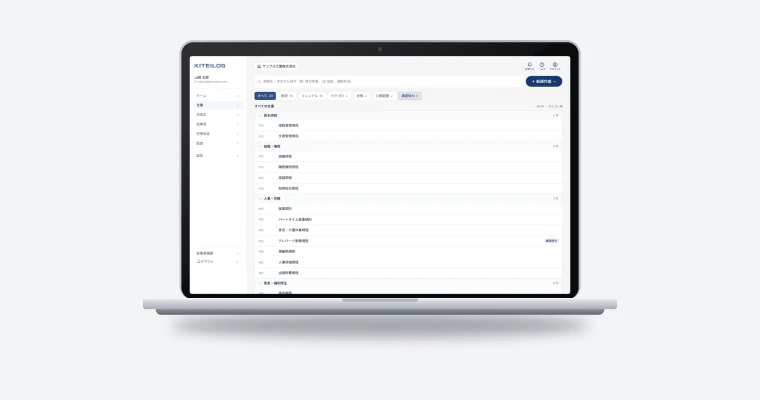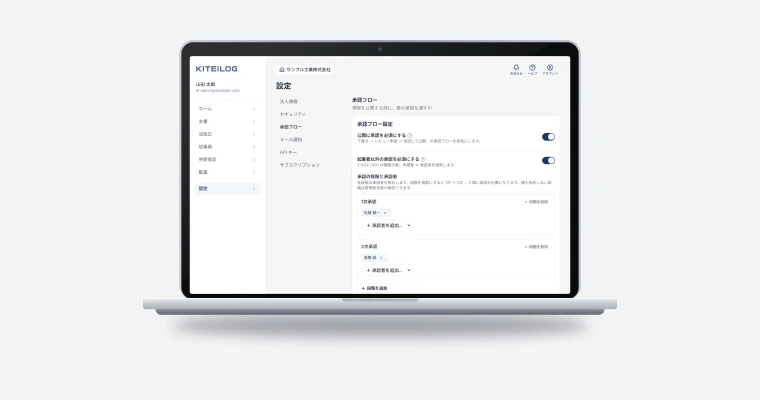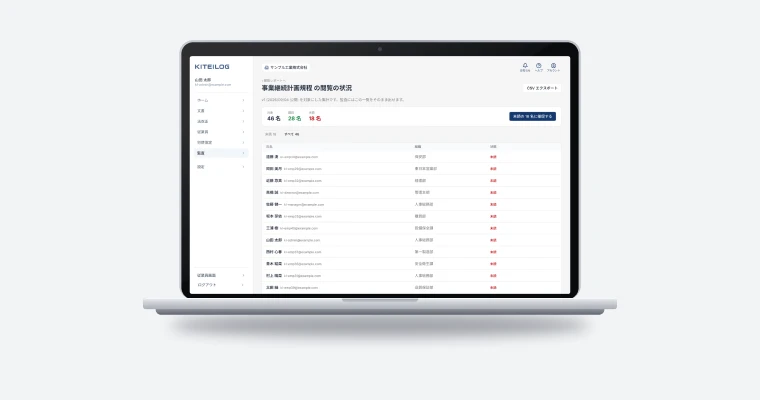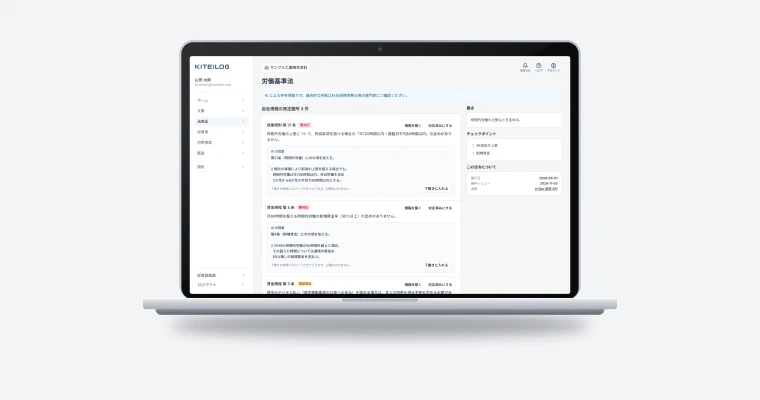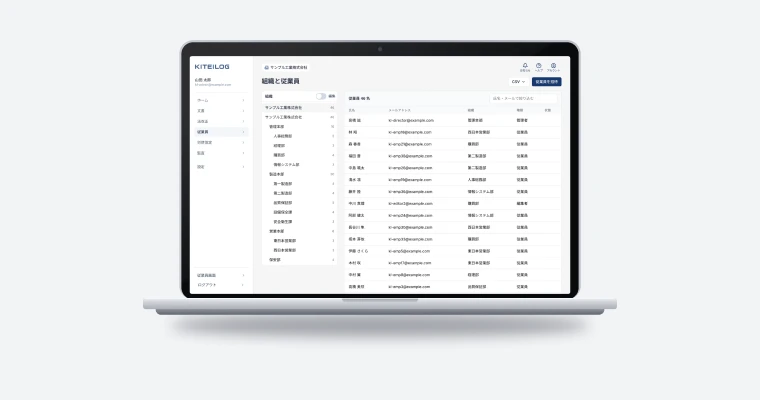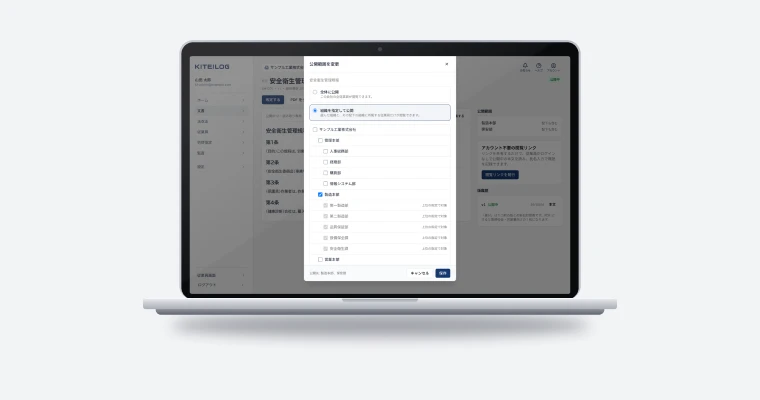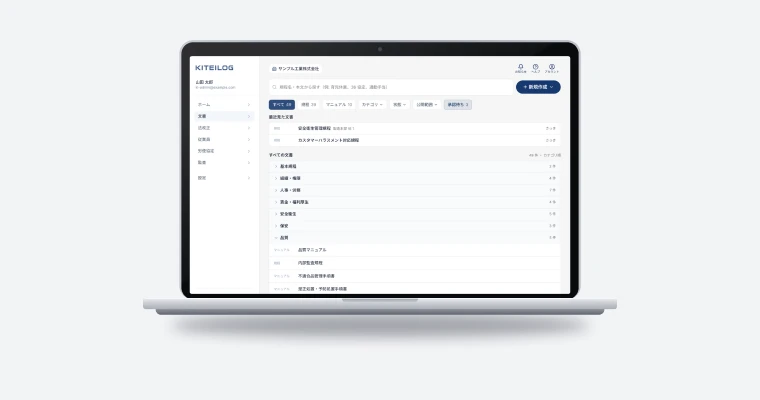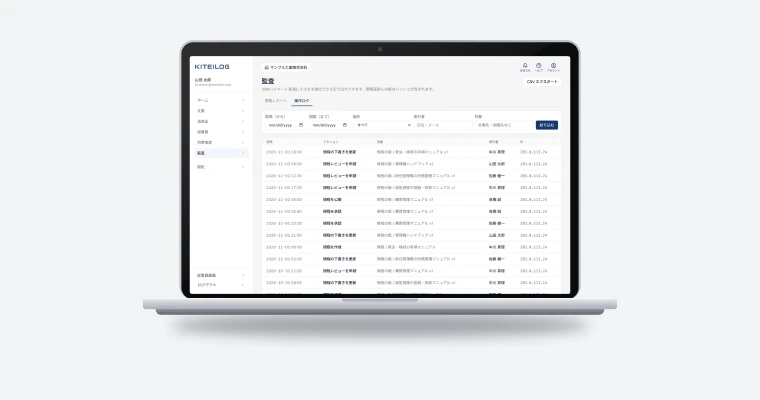
The facility imported its work rules, operating rules and personal-information rules from existing files and is preparing them for publication to staff.
Challenges before adoption
- Work rules and operating rules kept as loose files within the facility
- Hard to confirm the current version or trace amendments
- No reliable way to inform staff working in shifts
Results after adoption
- Existing files imported and the rules gathered in one place
- The current version easy to confirm, with amendments recorded as versions
- Content under review, with each rule to be published once complete
| Customer | A welfare facility |
|---|---|
| Product | Kiteilog |
| Adopted | August 2026 |
This welfare facility provides services that support the daily lives of its users, including care, everyday living support and consultation. Staff work in shifts from day into night, attending to each user individually.
Running a welfare facility requires work rules that set out how staff work, operating rules that set out how the service is run, and rules on handling users’ personal information. In August 2026 the facility adopted Kiteilog, imported the files it had kept for these rules, and began preparing them. The rules have not yet been published to staff; the facility is reviewing their content. This case follows the work from its background onward.
Rules a welfare facility must maintain and show
Welfare service providers are required by law to establish a range of rules. The operating rules set out the purpose and policy of the service, staff roles and duties, operating days and hours, capacity, the services offered and their fees, and how emergencies are handled. They are important information for users choosing a service and must be displayed where they can easily be seen.
The operating rules are also tied to the standards for designation and operation. Changing capacity or services means revising the operating rules and, where required, completing procedures with the responsible authority. If the operating rules do not match how the service is actually run, this may be pointed out during administrative guidance.
Handling personal information is another key issue. The facility routinely handles information that requires particular care, such as users’ physical and mental condition, medical history and family circumstances. The personal-information rules set out how such information is obtained, stored and shared, so that all staff handle it on the same principles.
Then there are the work rules that set out staff working conditions. Staff work day and night shifts, and clear rules on hours, days off and leave are a precondition for staff being able to keep working with confidence. Recruiting staff is a major challenge in welfare, and setting out working conditions clearly also helps staff stay.
These rules are connected. The staffing set out in the operating rules must be consistent with working arrangements in the work rules, and the handling of personal information is also mentioned in the operating rules. Changing one rule means checking its effect on the others.
Rule management that relied on files in the office
The facility kept these rules as files: rules written in a word processor, saved on an office computer or in a shared folder, and printed and filed as needed.
This made it hard to confirm which file was current. Each revision had either overwritten a file or saved it under a new name, so several files with similar names remained, and deciding which was in force meant opening them and checking the content.
Keeping a record of amendments was also a problem. There was no set way to record when, which provision and how a rule had been changed, so tracing past amendments meant relying on memory or old printouts. For rules such as the operating rules, which are linked to administrative procedures, it is desirable to be able to explain the history of changes.
Rule handling was also concentrated on the person in charge of administration. When that person was away and a staff member asked about a rule, it was not easy for anyone else to find the right file.
Reaching staff in a shift-based workplace
Informing staff of the rules posed difficulties particular to welfare work. Staff work in shifts and are rarely all on site at the same time. Explaining a revised rule at a staff meeting may not reach those who were not present.
Printed rules had been left in the staff room, but there was no way to confirm whether staff had actually read them. For rules such as those on personal information, which only work if every staff member follows them, it is important that the content has genuinely reached everyone.
Explaining the rules to new staff was similar. Going through the rules from scratch at every hire was a burden on administration. With a single place to check the rules, new staff can be directed there in the same way.
The facility set two goals for reviewing how it manages rules: gathering them in one place so the current version can be confirmed, and making sure staff are reliably informed.
Starting from the files already at hand
The facility compared several approaches. Reorganizing shared folders is easy but leaves the problems of identifying the current version and recording amendments. A general-purpose document management tool was considered, but it was not well suited to rules made up of articles, and a separate way of informing staff would still be needed.
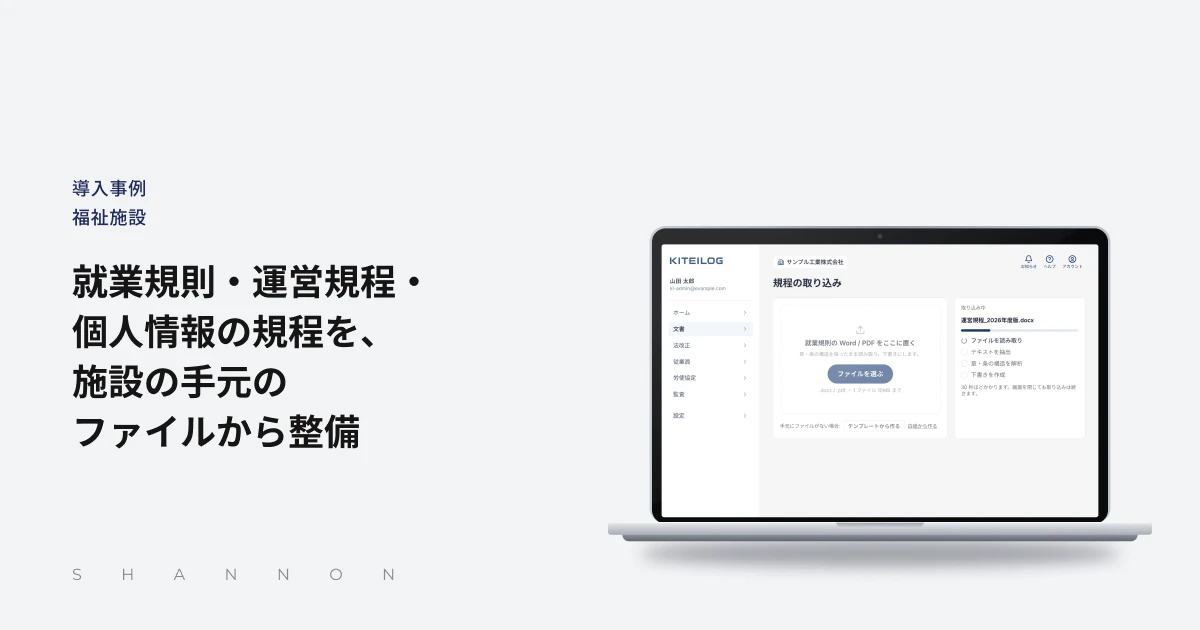
A major reason for choosing Kiteilog was that the facility could start managing its rules by importing its existing files. It already had rules it had used for years, and building on those files rather than re-entering everything would keep the administrative burden down during the move.
Managing rules as versions was also important. With each amendment recorded as a version, there is no doubt about which is current, and earlier content can be checked. For the operating rules, which are tied to administrative procedures, this was essential.
The availability of read confirmation after publication, which shows whether staff have read a rule, also supported the choice, since it addresses the problem of informing staff who work in shifts. With limited administrative capacity, it also mattered that the system needed little preparation and could be used alongside daily work.
Importing the work rules, operating rules and personal-information rules
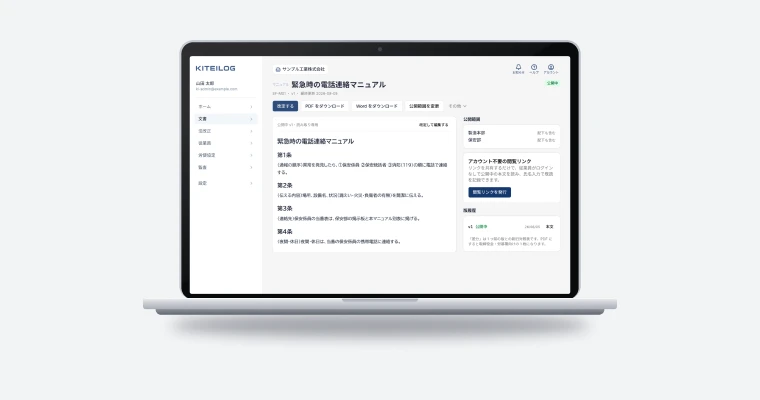
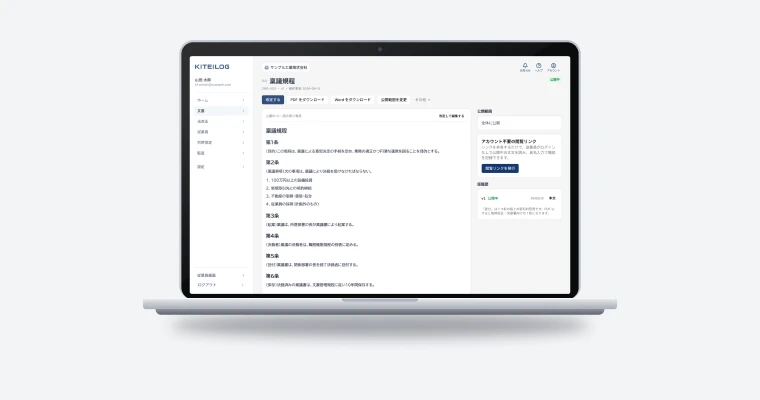
After adoption, the facility first imported the work rules in force and its other rules from existing files. On import, AI reads the structure of the provisions and turns them into editable rules. The operating rules and personal-information rules were imported in the same way.
Before importing, the facility reviewed the files in the office to establish which version of each was actually in force. Picking out the current version from files with similar names took effort in itself, but it was an essential first step toward gathering the rules in one place. Some printed rules had handwritten corrections; the facility checked whether these had been treated as formal amendments and reflected the necessary ones in the provisions in Kiteilog.
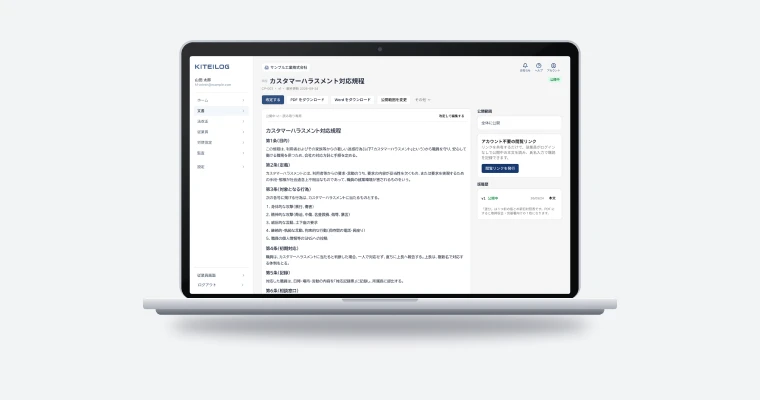
The person in charge of administration checked the imported rules against the original files for missing provisions or formatting problems. Some rules have many provisions and attached tables or forms, so the check is being done carefully, one rule at a time, finishing each before moving on to the next, so the status of the work is always clear.
What the review has brought to light
With the rules side by side in one place, the relationships between them have become easier to see. The facility can compare whether staff roles and staffing in the operating rules are written on the same basis as working arrangements in the work rules, and whether passages on handling user information are worded consistently in the personal-information rules and the operating rules.
For the work rules, the review focuses on whether working hours, breaks and night-shift arrangements for each pattern of work match current practice. As this directly affects how staff work, time is being taken over it.
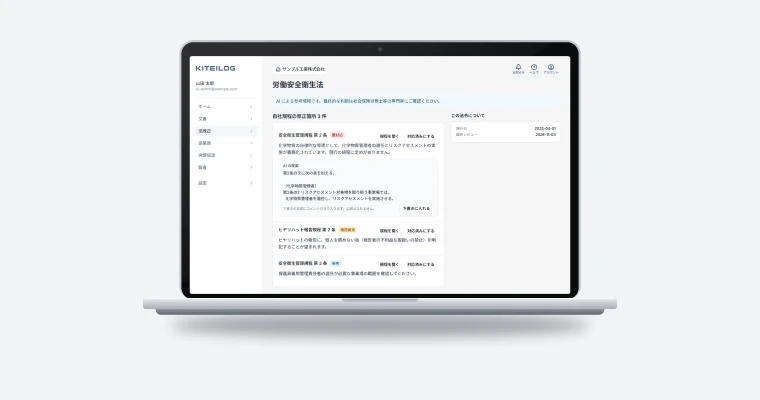
Where the review finds a gap between practice and what a rule says, the wording is revised in Kiteilog. Revisions are recorded as versions, so the preparation process itself remains on record. Revised rules are not shown to staff until they are published, so rules still being settled do not cause confusion on the floor.
The facility manager and the person in charge of administration are leading the review. There is no longer any doubt about which version is current, and questions about rules can be answered by looking in the same place. Because the manager can also check the rules there, rule management is less dependent on one person.
Making sure staff know: publication and read confirmation
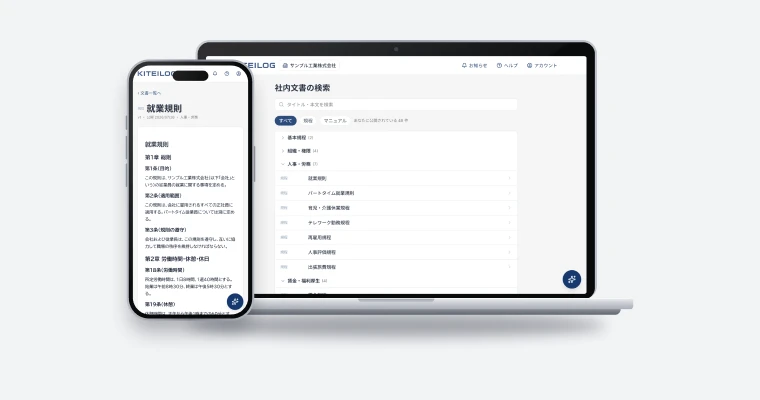
The facility plans to publish each rule to staff once its preparation is complete. Key points will be explained at staff meetings, and staff who cannot attend because of their shifts will be able to check the same content in Kiteilog. Being able to read rules at a convenient time, such as before or after a night shift, is a real benefit in a shift-based workplace.
After publication, the facility intends to use read confirmation to make sure all staff are aware of the rules. For the personal-information rules in particular, it aims to keep every staff member, including new joiners, up to date with the content.
If the operating rules need to change, the facility will keep the history as versions and organize what is needed for administrative procedures. Being able to compare against earlier versions should also help in preparing those procedures. Rules change as the facility’s operations change, and with its rules managed as versions in one place, the facility aims to remain somewhere users can rely on its services and staff can work with confidence.
Key features
- Rule-file import (AI)
- Rule drafting
- Versioning