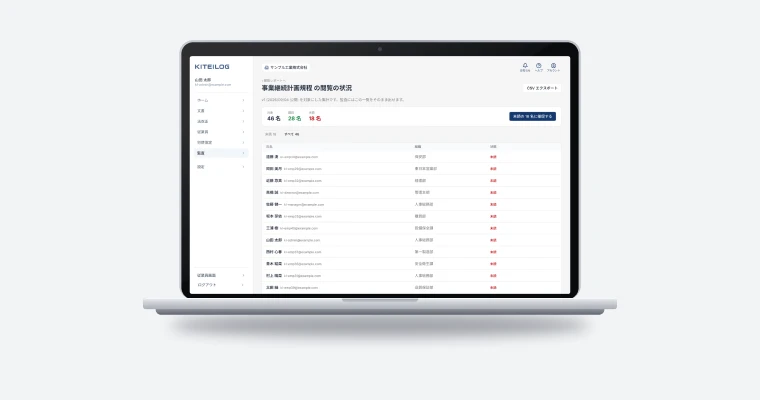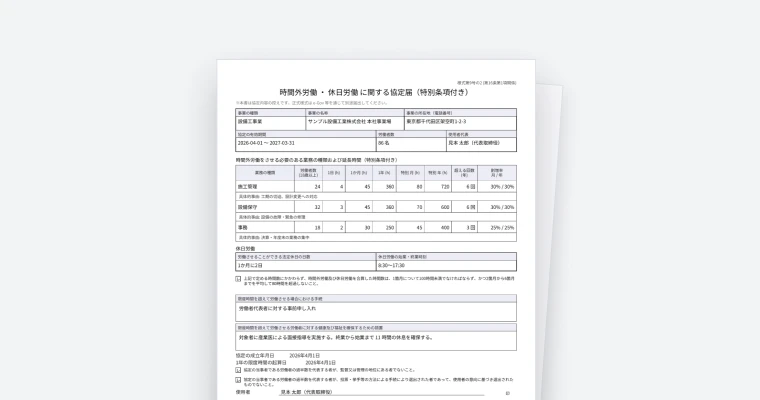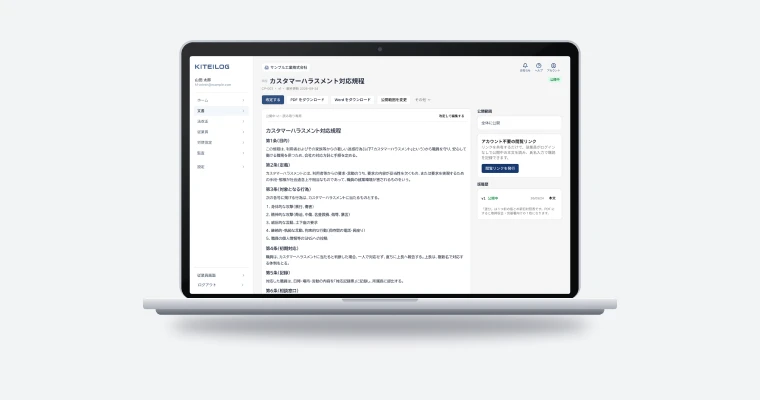
The company is drafting its work rules, approval-request rules and rule-management rules to establish its internal rules ahead of growth.
Challenges before adoption
- Decisions and rule handling relied on custom, with procedures undocumented
- An approval-request procedure was needed ahead of business growth
- No set procedure for creating and amending rules themselves
Results after adoption
- Drafts of key rules written in one system, with discussion under way
- The history of discussion kept as versions from the draft stage
- Groundwork for how rules are made, built around the rule-management rules
| Customer | A real-estate company |
|---|---|
| Product | Kiteilog |
| Adopted | October 2026 |
This real-estate company handles property sales and rental brokerage as well as property management. Its management and employees have grown the business by making decisions together at close quarters. As the range of properties and transactions widens, the company is approaching the stage of taking on more employees.
As an organization grows, decisions that used to be made face to face need to be set out as rules anyone can understand. In October 2026 the company adopted Kiteilog and began drafting approval-request rules and rule-management rules alongside its work rules and childcare and family-care leave rules. None of the rules have been published yet; the company is working through drafts and discussing their content. What follows describes how it started putting its internal rules in order with growth in mind.
Deciding to settle internal rules before growth
Real-estate transactions involve large sums and complex contracts. Property acquisitions and sales, lease agreements, advertising and repairs to managed properties all call for company-level decisions. It is also an industry in which the law places strong demands on fair dealing and accurate explanation to customers, so a clear internal decision-making process bears directly on the business’s credibility.
Until now, management made many of these decisions directly. With few employees, verbal consultation and approval are enough. But as employees increase and transactions are divided among them, leaving it unclear who may decide what risks decisions stalling or, conversely, moving forward without necessary checks. Work under real-estate brokerage law also requires procedures such as explaining important matters and providing contract documents, and the more employees handle such work, the more important clear internal checks become.
The company decided to put its basic rules in writing before such problems surfaced. It judged that laying the groundwork while the organization is small makes agreement easier and operation more natural than rushing to write rules after headcount has grown.
It chose to start with the work rules and the childcare and family-care leave rules, which set the basics of how people work; the approval-request rules, which set the decision procedure; and the rule-management rules, which set how rules themselves are managed. All of these become more necessary as an organization grows.
Decisions and rules supported by custom
Many of the company’s decisions relied on custom. There was an unspoken understanding that spending above a certain level or contracts with new counterparties would be discussed with management, but the threshold was not written down. Records of these discussions were scattered across emails and meeting notes, making it hard to trace the reasoning later.
The same was true of internal rules. Some documents had been written when needed, but there was no defined procedure for who drafts a rule, who approves it and from when it applies. Without a set procedure for amendments either, practice could change without the change reaching everyone involved.
The absence of a procedure for making rules was a fundamental obstacle. Individual rules, once written, will drift away from reality over time unless there is a mechanism for amending and managing them. By including rule-management rules in the scope of work, the company chose to address this directly.
Handling rules in one system from the drafting stage
The company considered several approaches. Writing rules in a word processor and storing them in a shared folder is easy, but files multiply as drafts are discussed and it becomes unclear which is the latest. Commissioning outside specialists to write all the rules was another option, but rules that fit the company’s actual circumstances require internal discussion. A separate in-house list of rules with versions and effective dates was also considered, but with the list and the text kept apart, missed updates would be hard to avoid.
Kiteilog was chosen because everything from drafting to managing rules can be done in one system. Drafting, discussing and publishing once content is settled all happen in the same place, and amendments and management continue there afterwards.
Keeping a version record from the draft stage was also important. Discussing a rule means revisiting wording and thresholds many times, and knowing which drafts led to the final content helps when the intent of a rule needs to be checked later. Kiteilog can also set multiple approval stages, so once the rule-management rules define an approval procedure, it can be reflected in the system as well.
For a company writing rule-management rules, having the system that manages rules in place first was significant: the rules on how rules are made and amended can be written to match how rules are actually managed.
The thinking behind the approval-request and rule-management rules
The approval-request rules define which matters require approval, who drafts the request, whose review it passes through and who makes the decision. The company is organizing the matters that need company-level decisions, such as property acquisitions, large expenditures and the conclusion of contracts, and clarifying who holds decision authority for each.
How finely to set thresholds is one of the central questions. Thresholds that are too fine would slow everyday work; thresholds that are too vague would undermine the point of having rules. The company is looking for a workable line in light of the scale of its business and the nature of its transactions. It is also considering how approval records should be kept and for how long, since being able to trace the reasoning later helps when explaining decisions to counterparties or lenders.
The rule-management rules define how rules are established, amended and abolished, which department owns each rule, approval authority, when rules take effect and how employees are informed. Deciding how the body of rules is classified and which procedure applies to amending which rule is meant to keep the whole in order as the number of rules grows.
The two sets of rules are interlinked. Establishing or amending a rule is itself a matter for company-level decision, so the company is aligning their content by comparing the two side by side to make sure the procedures do not conflict.
Discussing content through successive drafts
The company is now writing drafts of each rule in Kiteilog and discussing their content. For the work rules and the childcare and family-care leave rules, it is making sure all legally required matters, such as working conditions and leave schemes, are covered while considering provisions that suit how it works. Childcare and family-care leave is an area where the law continues to change, so the company is aligning the schemes with current law and writing the request procedures so that employees find them easy to use.
The approval-request and rule-management rules require much more original thinking about the company’s own circumstances. Management and the person responsible for administration review the drafts and revise them as comments come in. Drafts are recorded as versions, so earlier drafts can be revisited at any point.
Handling drafts in one system has removed the risk of mixing them up. When files are circulated for comments, it becomes unclear who commented on which version; in Kiteilog, everyone works on the same draft.
The company is also paying attention to consistent terminology across rules. If job titles in the approval-request rules differ from those in the work rules or the rule-management rules, employees will be confused. Drafting several rules in the same place makes such details easier to check.
What writing things down has revealed
Drafting the rules has itself become an opportunity to review how the company works. Writing out the approval flow it had followed by custom revealed that judgment criteria differed slightly from person to person and that there were points where checks tended to be skipped.
Writing rules is a process of putting unspoken understandings into words and sharing them. Discussing the drafts has brought management and employees closer to a shared view of what the company values and how decisions should be made. The company also involves employees in the discussion, checking whether procedures are workable from the point of view of those doing the daily work, which it expects to help the rules take hold once in use.
Clear rules also matter in hiring. A company whose working conditions and internal procedures are clearly defined offers reassurance to people considering joining.
Nothing has been published yet, but drafting, discussing and keeping records in one system means the company is already trying out, in practice, the procedures it intends to set in its rule-management rules.
Toward publication and the start of operation
The company plans to publish each rule once its content is settled and begin operating under it. When publishing, it intends to explain the purpose and key points to employees and, for the approval-request rules in particular, show concretely how to draft a request and obtain a decision in daily work.
Publishing is not the end. Once in use, rules may turn out not to fit actual work, or situations may arise that were not anticipated. In such cases, the company will amend the rules following the procedure in its rule-management rules and keep the history as versions. For amendments, it also has in view producing comparison tables of old and new text to explain changes to employees.
The company plans to prepare further rules as the business expands. With rules and a rule-management system established while it is still small, it aims to build an organization that maintains the quality of its decisions as headcount grows.
Key features
- Rule drafting
- Draft editing
- Versioning