Two people share the work of preparing the purchasing rules and the fixed-asset and harassment-response manuals.
Challenges before adoption
- Purchasing and fixed-asset procedures were written separately by different people
- Storage and formats varied, so the overall state of documents was unclear
- There was no foundation for standardizing operating procedures
Results after adoption
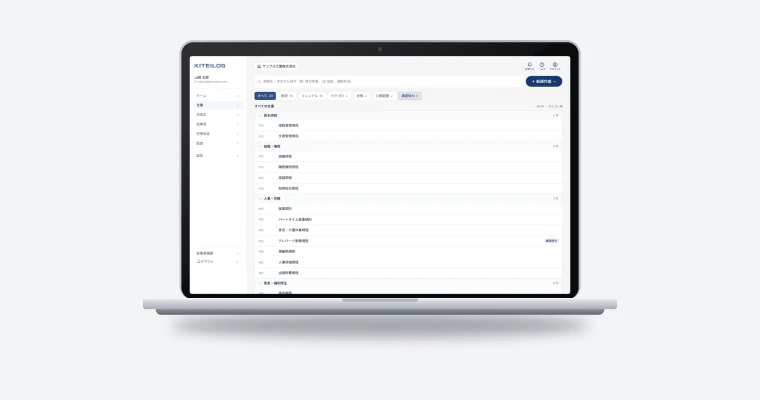
- Rules and manuals gathered in one place and visible in a single list
- Two people dividing the work and preparing documents in parallel
- Versioning that makes the history of amendments traceable
| Customer | A manufacturer |
|---|---|
| Product | Kiteilog |
| Adopted | June 2026 |
This company manufactures parts and products. Its administrative function supports production with a small team that covers a wide range of work, from procuring materials and equipment and managing fixed assets such as factory machinery to protecting the working environment of employees. It works closely with the production and quality functions to keep the company’s basic procedures running.
Procedures for this work had been written up as needed by whoever was responsible. In June 2026 the company adopted Kiteilog and began preparing its purchasing rules and its manuals on fixed-asset handling and harassment response for managers, with two people sharing the work. This case looks at how it built a setup in which document preparation does not rest on one person.
Procedures scattered across individual folders
The administrative work of a manufacturer involves many routine procedures: ordering materials and parts, selecting suppliers, inspecting deliveries, and acquiring, moving and disposing of equipment. Each needs to follow an established procedure.
At this company, the documents describing these procedures had been written individually by the employees responsible. Purchasing procedures were written by the person handling purchasing, fixed-asset handling by the person handling accounting, and the harassment-response guide by the person handling HR, each stored in personal or shared folders.
The way documents were written also differed. Some laid out procedures in a spreadsheet, others were written as text in a word processor. Titles and the recording of revision dates were not consistent, so although they were all company documents, it was hard to see them as a whole.
As a result, the company could not tell which procedures had been documented, which had not, and when each document had last been reviewed. If someone moved role or was absent, there was a risk that nobody could find the documents needed. Even where procedures were documented, they did not always match how the work was actually done; documents could remain unchanged even after the way of working had moved on.
Three documents of different character
The three documents covered here differ in nature. The purchasing rules set out ordering authority, supplier selection and inspection procedures in articles. Clear company rules are needed to keep transactions fair and to stay in line with the law on dealings with subcontractors.
Fixed-asset handling describes when and how equipment and machinery are acquired and how moves and disposals are recorded. It is tied to accounting and tax treatment and requires procedural steps such as reconciling physical assets with the register. Because a step-by-step explanation suits it better than articles, it was prepared as a manual. Fixed-asset procedures span long periods from acquisition to disposal, so records must be kept the same way even when the person responsible changes, and there are many points where judgment is needed, such as how to check physical assets or how to distinguish repairs from acquisitions.
The harassment-response manual for managers shows the first steps when a subordinate comes forward, how to establish the facts and how to report to the relevant departments. Employers are required to take measures to prevent workplace harassment, and it is important to give managers, who serve as a point of contact, concrete procedures. If managers do not know what to do, the employee who came forward may be left without support.
The mix of documents that should be rules and documents that should be manuals was one of the things that had made preparation difficult.
A system for preparing rules and manuals as a team
The company considered how to manage documents in one place. Reorganizing shared folders would align storage locations but would not resolve differences in format or the lack of an amendment record. A spreadsheet list of documents was also considered, but such lists easily drift out of step with the documents themselves.
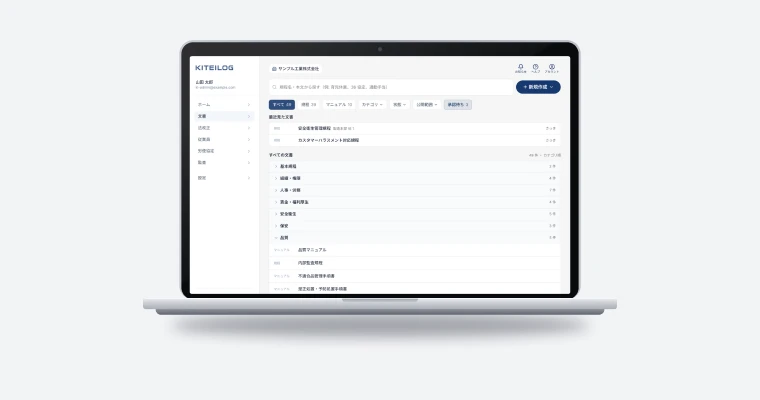
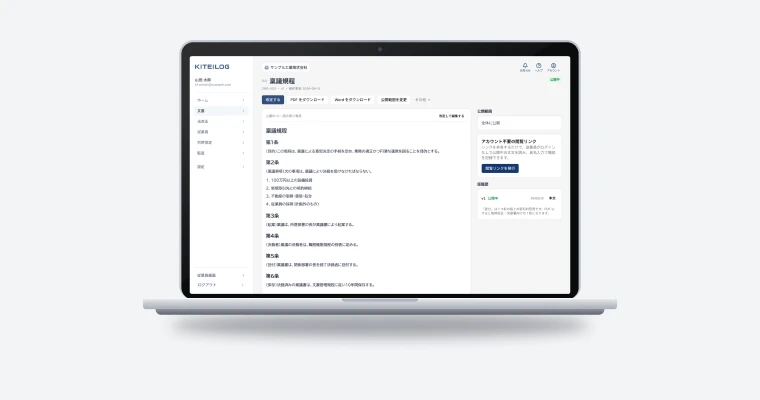
One reason for choosing Kiteilog was that rules and manuals can be handled in the same system. The purchasing rules are registered as a rule and fixed-asset handling and harassment response as manuals, all managed the same way in one list.
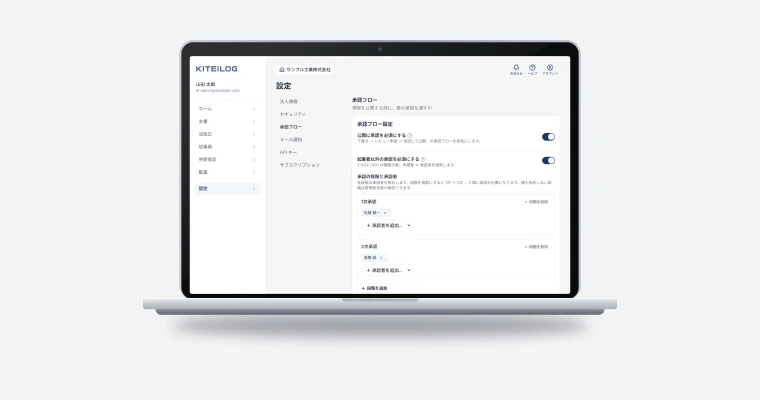
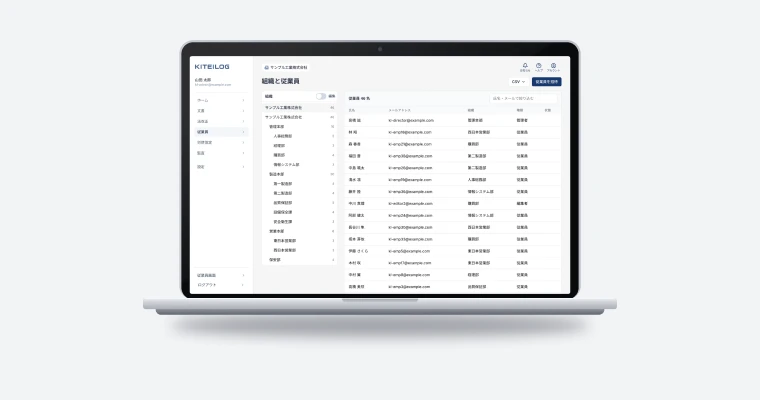
Another was the ability to have multiple administrators and share preparation. Each area of administrative work has its own expertise, and it is not realistic for one person to prepare every document. Being able to assign documents to different people while sharing progress in the same system was an important condition.
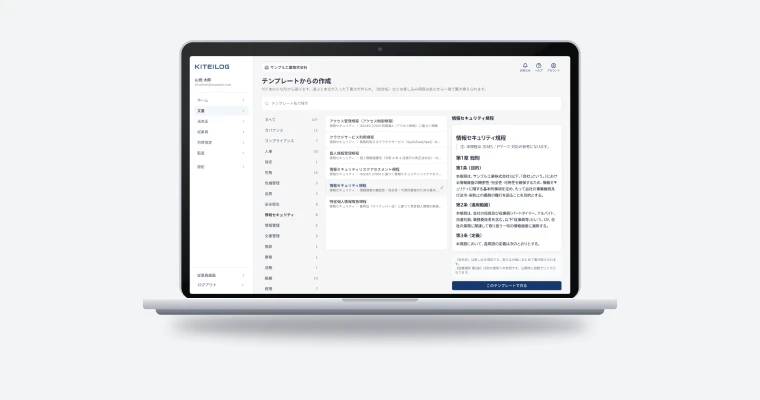
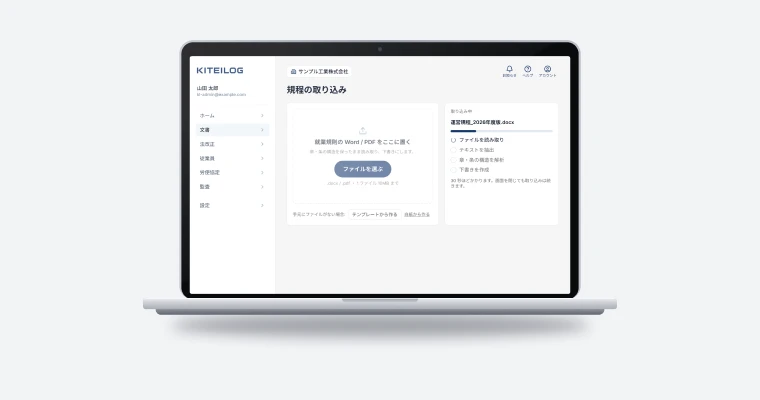
Importing existing files was also valued. Building on the documents already written reduces the burden of starting over; the import uses AI to read the content of existing files and turn it into editable rules and manuals. Building a document management system in-house was an option, but the administrative function had no capacity to build and maintain one, and the company preferred to spend its time on the documents themselves.
Importing existing documents and dividing roles between two people
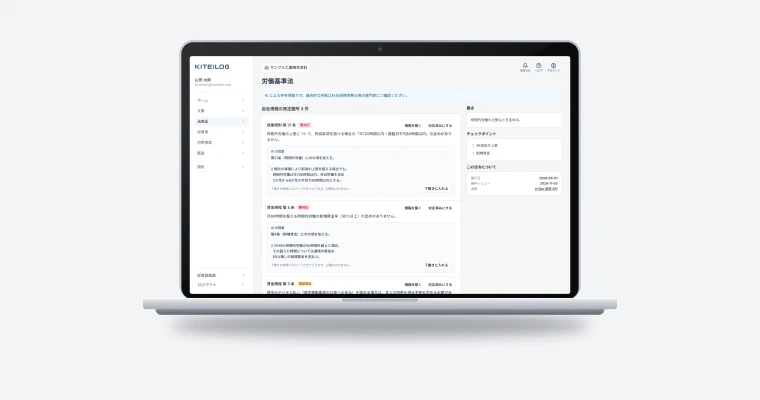
After adoption, the company first imported its existing files. Word-processor documents and stored procedure files were read in and became editable. The person responsible checked the imported content against the originals and tidied headings and wording. The import also surfaced outdated department names and references to forms no longer in use, which were updated to reflect the current organization.
The company then invited a second person as an administrator so that two people could prepare the documents together. Roles are divided by document: one person takes the purchasing rules and the fixed-asset manual, the other the harassment-response manual for managers. The invited administrator could see the imported documents as soon as they signed in, so it took little time to get used to the system and start work.
Before dividing the work, the two agreed on basic conventions such as titles, terminology and heading structure, so that documents written by different people would read as one company’s documents. Each also reads the other’s documents and passes on comments.
Points of care in sharing the work
The company made sure it was always clear who was responsible for which document. Each document has a main owner who is responsible for decisions about its content, while the other person reviews it from a reader’s point of view.
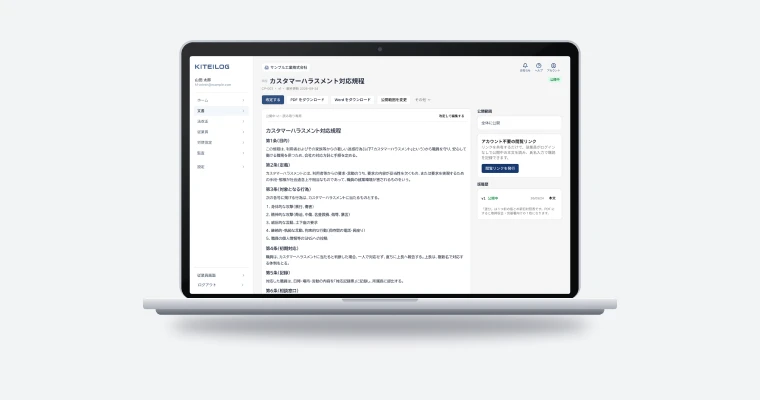
The harassment-response manual for managers is being prepared with readability in mind, so that a manager who receives a report can respond calmly. It sets out in order what to check first, what to record and whom to report to, aiming for a structure managers can return to when unsure. It also states the points managers must observe, such as protecting the confidentiality of the person who came forward and not treating them unfavorably for doing so.
The purchasing rules and the fixed-asset manual overlap: when equipment is bought, the purchasing procedure and the fixed-asset acquisition procedure follow one another. The same person owns both, and the other person reads them through together to make sure the hand-off points and terminology do not conflict.
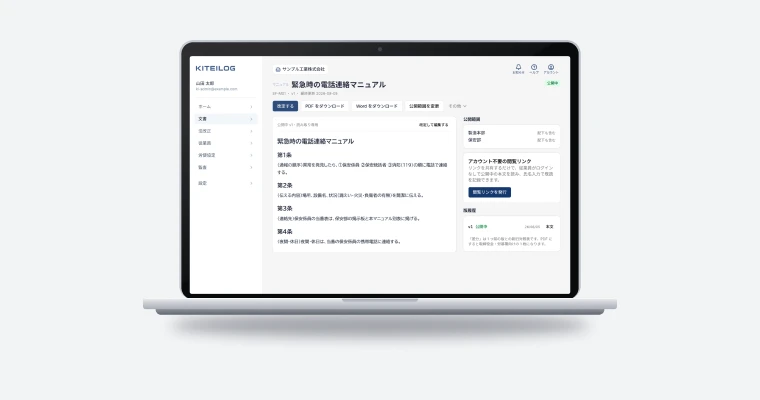
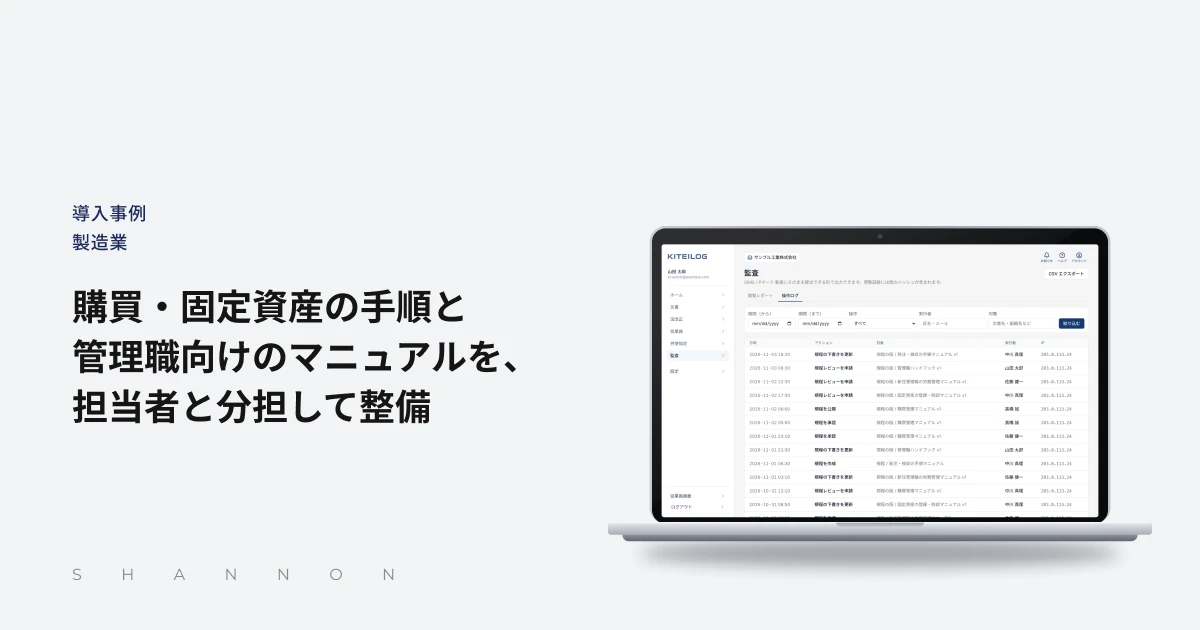
Versioning has also made it easier to edit each other’s documents. Changes are recorded as versions, so earlier content can be restored if needed.
Progress visible in a single list
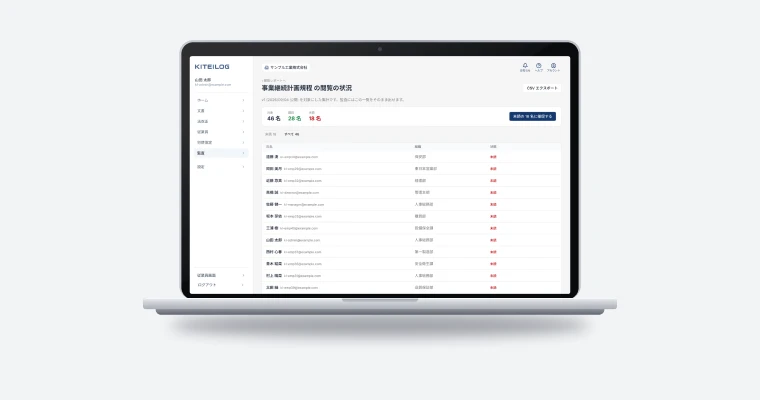
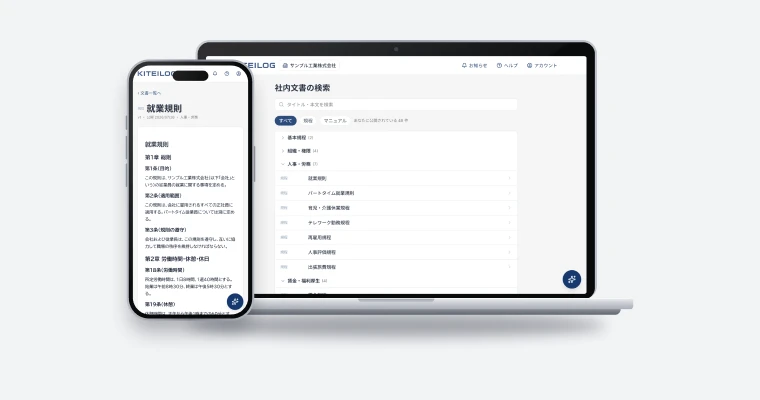
With rules and manuals in one place, the company can see in one list which documents are registered and what stage each is at. There is no need to check individual folders, and overall progress is visible on one screen.
Documents are managed as versions, so the history of amendments can be traced. What changed and when is kept as a record, and there is no longer any need to tell versions apart by adding dates to file names.
Sharing the work between two people is also a significant change. Neither has to carry all the documents alone, and each can work on their own area in parallel. When one is away, the other can check the status of documents in the same system, which helps prevent work from depending on a single person.
Common conventions mean that documents as different as purchasing, fixed assets and harassment response now sit together in a consistent form. Readers can find what they need in the same structure across documents, and progress can be explained to the head of the administrative function using the same list.
Extending to other procedures and standardizing work
The company is now finalizing the three documents. It plans to register further procedures that are repeated in administration and on the shop floor, such as inventory management, shipping and equipment inspection, as manuals over time.
Documenting procedures in a common format is itself a form of standardization. New employees can check procedures more easily, and variation between individuals is reduced. Standardization requires both well-prepared documents and their actual use, so the company also intends to set up a flow for revising procedures in response to feedback from the workplace, keeping the history as versions.
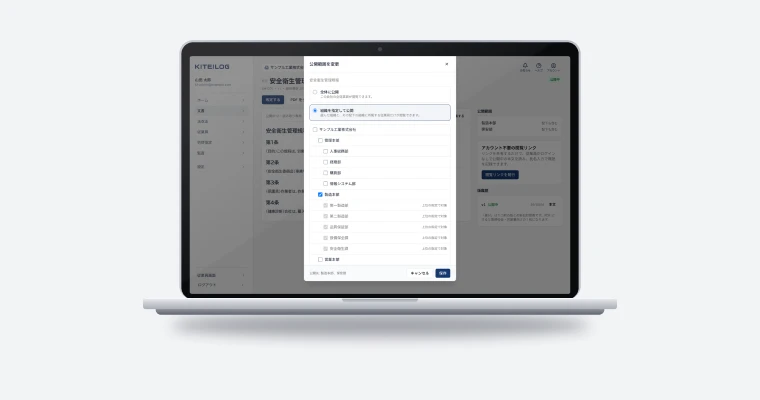
Once documents are finalized, the company plans to publish them to the relevant employees. The harassment-response manual in particular needs to be available to managers whenever they need it, and how to publish it is being considered as well.
Building on the two-person setup it started with, the company intends to extend document preparation across the organization, managing rules and manuals in one system and revising them as needed so that procedures stay in line with how the work is actually done.
Key features
- Rule and manual import (AI)
- Manuals
- Multiple administrators
- Versioning