The business wrote its quality manual and internal-audit rules and is preparing them for a defined audience, keeping their amendment history as versions alongside its other internal rules.
Challenges before adoption
- Quality documents were kept in files separate from other internal rules
- A consistent amendment history was hard to maintain
- It was not clear from the files whom each document was for
Results after adoption
- The quality manual and internal-audit rules managed in the same system as other rules
- Amendments recorded as versions, so their history can be traced
- An audience set for each document, making its readers clear
| Customer | A construction business |
|---|---|
| Product | Kiteilog |
| Adopted | August 2026 |
This business carries out construction work. As clients and main contractors place increasing weight on quality, it has been building a quality management system whose operation it can demonstrate through documents and records. Project size and type vary from site to site, and much of the work is done together with subcontractors, so everyone needs to be able to refer to the company’s approach to quality in the same way.
In a quality management system, the quality manual and the internal-audit rules are the core documents. Since August 2026, the business has used Kiteilog to prepare both in the same system as its other internal rules. The documents have been written and their audiences set, and the business is now checking their content ahead of internal audits. What follows traces its approach and progress so far.
Construction work and the need to show quality in writing
Every construction project is a one-off. Drawings and specifications differ from site to site, and many parties, including subcontractors, are involved. Securing consistent quality on every site requires the company to define procedures from planning through inspection and handover, and to make them part of how each site works.
Clients and main contractors increasingly ask businesses to explain their quality control arrangements. In public tenders and in customer evaluations, whether a quality management system is in place may also be checked. Setting out quality policies and procedures in writing, and backing up their operation with records, matters for keeping business opportunities open.
In such a system, the quality manual sets out policies and procedures, and internal audits confirm in-house that the system is operating as defined. The internal-audit rules determine how auditors are chosen, how audits are planned and how findings are followed up, and they work together with the quality manual.
How documents themselves are controlled is also examined in internal audits and external assessments: whether a document is the approved content, whether the current version is in use, and whether old versions are prevented from being used by mistake. Documents must be reviewed in light of audit results, organizational change and customer requirements, with a record of when, what and why something was changed.
Quality documents kept apart from other internal rules
At this business, internal rules such as the work rules were kept in separate files from the quality manual and the internal-audit rules. The quality documents had long been written mainly by the quality control function, while internal rules were handled by general affairs.
With documents stored in different places, keeping a consistent amendment history was difficult. When the quality manual was revised, the only way to tell versions apart was by file name or a note on the cover page, and checking differences from earlier versions meant opening several files and reading them side by side. Each audit also involved confirming with colleagues which version had been in force from when.
The quality documents and internal rules are also connected. Corrective procedures following an internal audit, or the authority to approve documents, relate to the organization’s division of duties. Managing them separately risked overlooking the effect of a change in one on the other.
It was also hard to tell from the files whom each document was for. The quality manual concerns a wide range of people, from site managers to the workers on site, whereas the internal-audit rules are aimed mainly at the staff and managers who carry out audits.
Construction sites run on tight schedules, with decisions made every day. If a site manager cannot tell which file is current, there is a risk of relying on an old printout. Fixing a single current version that everyone refers to was essential for protecting quality on site, and having the internal-audit rules, which check document control, stored in a way that was hard to control was seen as inconsistent.
Keeping rules and manuals distinct, in one system
The business considered ways of managing quality documents in the same place as internal rules. Ideas included tightening the organization of shared folders and using a general-purpose document management tool, but simply putting files in the same place would not solve the problems of amendment history and readership. Building a separate tracking sheet in-house was also considered, but with the tracking sheet and the documents kept apart, missed updates would be hard to avoid.
The deciding factor in choosing Kiteilog was that rules and manuals can be kept distinct while being managed in the same system. Rules made up of articles and manuals built around procedures and explanations are different kinds of documents. In Kiteilog each is registered as the appropriate kind, while versioning and audience settings work the same way for both.
The business also valued having amendments recorded as versions. Each change adds a version, and earlier content can be checked at any time. The amendment record a quality management system requires is kept as part of routine updates, without extra work. Being able to set an audience for each document also fitted its needs, as the difference in character between the two documents could be expressed within the system itself.
The quality manual as a manual, the internal-audit rules as a rule
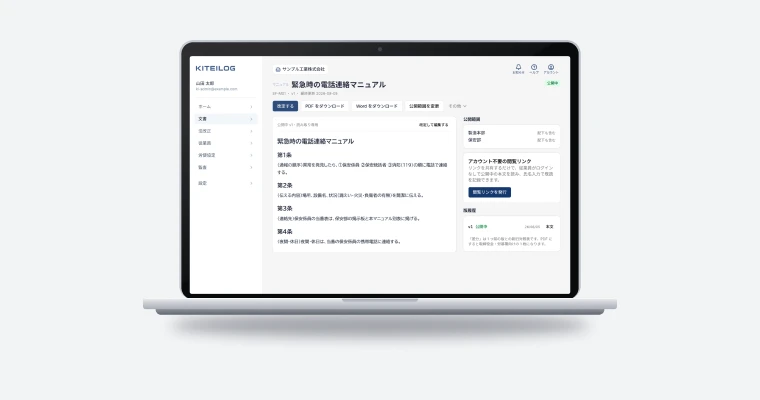
After adoption, the business first clarified the role of each document. The quality manual explains quality policies, procedures at each stage of construction and how records are kept, so it was created as a manual. The internal-audit rules set out the purpose and structure of audits, auditor requirements and audit procedures in articles, so they were created as a rule.
Starting from the content of the existing files, the business reviewed chapter structure and terminology. It checked that the passages of the quality manual that mention internal audits did not conflict with the articles of the internal-audit rules, and clarified how responsibilities are divided between the two.
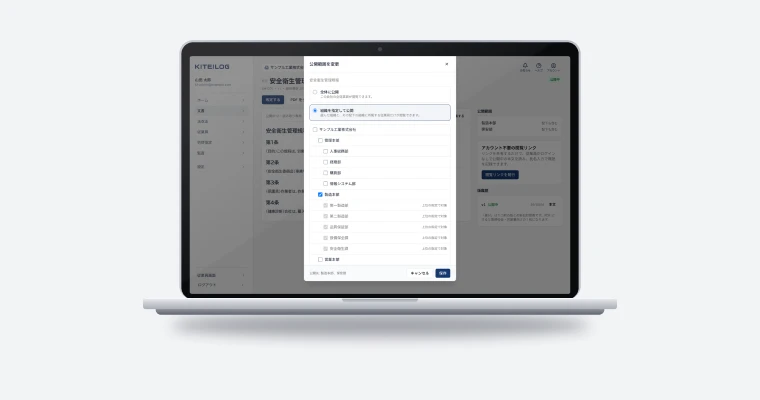
An audience was set for each document. The quality manual covers employees involved in construction broadly, while the internal-audit rules are aimed mainly at the employees and managers responsible for audits. With audiences defined, it will be clear who should read each document once it is published.
The documents are now being checked internally, with the quality control function and general affairs each reviewing them from their own perspective and aligning wording and procedures.
Settling content before publishing
The business chose not to publish quickly but to settle the content thoroughly before presenting it to employees. The quality manual is what site work relies on, and frequent changes after publication could cause confusion.
It is therefore checking each chapter of the quality manual against actual practice on site. Where practice tends to differ between sites, such as construction planning and how inspection records are kept, it is gathering how several sites work and determining the procedure the company should treat as standard.
For the internal-audit rules, it arranged the flow from audit planning to reporting and confirming corrective action in the order of the articles, so that auditors can follow the procedure without hesitation. In the quality manual, it made clear where the internal-audit rules should be consulted, so readers can move between the two documents.
Because every change in Kiteilog is recorded as a version, revising content during preparation does not lose the history of earlier discussion. Documents still being prepared are not yet published, so content under discussion does not reach sites prematurely.
What changed once the documents were in one place
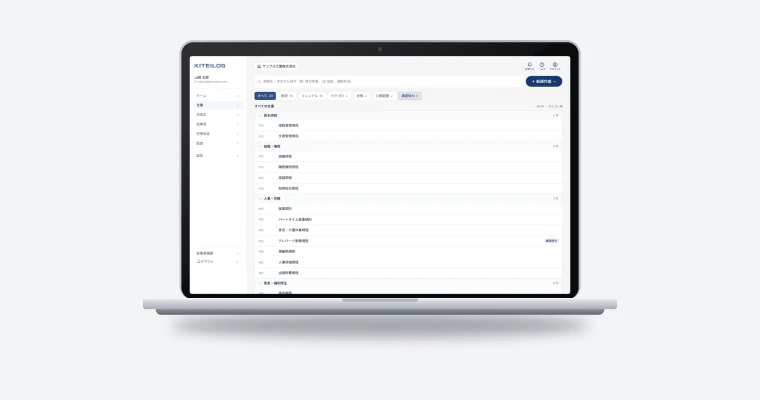
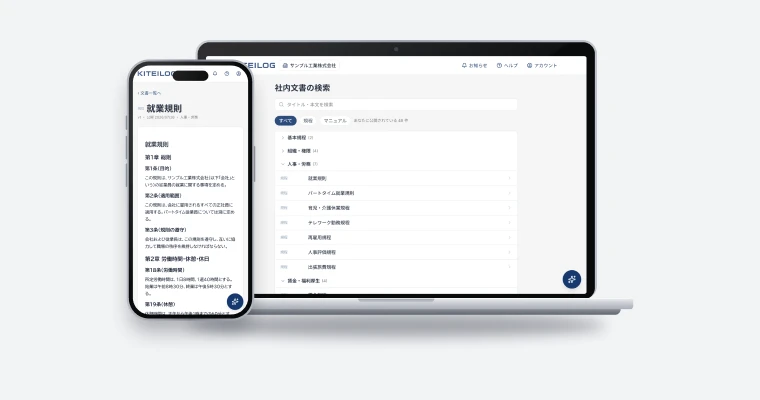
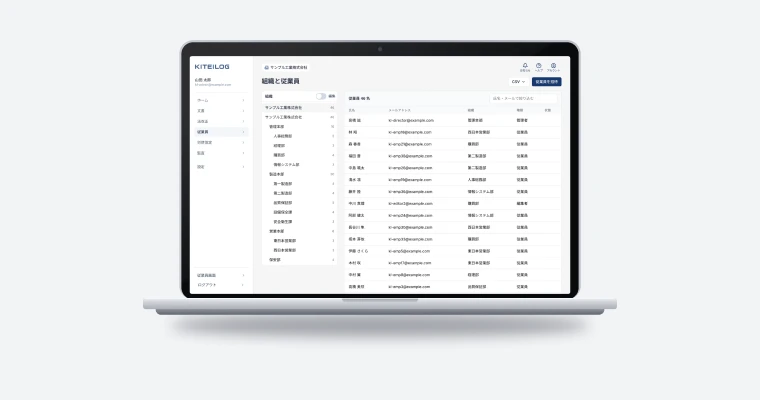
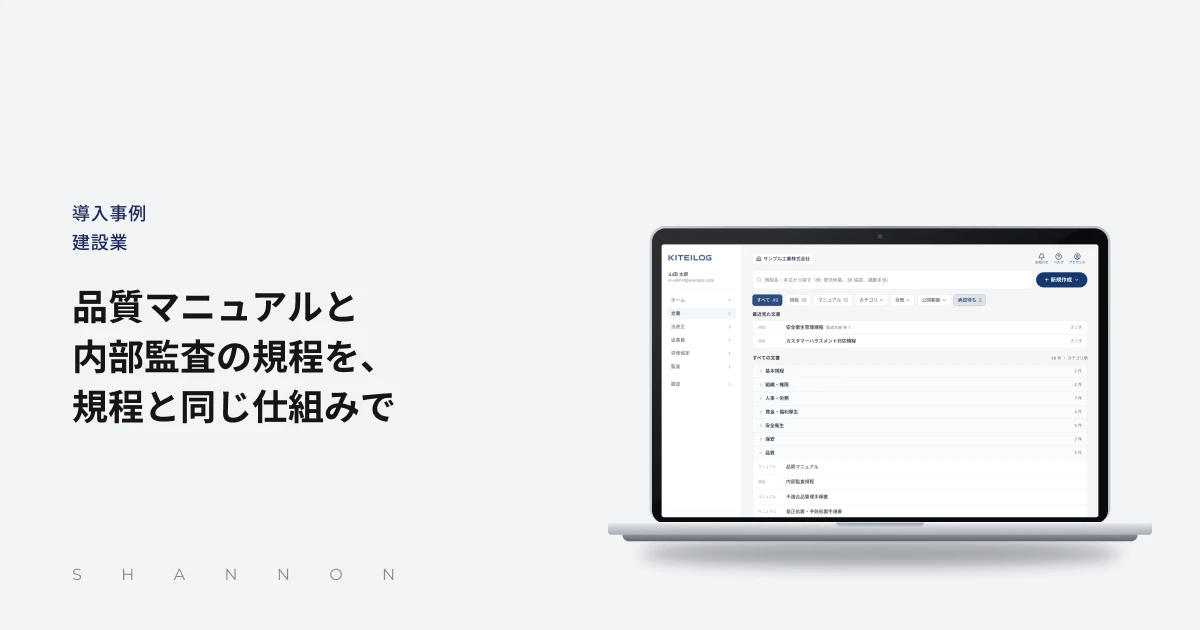
With both documents in the same system as other internal rules, there is no longer any searching for quality documents. They appear in one list alongside the work rules and other internal rules, and it is easy to see what stage each document is at.
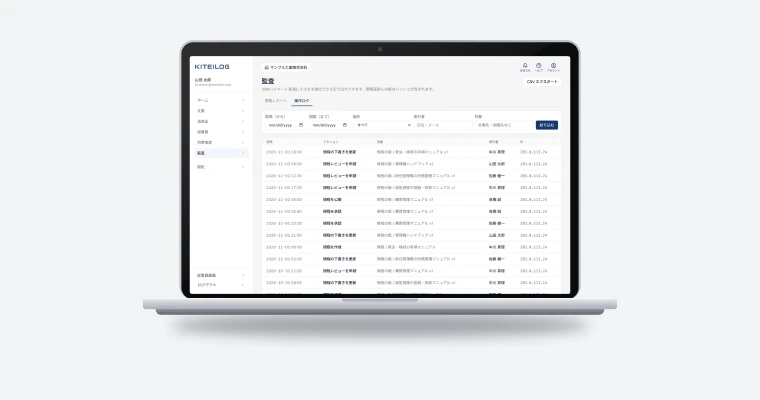
Because amendments are recorded as versions, the history of future reviews will also be kept. There is no need to tell versions apart by file name, and checking earlier content is a matter of following the record.
The quality control function and general affairs can now discuss the documents while looking at the same list. Where they previously sent files back and forth, they can now consider consistent wording and the division of roles with the same document in front of them.
Setting audiences has also made it possible to keep readers in mind while working on content. Once it is clear whom a document is for, the level of detail and choice of terms become more consistent.
Developing the documents together with internal audits
The business plans to review the documents in line with internal audits. Where an audit reveals a gap between procedure and practice, it will revise the quality manual or internal-audit rules and keep the history as versions, running audits and amendments as one cycle so that the system is more than a formality.
It also intends to register other quality-related documents, such as construction procedures and inspection guidelines, as manuals over time, so that site employees can more easily check the procedures they need.
When the documents are published, the business plans to present them to the employees set as their audience and promote awareness so that the quality manual is used as a basis for everyday decisions on site. Making the current version available from site offices as well should remove reliance on old printouts.
Preparation is still under way, but the groundwork for handling quality documents and internal rules on the same principles is taking shape. Using a system that manages rules and manuals together, the business aims to keep demonstrating the construction quality its customers trust.
Key features
- Manuals
- Rule drafting
- Audience settings
- Versioning