The company imported its HR rules and runs multi-stage approvals in Kiteilog. A record of each approval is kept for every version and can be shown during audits.
Challenges before adoption
- Approvals requested by email, making it hard to see who approved what
- Certification reviews and client audits asked for a record of approvals
- No clear view of which stage an amendment had reached
Results after adoption
- Review, staged approval and publishing recorded in one flow
- Approval records kept for every version and available for audits
- A law check on related provisions before each amendment
| Customer | An IT services company |
|---|---|
| Product | Kiteilog |
| Adopted | August 2026 |
This IT services company develops, operates and maintains systems under contract for its clients. It often handles client business systems and data that include personal information, and it holds a third-party information security certification that it works continuously to maintain.
Amending its internal rules involves several approvers, and until recently requests and replies went back and forth by email. As certification reviews and client audits asked more often about how its rules were managed, the company came to see a clear need to keep a reliable record of how each approval happened. This is how it adopted Kiteilog in August 2026 and how its approval process changed.
Audits that ask who approved what, and when
In IT services, being able to demonstrate information security management objectively is often a condition of doing business. The company’s certification includes periodic reviews of whether internal rules are properly defined, approved and communicated to employees.
Client audits work the same way. Clients who outsource system operations want to know which rules their contractor works under and may ask for an explanation of how those rules are managed, along with supporting evidence. Not only the content of a rule but also the process by which it was adopted is in scope.
What auditors need is more than the latest version. They want a record showing who drafted the amendment, who reviewed it at each stage and who gave final approval. Information security management depends on a cycle of defining, operating, checking and improving rules, and a well-recorded amendment process is evidence that the cycle is working.
The company’s rules themselves were in good order, but it lacked a consistent way to record approvals. Before each review or audit, staff had to dig through past correspondence to assemble evidence.
Approval history buried in email threads
Previously, the department responsible for a rule drafted the amendment as a document file and emailed it to each approver. Approvers replied by email, sometimes asking for changes, and with several approvers the exchange was repeated in turn.
The record of approvals ended up scattered across mailboxes. Confirming who had approved at which stage meant searching through several people’s email, and when revisions piled up it became unclear which version of the file a given approval referred to.
Progress was also hard to follow. Only the person who sent the request could find out whose desk a draft was sitting on, and when an approver was away the process stalled, sometimes leading to last-minute reminders as the effective date approached. Even after approval, the final version had to be sent out again to everyone concerned.
HR rules, covering pay, travel expenses and telework, affect employees directly, change often and involve many approvers. The burden of email approvals and the uncertainty of the record were most visible there.
Approval stages that match the company’s own sign-off chain
The company compared several options, including a general-purpose workflow tool for approval requests and a general-purpose document management tool to keep rule files and approval records separately.
A workflow tool can record approvals, but they are detached from the rule text and its versions, so another method would be needed to link each approval to the right version. Combining it with a document management tool would mean moving between two systems. As a systems developer the company could have built something in-house, but it judged that using a service with the necessary features was more sensible than spending staff time building and maintaining an internal tool.
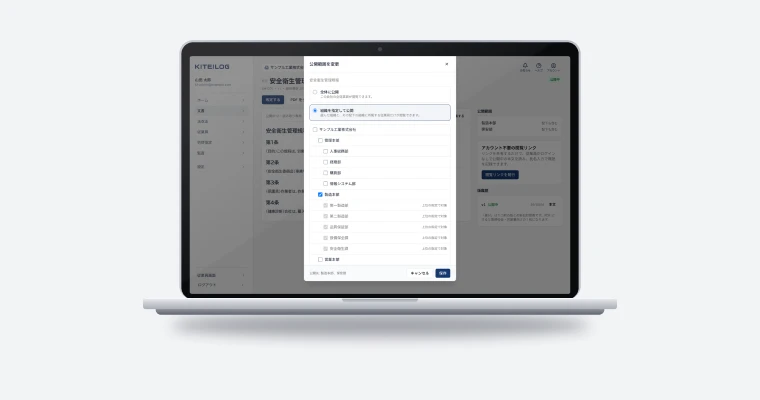
In Kiteilog, a draft amendment can be sent for review, moved through approval stages in order and then published, all within one system. Because the approval record stays tied to the rule version, it is easy to confirm later who approved which content. That was the deciding factor.
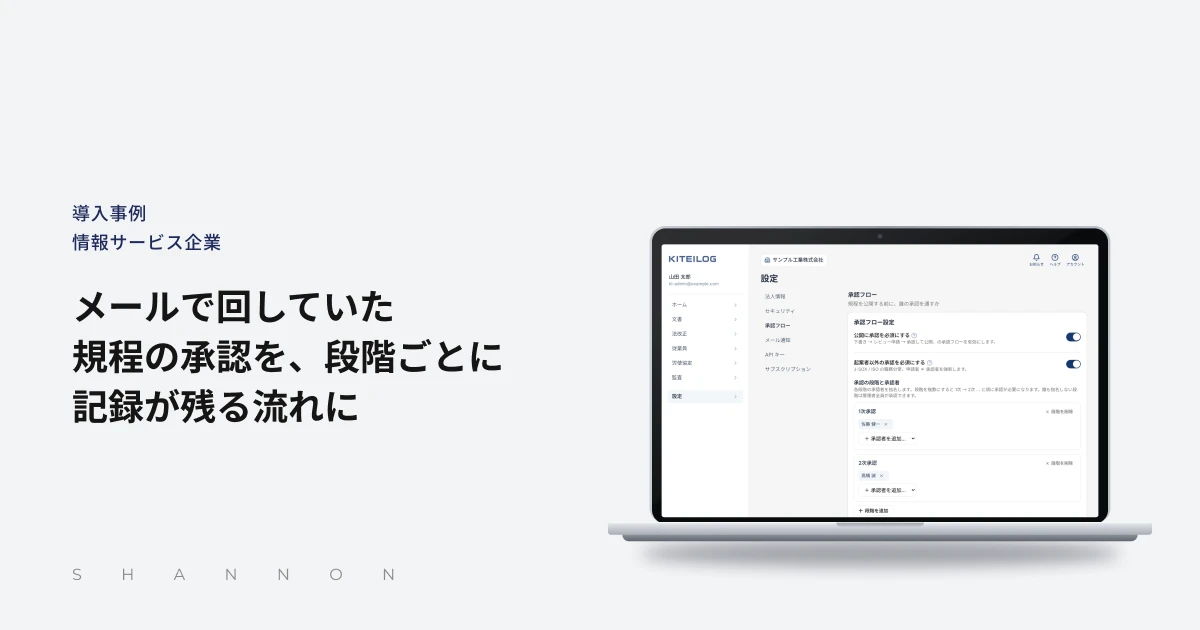
Equally important was the ability to configure approval stages to match the company’s actual sign-off chain, for example a department head, then the administrative department, then final approval. The company could keep its existing approval rules largely as they were.
Starting with HR rules
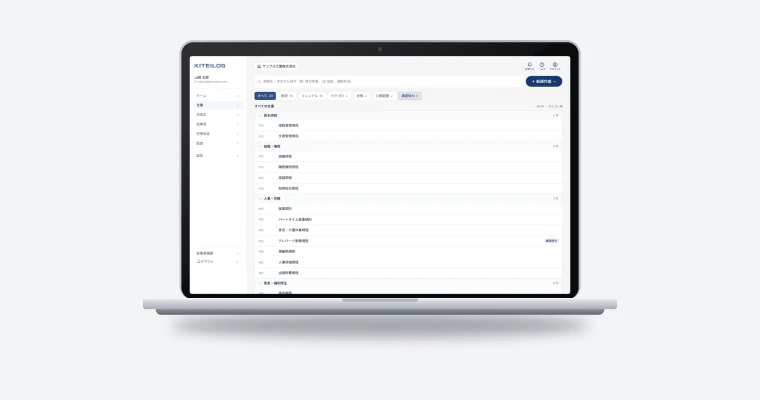
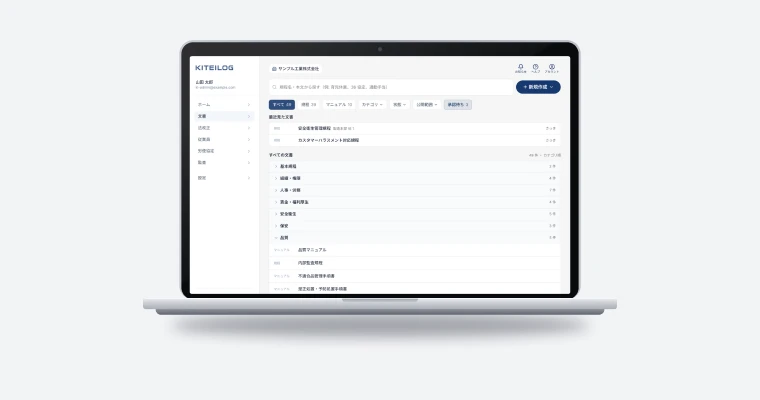
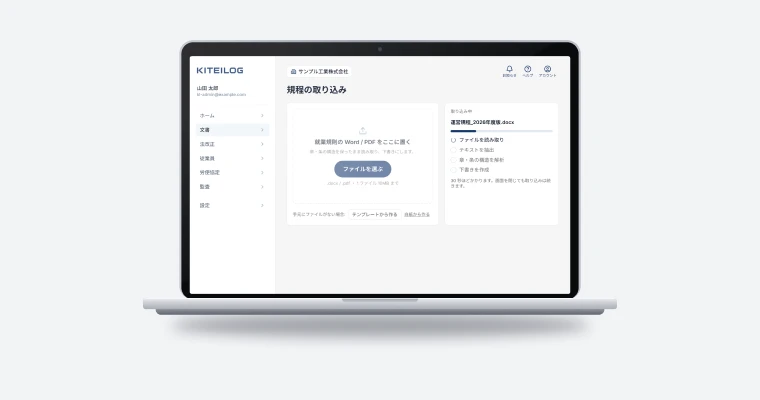
The rollout began with HR rules, where the number of approvers and the frequency of amendments were highest. The existing files for pay, travel expenses, telework and other rules were read in with the AI import, keeping their structure, and the responsible department checked them against the originals.
Next, approval stages were set up. The approvers for HR rules and their order were mapped out and reproduced in Kiteilog. Approvers walked through receiving a review request and approving it using an actual draft.
Operations started with three administrators. Registering rules, configuring stages and drafting amendments can be shared among them, so no single person carries the load, and work continues when one of them is away. Passkey sign-in is available, which reduces the burden of managing passwords and suited a company that cares about the security of the systems that hold its rules.
During the transition, amendments already in progress by email were finished by email, and every new amendment was started in Kiteilog. The switchover date was announced in advance, and from then on all approval requests were sent from Kiteilog. Approvers were told not only how to use it but also that approvals recorded there would serve directly as evidence for reviews and audits, which helped them accept the change.
Checking related provisions with the law check before amending
HR rules are closely tied to labor law. Working hours and cost-sharing in telework, or wage payment rules in pay regulations, are areas where legal changes often call for a review.
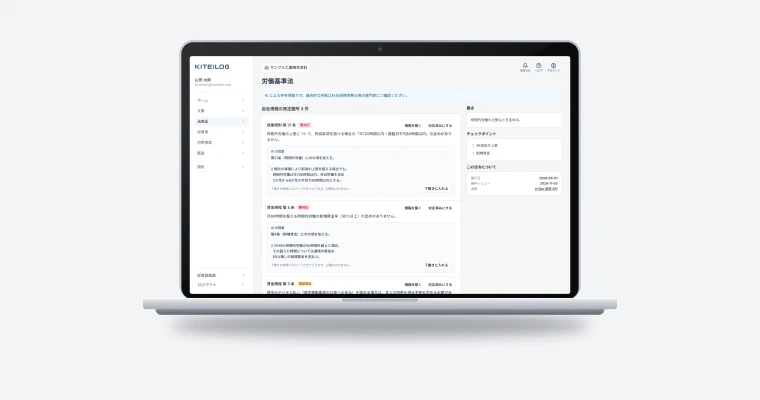
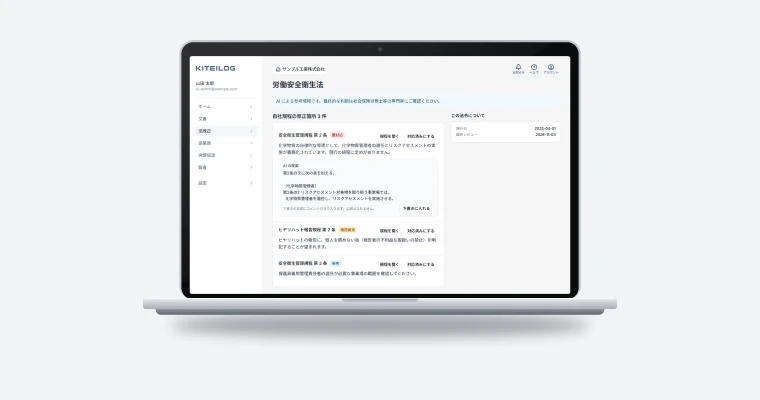
Before drafting an amendment, the company now uses the Kiteilog law check to examine the related provisions against current law and recent amendments, and only then starts the draft.
The results serve as input to the review. Final decisions are made internally, but having the starting points identified makes it easier to narrow the scope, and approvers can understand the background of an amendment before checking it. Building the law check into the procedure also means the review no longer depends on one HR specialist’s knowledge and is carried out the same way each time.
Approval records kept with every version
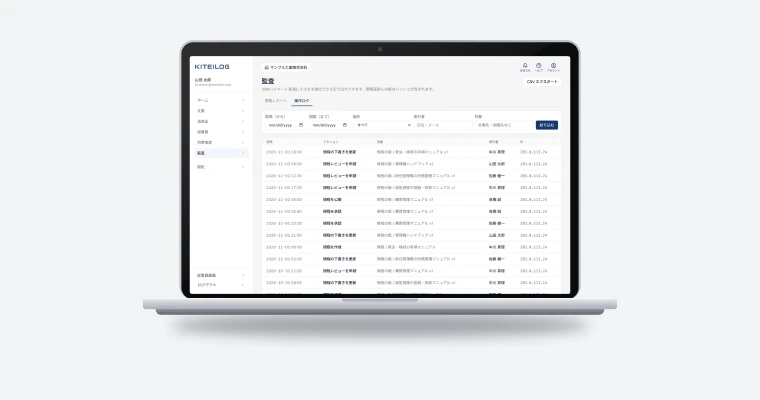
Review requests, staged approvals and publishing now all happen in Kiteilog. Each approval is recorded on the draft, and a draft that clears every stage is published as a new version. Because records are kept per version, the company can see who approved at which stage even for past amendments.
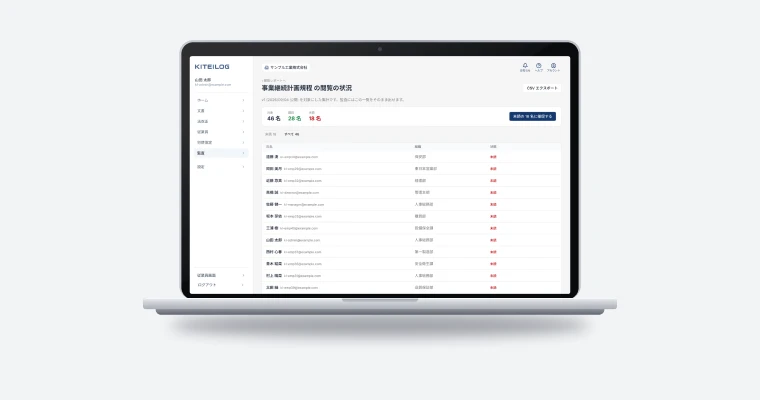
Progress is visible on screen. A list shows which stage each draft has reached, so stalled drafts are spotted early and approvers can be prompted. There is no need to ask about status by email, and amendments can be planned toward their effective dates.
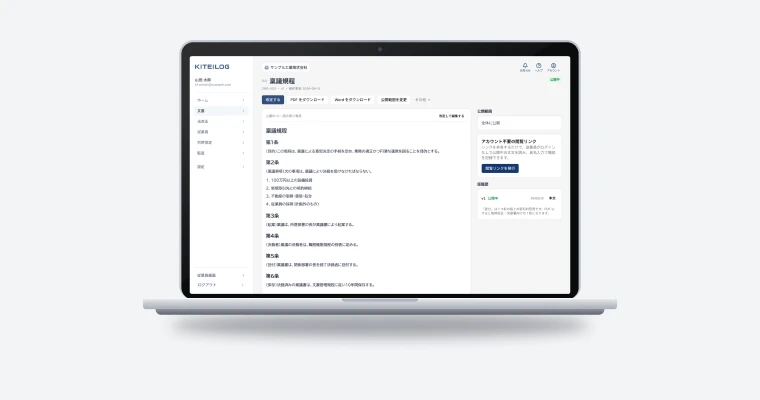
Preparing for reviews and audits is changing too. Instead of hunting through old email, the company can present approval history as rule versions and their approval records. When a client asks for a copy of a rule, it is exported to Word.
Approvers find the work lighter. Requests arrive in Kiteilog, they read the draft on the spot and approve it, with no attachments to open and no doubt about which version they are approving. Requests for changes stay attached to the same draft. The three administrators share drafting and progress tracking on the same screen, with less need for handover messages.
Extending the flow beyond HR rules
The company plans to extend the approval flow it built for HR rules to rules on information security and operational management. Where approvers or stages differ by type of rule, each flow will be configured to match.
As the range of rules grows, so will the number of approvers and combinations of stages. Drawing on the experience with HR rules, the company will organize how stages are designed and how approvers are briefed, and roll the approach out in the same way. By managing all rules in one system and recording approvals consistently, it aims to make audit readiness part of everyday operations and to standardize rule management so that anyone can confirm the history of an approval in the same way.
Key features
- Rule-file import (AI)
- Approval stages
- Review and approval
- Law check
- Word export