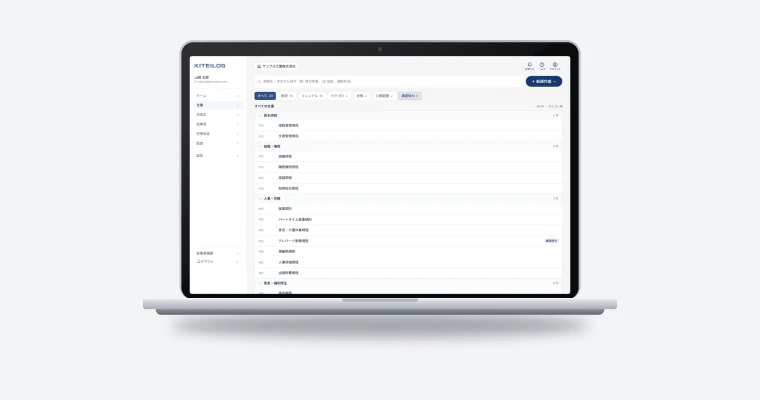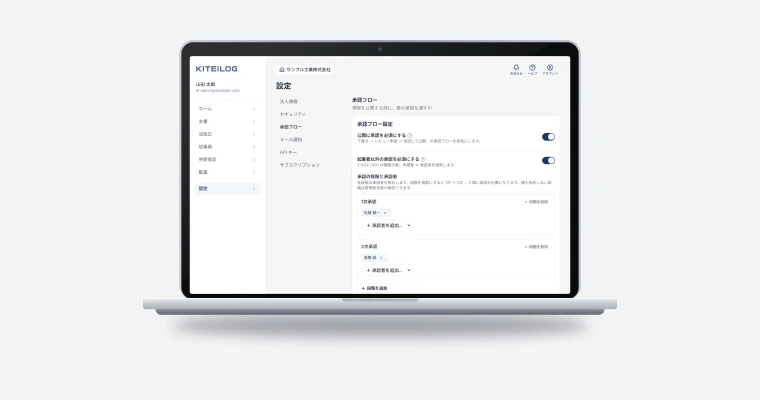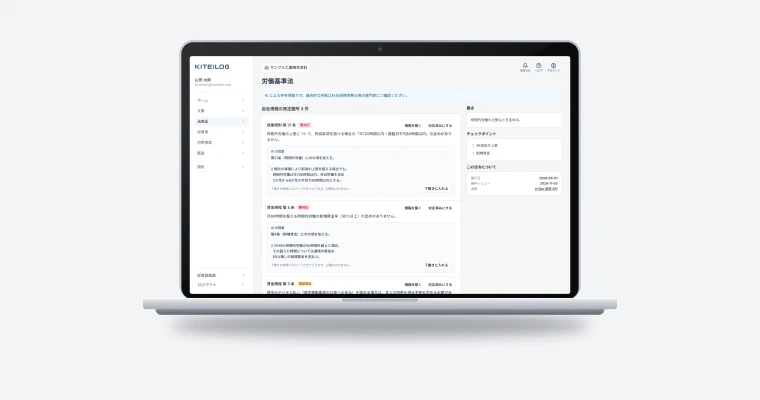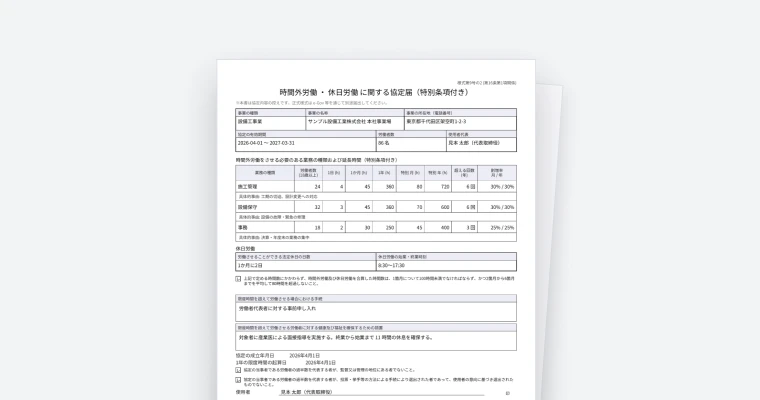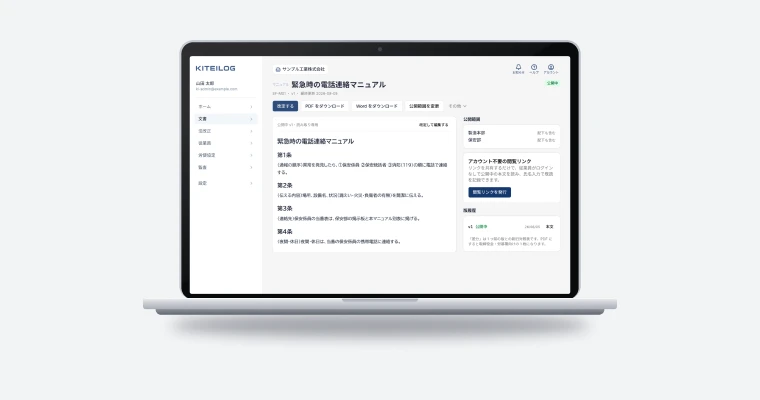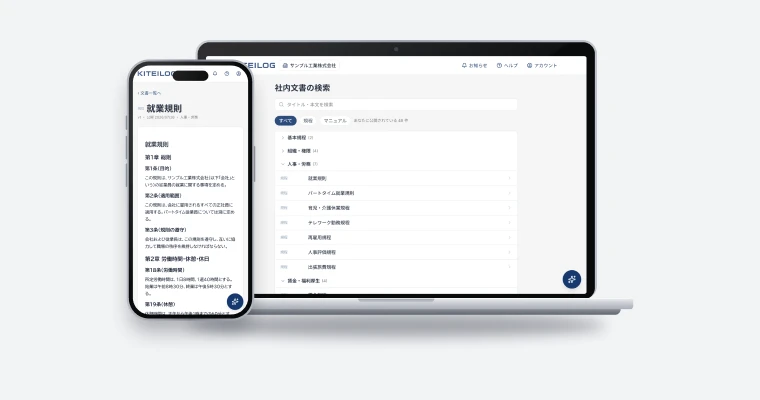
The company publishes its health-and-safety and business-continuity (BCP) rules and confirms that employees have read them. Amendments are shown in comparison tables, and outside parties receive rules through share links.
Challenges before adoption
- No way to confirm whether employees had read an amended rule
- Change summaries rebuilt by hand for every amendment
- Few ways to get current rules to contractors and other outside parties
Results after adoption
- Read confirmation shows how far each published rule has reached
- Comparison tables exported at each amendment show exactly what changed
- Share links and PDF export cover outside parties and on-site notices
| Customer | A manufacturer |
|---|---|
| Product | Kiteilog |
| Adopted | October 2026 |
This company is a manufacturer that machines and assembles parts and products in its factory. Many processes use machinery, and shift workers and contractors’ staff working on site all share the same floor.
On a factory floor, the rules that prevent accidents and the rules that keep the business running after a disaster or equipment failure must reach every person who works there. In October 2026 the company adopted Kiteilog and changed how it communicates its health-and-safety management rules and its business continuity (BCP) rules. This is how it moved from simply distributing rules to confirming that they had been read.
Why safety and continuity rules must reach everyone on the floor
Manufacturing sites have many potential causes of accidents: rotating machinery, heavy loads, high-temperature equipment. Under the Industrial Safety and Health Act employers must set up a safety and health management system, and the company’s health-and-safety rules define that system and the rules for work.
Defining rules is not enough. Work procedures, protective equipment and how to report abnormalities only matter when every worker knows them and follows them every day.
The same applies to the BCP rules. When an earthquake, flood, epidemic or major equipment failure occurs, employees need to know in advance who decides what and in which order recovery proceeds. For a manufacturer responsible for supply to its customers, continuity planning also affects their trust.
Both sets of rules are revised as equipment is renewed, processes change, laws are amended or lessons are learned from incidents. Amendments are not rare, and communicating each one accurately had become a key task for the department in charge of safety and health. Yet there was no way to confirm how far each announcement had actually reached, including to newly assigned or mid-career employees.
Notice boards and circulation sheets that could not show who had read a rule
Previously, an amended rule was printed and posted on the site notice board, and supervisors were asked to circulate it. They explained the change at morning meetings and collected stamps on a circulation sheet.
The status of the announcement was unknown until the sheets came back. In shift-based workplaces everyone was never at the same morning meeting, and supervisors had to check individually whether people on leave or away had been told.
A stamp on the sheet could not show whether someone had read the rule or only heard a verbal summary. Safety rules must be understood accurately, and not knowing whether communication had become a formality was a serious concern. BCP rules were especially hard to judge, because their content is needed only in an emergency.
Storing and retrieving the sheets was also a burden. Records were scattered on paper across workplaces, and building a picture of one amendment meant collecting and matching sheets from each. When outside reviews or customers asked about safety training and communication, the company could not quickly show who had been told and when.
Change summaries rebuilt by hand every time
Another problem was the material used to explain amendments. Staff created a document placing the old and new provisions side by side, by hand, for every amendment.
The more provisions changed, the longer this took, and any revision to the draft meant redoing it. Manual work also risked omitting a change or leaving outdated wording. The same material was used both for internal approval and for informing employees, so its accuracy mattered.
Outside parties were another issue. Contractors working on site must follow the safety rules, and the company printed or emailed the latest rules after each amendment, with no way to check whether the copy in their hands was current. Giving outsiders accounts in an internal system was not realistic, so a way to deliver just the necessary rules was needed.
Publishing and read confirmation in one system
The company compared several approaches, such as placing rules in a shared folder and announcing them, or asking employees to confirm reading through a general-purpose survey tool.
A shared folder cannot show who opened a rule. Adding a survey tool would split the rule text and the confirmation records between two systems and require new questions for each amendment. Neither could manage amendments and communication end to end. Building a system in-house was considered, but the safety department had no capacity to develop or maintain one.
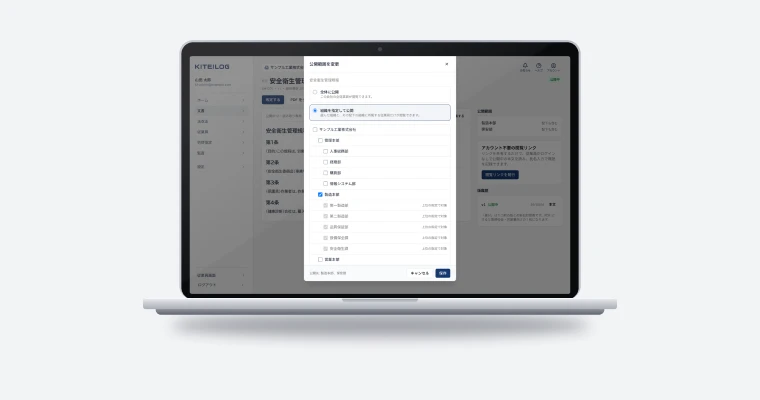
Kiteilog lets the company confirm that employees have read each published rule. The text and the read records live in the same place, and when a new version is published, reading can be confirmed again for that version. Handling publication and confirmation in one flow was the main reason for the choice.
The comparison table export was another deciding factor: a table of old and new provisions is produced from the amendment itself and can be used as is. Share links for outside parties and PDF export for notices and handouts also fit the company’s practices.
Starting with the safety and BCP rules
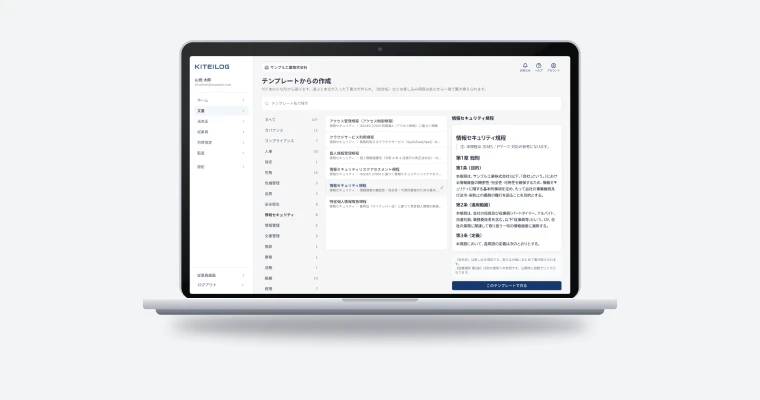
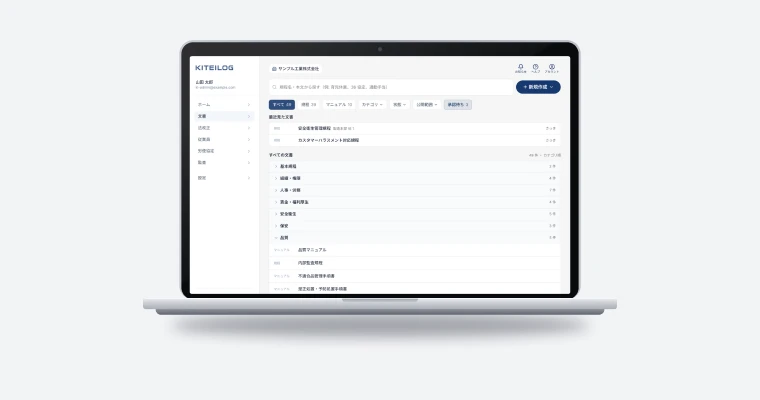
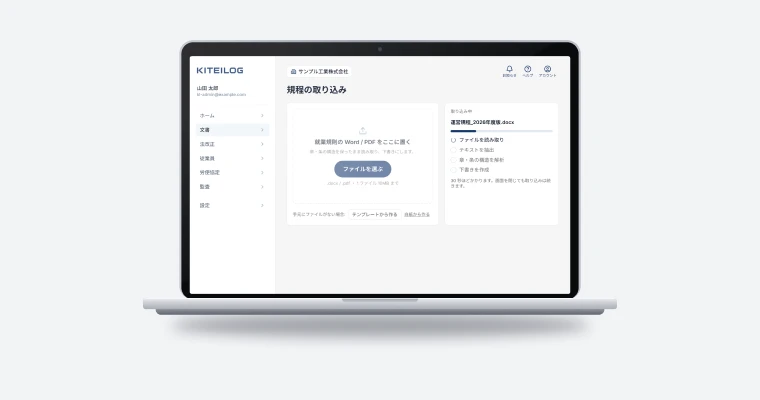
The rollout began with the health-and-safety management rules and the BCP rules, where reliable communication mattered most. Existing files were read in with the AI import, keeping their structure, and the safety department checked them against the originals before publishing.
Before publication, supervisors were briefed on the new approach: rules are published in Kiteilog, employees open and read them there, and the safety department can see who has read them. Supervisors were asked to pass this on in their workplaces.
Employees received a short guide to finding and reading rules, given at morning meetings and team briefings, with separate sessions for each shift. For workers who rarely use a computer, supervisors demonstrated the steps in person.
During the transition, the notice board stayed in use, since many workers learn of rules there. The board kept that role, while formal confirmation moved to Kiteilog’s read records. The posted copies are PDFs exported from Kiteilog.
What read confirmation and comparison tables changed
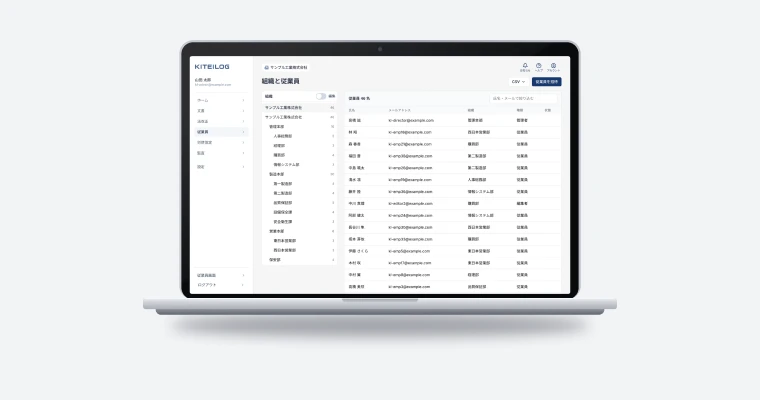
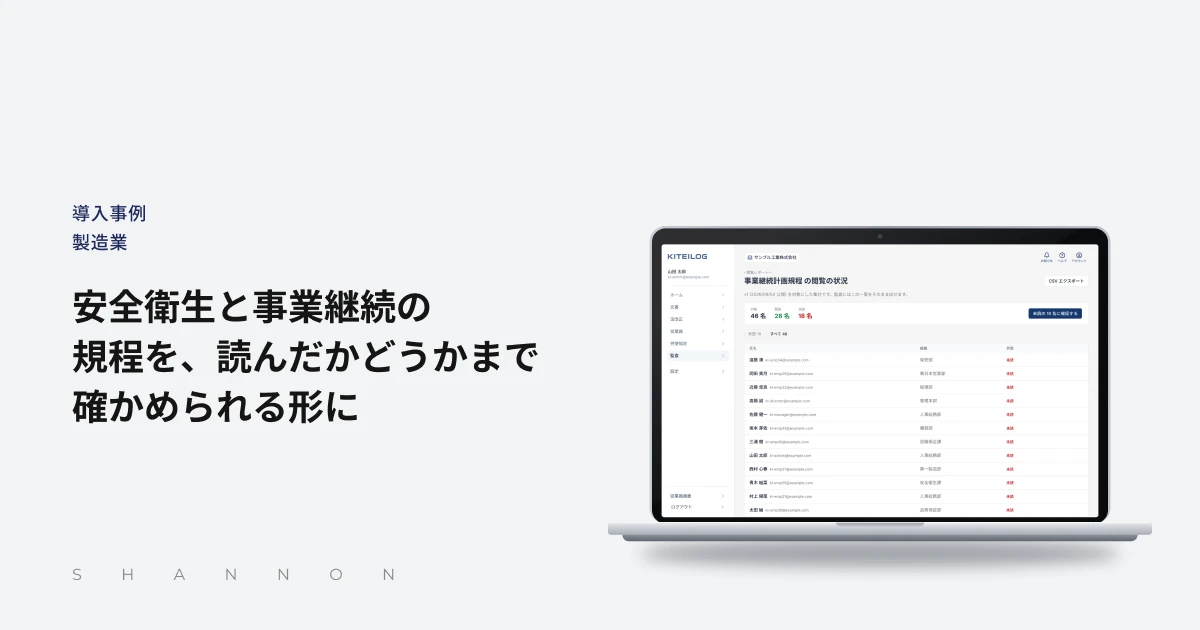
The company can now see who has read each published rule. The safety department checks the status rule by rule and asks supervisors to follow up where people have not yet read it. There is no waiting for sheets to come back, and newly assigned employees can be checked the same way.
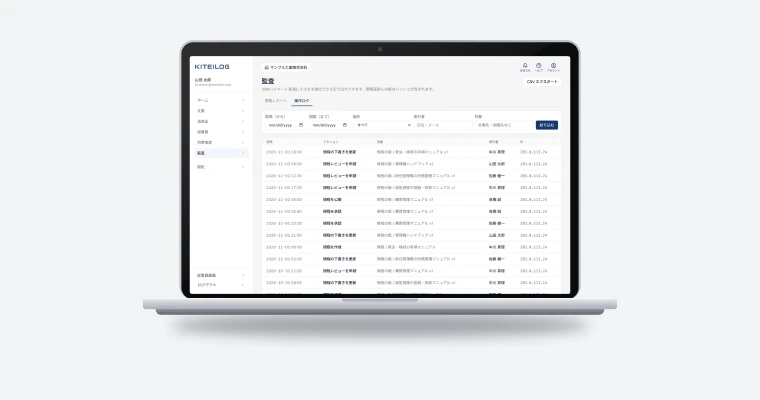
The read records also serve as a record of communication. Who read which published rule, and when, is kept in the system, so sheets no longer need to be gathered and matched. Supervisors no longer circulate sheets and collect stamps; they only need to speak to the people who have not yet read the rule.
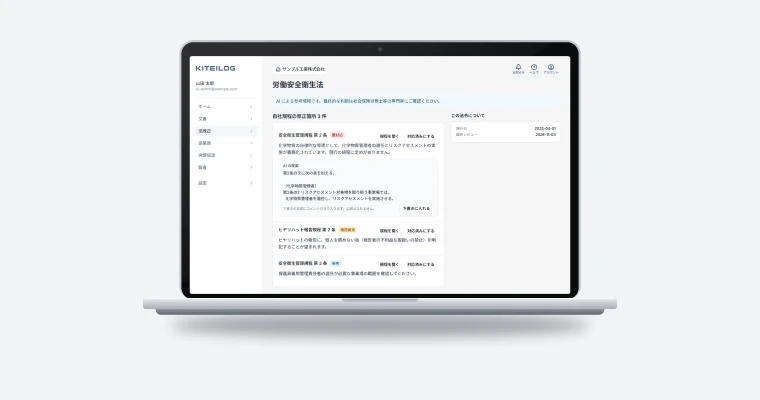
At each amendment, a comparison table exported from Kiteilog shows exactly what changed. Employees see the old and new provisions side by side and understand the change quickly. The manual work has gone, along with the risk of omissions and outdated wording, and approvers and employees look at the same table.
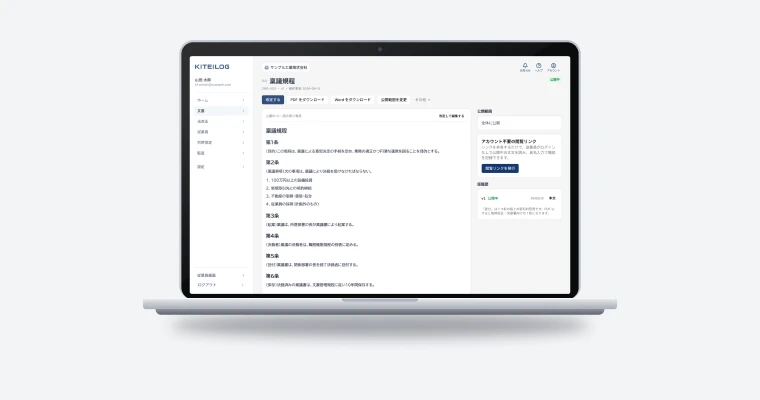
Contractors and other outside parties view the rules through share links. Outdated paper copies no longer linger, and after an amendment the same link shows the current content. Where paper is needed for posting or handouts, exported PDFs are used.
Extending the approach to other rules and manuals
The company plans to extend this approach to other rules and to manuals. Work procedures and equipment handling documents are among the many that must reach every worker.
Rather than communicating each rule differently, using the same flow of publication, read confirmation, amendment and comparison table will be easier to understand for employees and the safety department alike. For the BCP rules, the company is also considering asking employees to reread them alongside drills, so that read confirmation supports everyday preparedness. Its goal is that the rules protecting safety and business continuity always reach, and are understood by, everyone on site.
Key features
- Rule-file import (AI)
- Publishing and read confirmation
- Share links
- Amendments and comparison tables
- PDF export