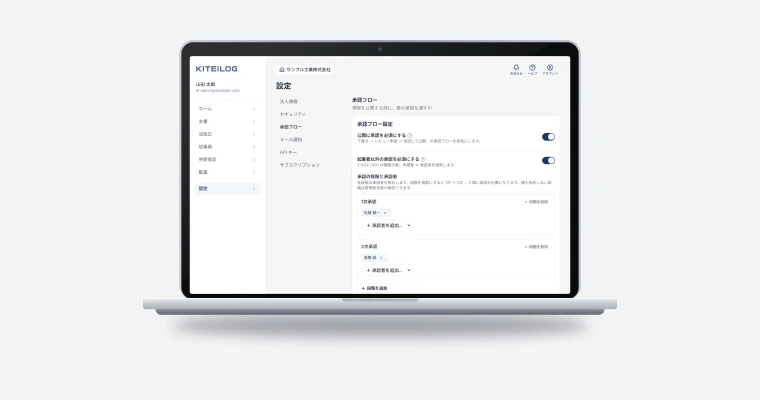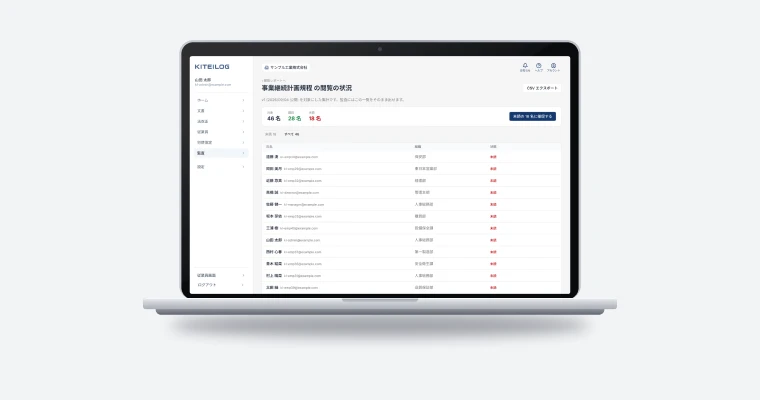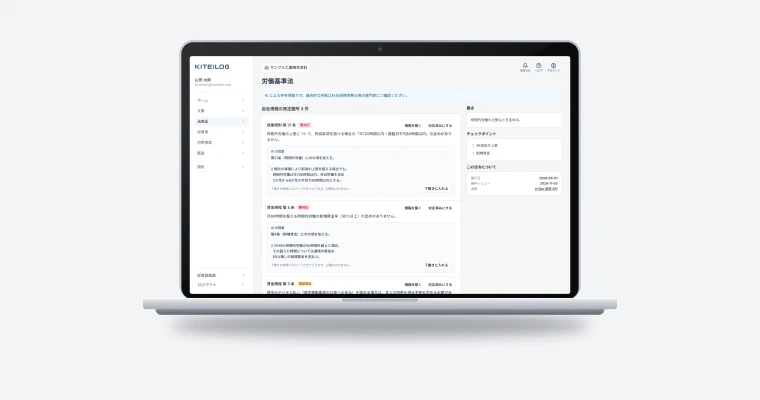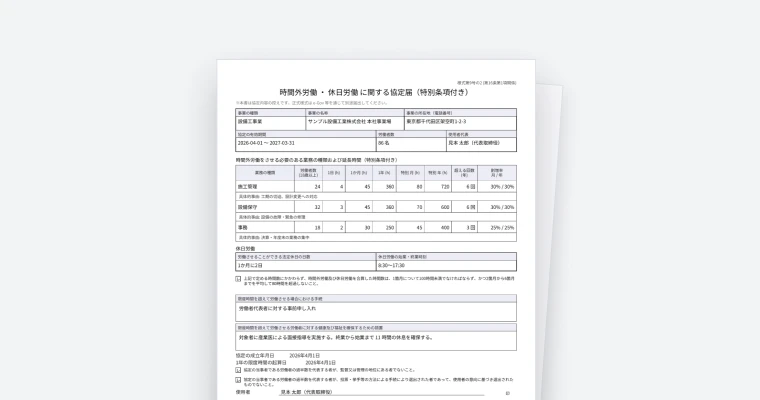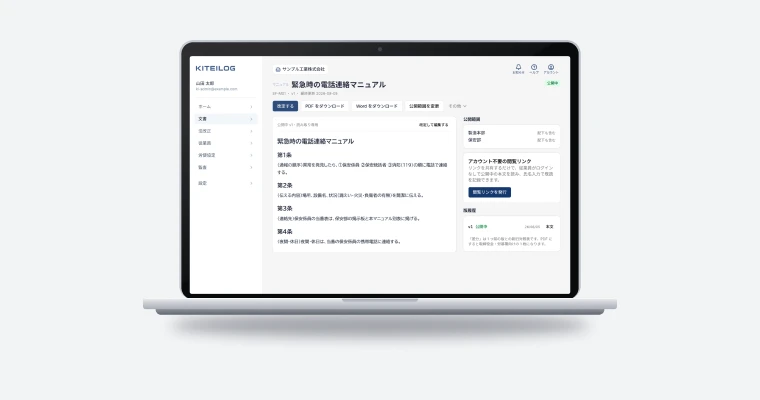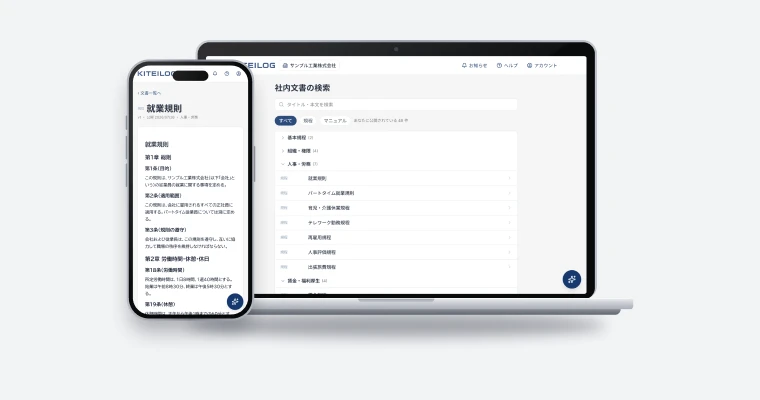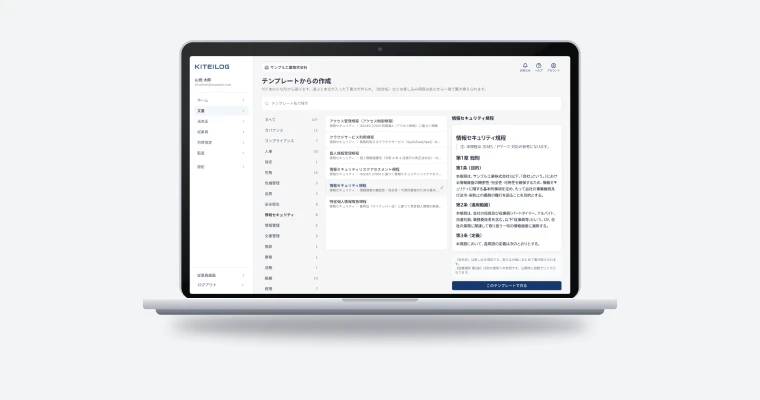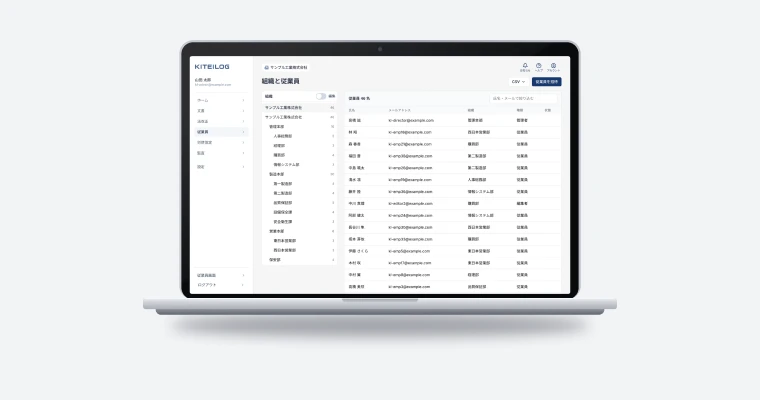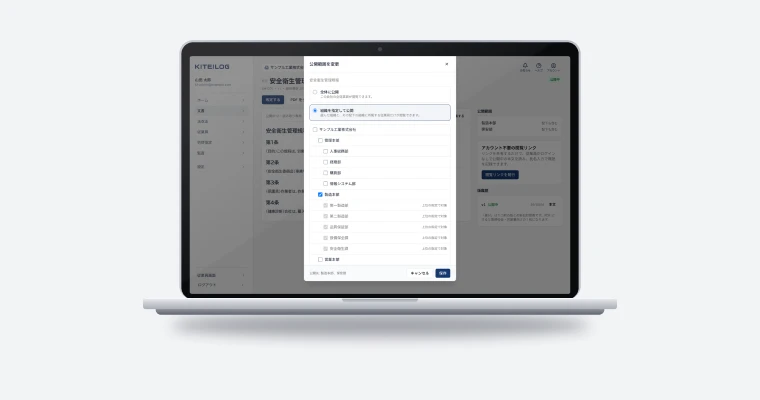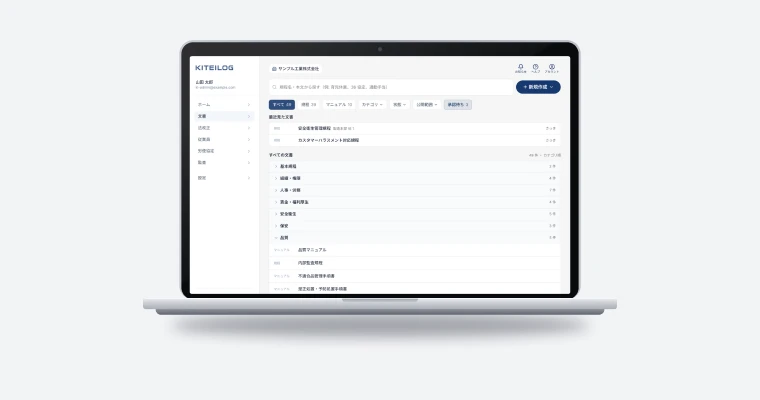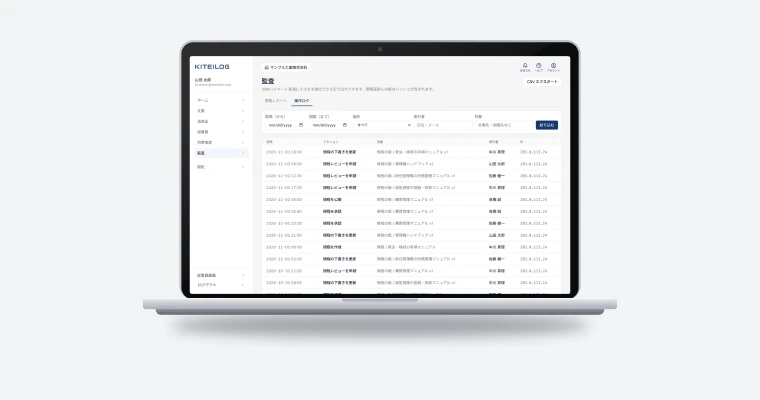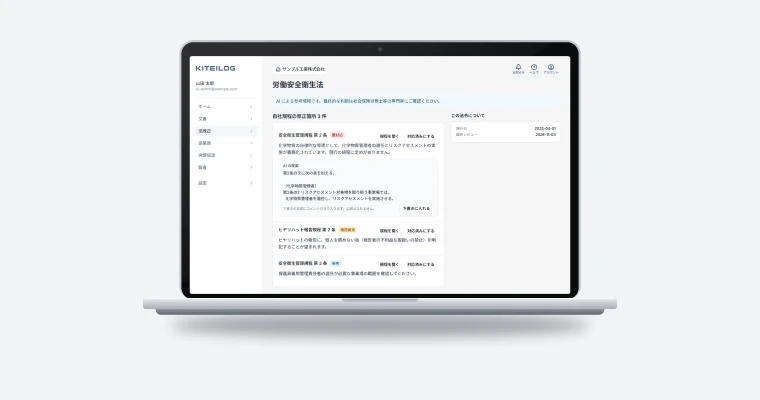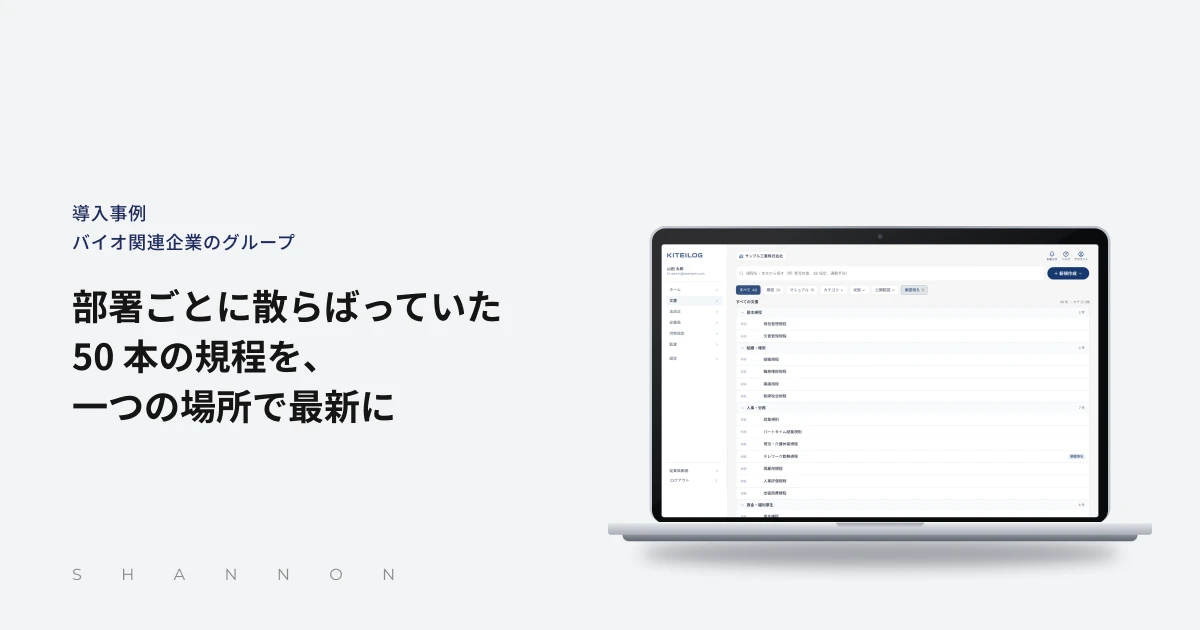
The group imported its 50 internal rules from existing files, organized them into 14 categories and published them, so the current version can be checked in one place.
Challenges before adoption
- 50 rule files kept by individual departments, with no clear current version
- Amendment history recorded differently for each document
- No single place where the whole group could see the same rules
Results after adoption
- All 50 rules imported within a few days and sorted into 14 categories
- The published current version is now shared across the group
- Amendments are recorded as versions and handled in Kiteilog
| Customer | A group of biotech-related companies |
|---|---|
| Product | Kiteilog |
| Adopted | September 2026 |
This group is made up of several companies engaged in biotech-related research and development and in the manufacture and sale of products. Research, manufacturing, quality assurance and administrative departments each play their part, and the group runs its business under a common set of internal rules.
As the business grew, so did the number of rules, reaching some 50 in total. Each department kept its rules as document files, and simply confirming which version was current had become a chore. In September 2026 the group adopted Kiteilog, a rules and manuals management service, to bring its rules under central management. This is the story of how the scattered rules were brought into one place.
Why rules must be exact in a group that does research and manufacturing
In biotech-related work, many tasks follow documented procedures: research protocols, handling of samples and chemicals, control of manufacturing processes, quality records. Business partners and regulators may ask to confirm that internal rules are properly documented and applied in their correct version.
Alongside these operating procedures sit the internal rules that support how the organization is run: authority and approvals, document control, information handling, personnel and pay. Many of them apply in common to every company in the group.
Rules are not written once and left alone. They are amended as the organization changes, as laws are revised and as work is reviewed. The larger the group, the more often amendments happen and the more departments are involved.
The group had long recognized that its internal rules were not managed as carefully as its research and manufacturing procedures. Reaching 50 rules made the need to rethink the system plain. The administrative department’s workload also mattered: inquiries about rules, collecting draft amendments and redistributing files all grow with the number of rules, and much depended on the experience of the people handling them.
Rule files copied again with every amendment
Until then, each department stored its rule files in shared folders or on its own computers. To amend a rule, staff copied the existing file, edited it and saved it with a date or version number in the file name.
Every amendment added another file with a similar name. Drafts sometimes sat next to final files, and staff had to judge from file names or modification dates which one was current. To check another department’s rule, they would ask that department to send the latest file, and copies sent by email could remain in circulation after the rule changed.
Each document also recorded its history differently. Some had a history appended at the end, some were tracked in a separate list, and some had no history at all, so tracing earlier versions was difficult.
In principle every company in the group referred to the same rules, but in practice the files at hand could differ by company or department. Making sure everyone could see where the current version was had become a precondition for applying the rules correctly.
Choosing a way to move 50 rules without retyping them
The group considered several approaches, including reorganizing the shared folders with a general-purpose document management tool and tracking rules and versions in a spreadsheet.
A document management tool could tidy up where files were kept, but it could not record amendments at the level of individual provisions or manage the amendment process. A spreadsheet list would depend on manual updates and risk repeating the same problems. Building a system in-house was also possible, but development and maintenance would take people and time out of proportion to the goal.
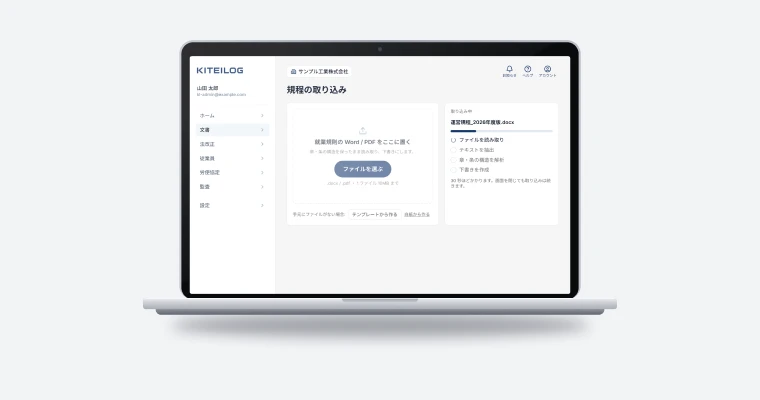
The main reason for choosing Kiteilog was its AI import, which reads existing Word and PDF rule files and registers them with their chapter and article structure intact. The group would not need to retype 50 rules, keeping the migration manageable.
The group also valued being able to organize rules by category, to have published rules managed as versions, and to run amendments within the system. Export to Word, the format used for submission and distribution, meant daily work would not have to change much.
Fifty rules imported in a few days and sorted into 14 categories
The rollout began by gathering the rule files from each department and settling which file was the current version of each rule. Where several similar files existed, the responsible department confirmed which was official.
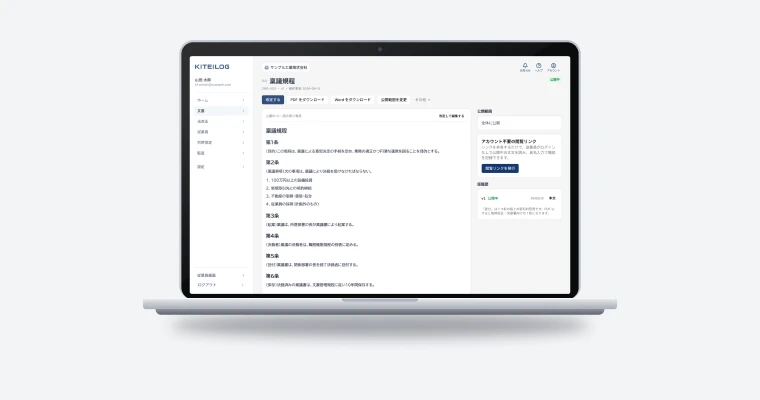
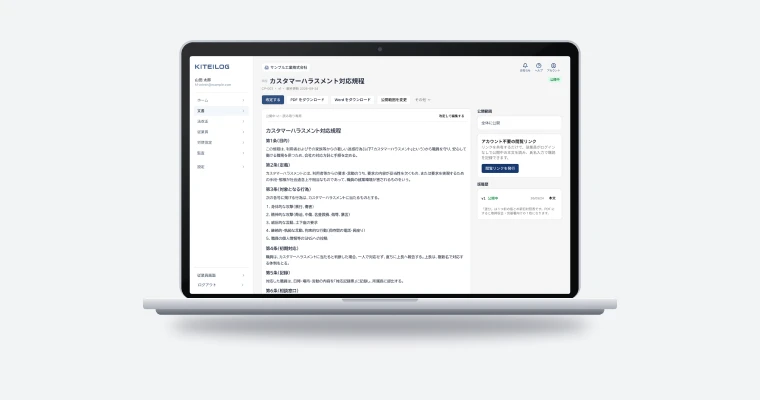
The confirmed files were then read in with the AI import. The import finished within a few days, and all 50 rules were registered with their structure preserved. Each responsible department checked the imported text against the original.
In parallel, the group designed its categories. Based on the nature of each rule, such as general affairs, personnel, accounting, information management, quality and safety, it set up 14 categories and assigned every rule to one of them.
Rules were published as soon as their check was complete, and most are now published in Kiteilog. During the transition the old files remained accessible, and Kiteilog became the official reference rule by rule, which avoided confusion. Once publishing was well advanced, the administrative department informed each department that rules should now be looked up in Kiteilog and that files left in the shared folders would no longer be updated.
What mattered in checking imports and designing categories
The group’s top priority during migration was making sure the imported text matched the original. Every word in a rule can carry meaning, and the content must not change in the move. After each import, the responsible department reviewed the article and paragraph breaks and the handling of appended tables and supplementary provisions before publishing.
Because the AI import made data entry quick, there was ample time for this review. Retyping everything would have doubled the work of entry and checking and stretched the migration out considerably.
For categories, the group chose to organize by the nature of each rule rather than by department name, so that categories would not have to be rearranged every time the organization changed. Rules shared across group companies sit in the same category regardless of which department owns them, so users in every company look in the same place. The figure of 14 categories came from balancing these considerations: too few would crowd each category, too many would make it hard to know where to look.
Everyone seeing the same version
The published rules can now be viewed in the same version across the group. To check a rule, staff open Kiteilog, browse to the category and reach the current version. There is no longer any need to ask the owning department for the latest file.
The 14 categories also make the overall picture easier to grasp. Staff can see at a glance which rules exist in which area, which helps when drafting a new rule or reviewing related ones.
When a printed copy is needed for a business partner or for internal distribution, the rule is exported to Word. Word export is used often, and being able to produce documents in the familiar format helped the transition go smoothly.
Amendments are recorded as versions, so earlier versions and the history of changes can be traced. The scattered ways of recording history have been replaced by a single consistent one. The administrative department spends less time sending files and redistributing amended rules, and can explain the state of its rule management clearly when partners ask.
Next: standardizing amendments across the group
With registration and publishing well under way, the group has started handling amendments in Kiteilog: a draft is created, its content checked and then published as a new version. Changes to each provision remain in the version record, so there is no need to keep a separate history list.
Until now each department amended rules in its own way. Running amendments in the same system lets the group align the process itself and leave behind the habit of copying files.
The group plans to extend this amendment process to all its companies and standardize rule management. Its aim is that, however many rules there are, anyone can see where the current version is and how it came to be.
Key features
- Rule-file import (AI)
- Organizing by category
- Publishing and versioning
- Amendment workflow
- Word export