The company registered its safety rules, health-and-safety rules and office phone-handling manual in one system, and publishes each to a defined audience.
Challenges before adoption
- Safety rules and operating manuals were managed separately
- It was unclear which employees each document was meant for
- The scope of communication and the latest version were hard to track
Results after adoption
- Rules and manuals published in one system, each to a set audience
- Clear ownership of each document and an easily tracked scope
- Amendments under way, with the law check used to confirm provisions
| Customer | An energy company |
|---|---|
| Product | Kiteilog |
| Adopted | August 2026 |
This energy company operates and maintains facilities involved in supplying energy. Its workforce includes technical staff engaged in safety work and office staff who handle calls from customers and business partners. Protecting the safety of facilities and answering everyday inquiries are very different jobs, and the rules and procedures each group must follow differ accordingly.
The company set out to manage its statutory rules, such as its safety rules and health-and-safety rules, together with operating manuals such as the office phone-handling manual, and to make sure each document reaches the employees who need it. What follows describes the path from adopting Kiteilog to beginning its first amendments.
Statutory safety rules alongside operating procedures
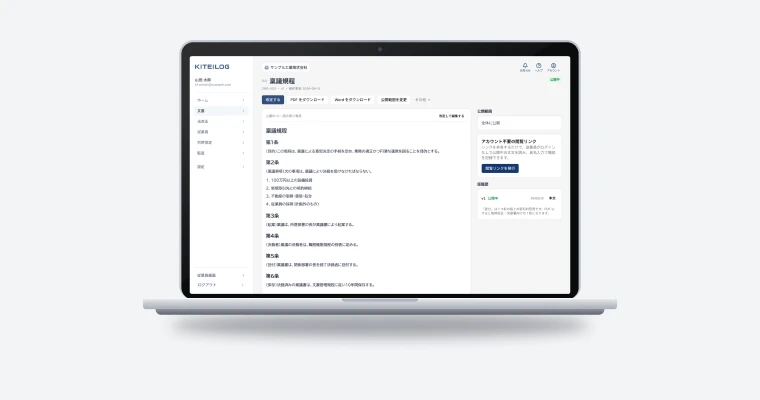
Businesses that handle energy are required under the relevant laws to establish safety rules that set out how construction, maintenance and operation of their facilities are kept safe. Under the Industrial Safety and Health Act, they must also define the structure and procedures for protecting employees’ safety and health. The company built its rules around these two pillars: its safety rules and its health-and-safety management rules.
Having such rules on paper is not enough. Employees engaged in safety work need to understand them and follow them in daily work, and when a rule changes, that change must reach the people it affects.
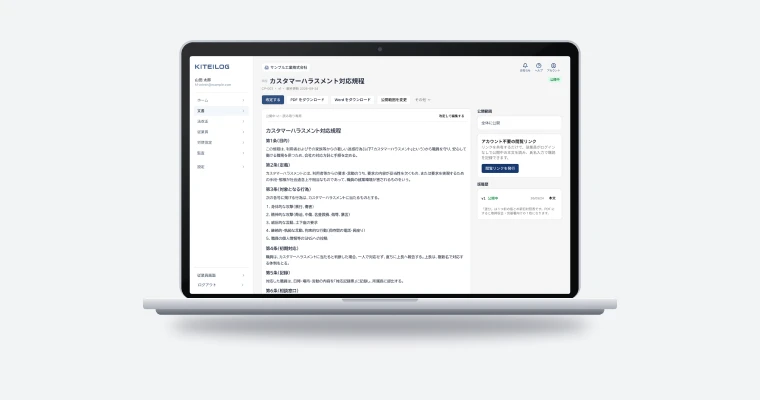
The company’s work also depends on operating manuals that are not required by law, such as procedures for answering the office phone and routing inquiries. These are essential to maintaining the quality of customer service.
Safety and health-and-safety rules were kept by the safety department, while operating manuals were kept by office staff, each as separate files in separate places. Because the documents differed in nature, so did the people who looked after them and the way they were stored.
Unclear audiences for each document
The first problem with this separation was the scope of communication. The safety rules were meant for employees in safety work, and the phone-handling manual for office staff who answer calls, but the files themselves did not make clear whom each document was for.
Without a clear audience, a document could reach people it did not concern while missing those who needed it. For safety and health-and-safety rules in particular, being unable to confirm afterwards who had received them was a weak point when explaining the company’s safety arrangements.
Versions were another issue. Each review produced an updated file, but which file was current, and what had changed when, depended on file names and individual memory. There was no way to notice an outdated copy in an employee’s hands.
As the number of documents grew, so did the effort of managing them, and it became hard to see at a glance which documents the company actually had. The safety department and the office each handled documents in their own way, and there was no shared view of the whole.
Choosing one system for both rules and manuals
The company compared several approaches, including continuing with shared folders and using a general-purpose document management tool. Both would have required considerable workarounds to publish each document to a defined audience and track its versions.
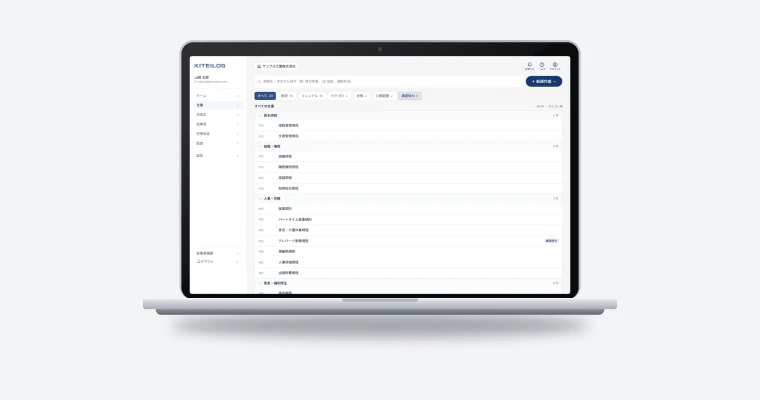
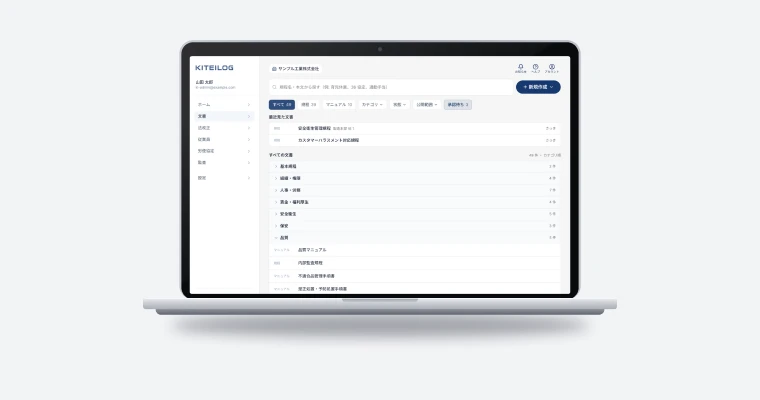
One reason for choosing Kiteilog was that rules and manuals can be managed in the same system, with manuals registered as a separate kind. Statutory rules and operating manuals could be kept distinct yet handled on one screen.
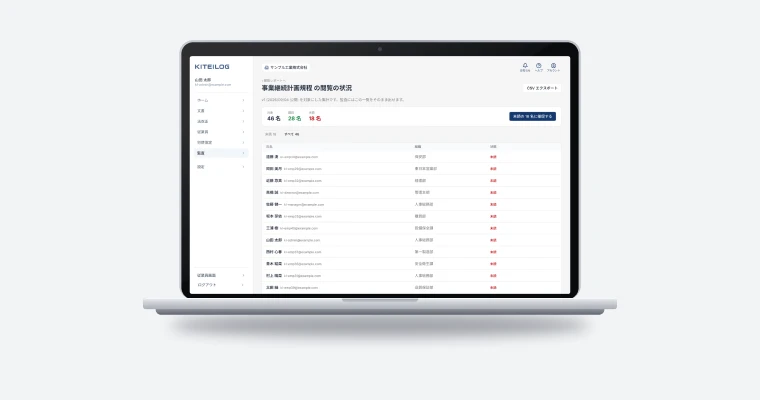
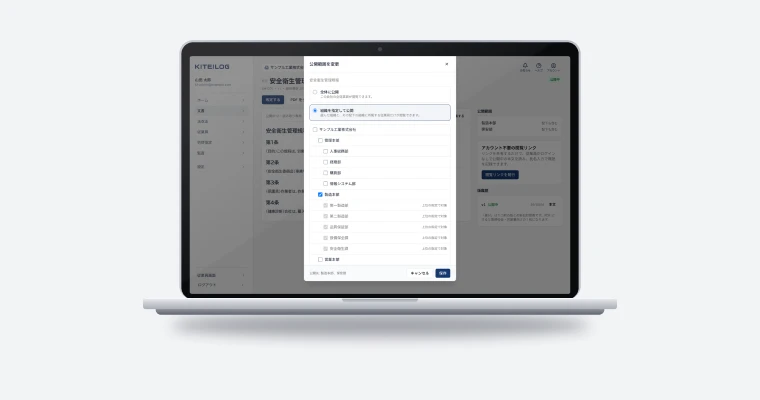
Another reason was the ability to set an audience for each document when publishing, so that only the relevant employees receive it and the scope of communication is recorded in the system.
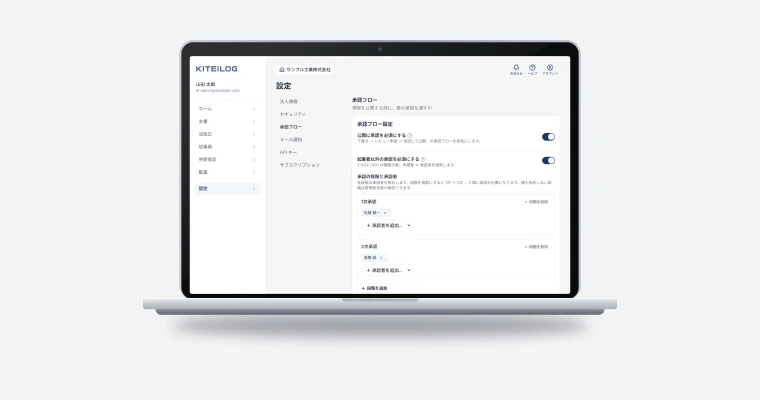
The amendment workflow, versioning and law check were also decisive. Safety rules must be reviewed as laws change and facilities evolve, and keeping the history as versions while checking the relevant provisions is essential for long-term use.
Importing existing files across two accounts
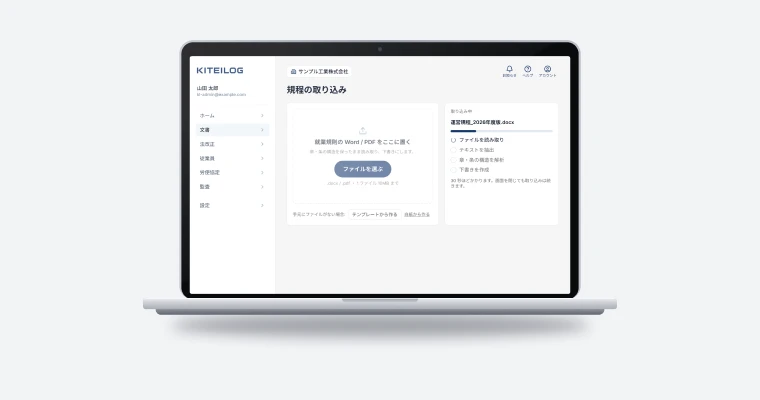
The company first imported its existing rules and manuals, including the safety rules, health-and-safety rules, work rules and the office phone-handling manual, using Kiteilog’s AI import to read the articles and heading structure from the original files.
Imported documents were not published as-is. Staff checked each one, confirming that article numbers and heading levels matched the originals and correcting any errors before preparing to publish.
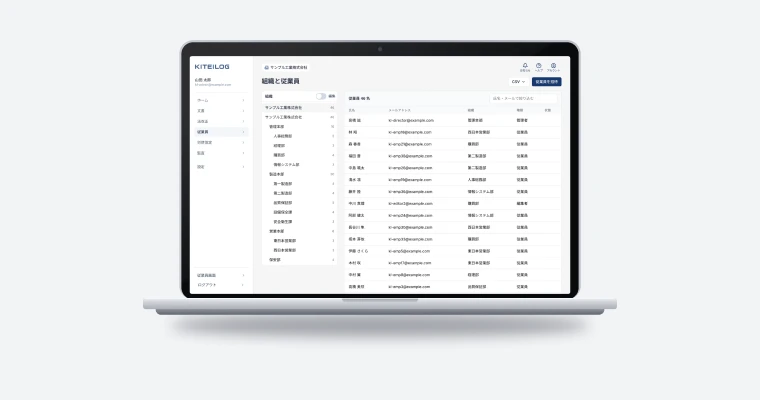
The company uses two accounts, dividing them according to the scope of management. This allows each person responsible to focus on the documents they look after.
During the transition, the old files remained available while documents were published in Kiteilog one by one, as their review was completed, so employees could adjust without confusion. Rather than switching everything at once, the company moved document by document, keeping both employees and administrators on familiar ground during the change.
Deciding the audience for each document
The step that took the most time was sorting out the audience for each document: the safety rules for employees in safety work, the phone-handling manual for office staff who answer calls, and the work rules for all employees.
This put into words a scope of communication that had previously been implicit, and confirming it among the people responsible became an opportunity to revisit the purpose of each document.
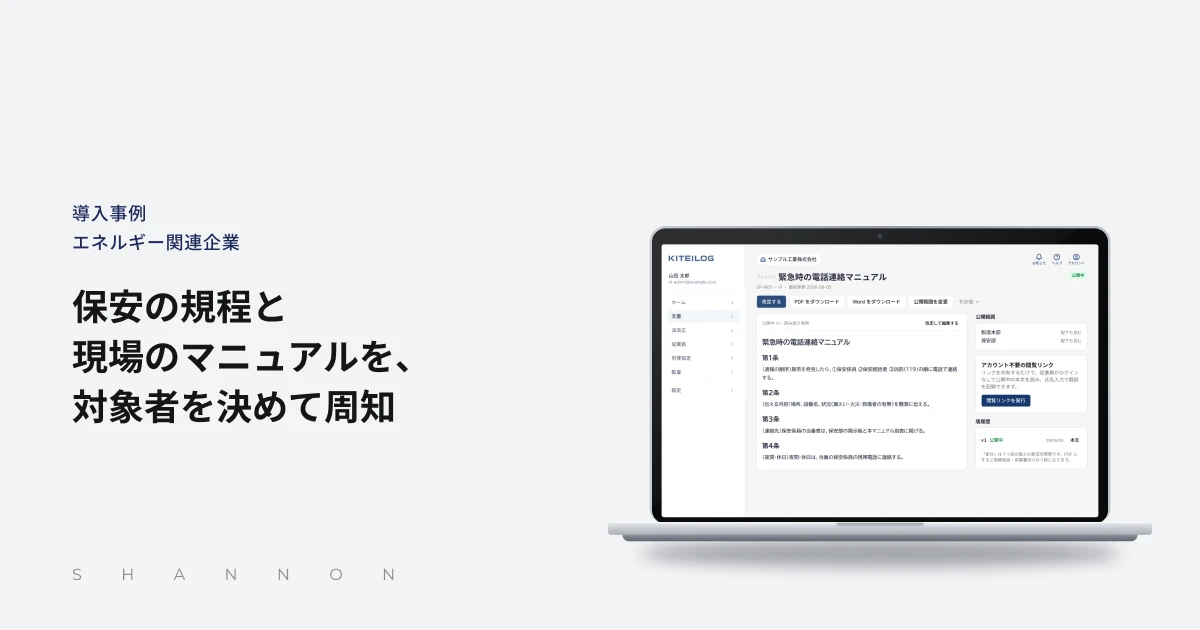
Documents with an audience set are published to those employees, who can find what concerns them without wading through what does not. Administrators can see on screen which documents have been communicated to which groups.
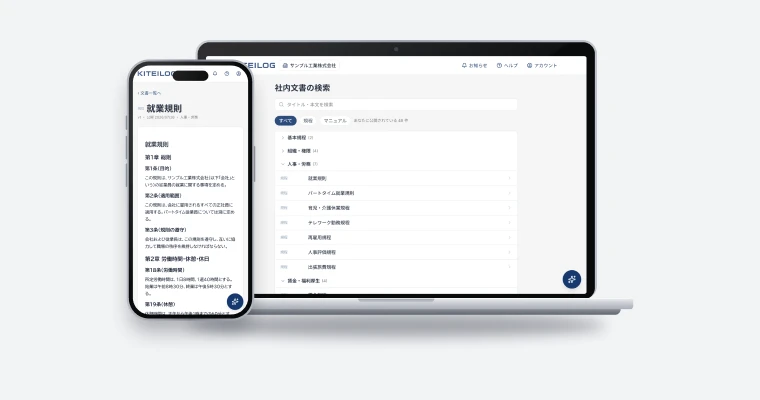
With rules and manuals published in the same place, employees now have one place to look, whether they are checking a safety rule or an office procedure. The same steps lead to the latest content in either case.
Documents reviewed at different paces, updated through one workflow
Once in operation, the company noticed how differently its documents are reviewed. The phone-handling manual is updated fairly often as inquiries and contacts change, while the safety rules must be revised carefully because they concern laws and the safety structure.
In the past this difference showed up as different update methods: manuals were edited directly, while rules were circulated within the department before being replaced. It was not possible to see across documents who had changed what, and when.
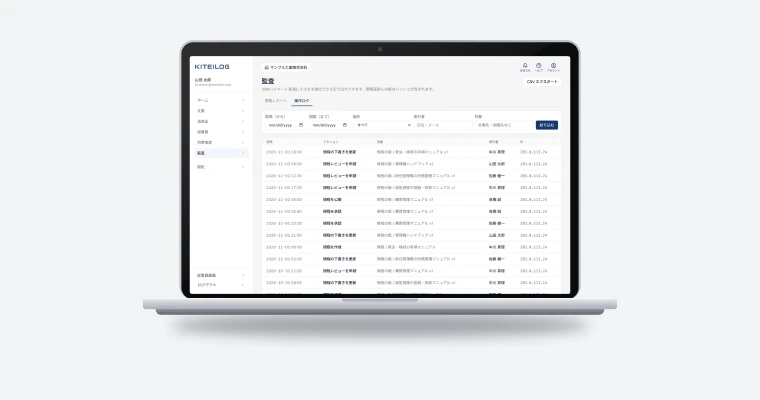
In Kiteilog, rules and manuals follow the same flow: draft, review, publish and keep as a new version. The time spent on review differs, but the procedure is the same. When a different person takes over a document, the same steps can be handed on, making document management less dependent on any one person’s habits.
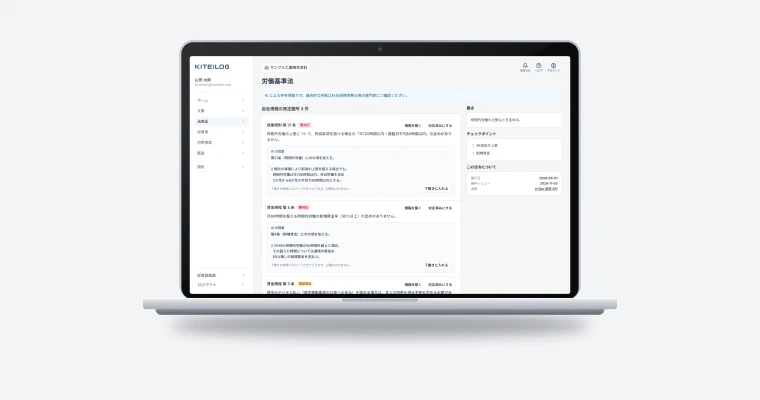
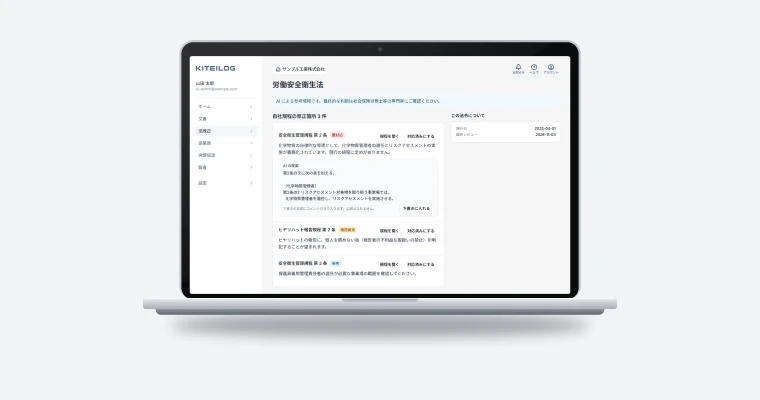
For the safety and health-and-safety rules, the company uses the law check, which compares articles with current law and amendments and highlights points to review. Staff use these as a starting point to examine the relevant provisions and decide whether a change is needed.
Amended rules are recorded as versions, so the history can be traced, and amended rules are published after confirming their audience so that changes reach the employees concerned.
Extending central management to more manuals
With rules and manuals published in one system, each to a defined audience, it is now clear whom each document is for, the scope of communication is easier to track, and there is no doubt about which version is current.
The company plans to register its other operating manuals in turn and manage all its documents centrally, from safety rules to office procedures.
New manuals will follow the same steps: import, review, set the audience, then publish. Keeping these steps consistent means the scope of communication stays clear as documents grow, and helps standardize document management across departments. The company will also continue to run the amendment workflow and law check so that the rules supporting its safety arrangements always reach the right employees in their latest form.
Key features
- Rule and manual import (AI)
- Audience settings
- Publishing and versioning
- Amendment workflow
- Law check