The company drafted its full set of information-security, personal-data and confidentiality rules from templates on its first day, and publishes each once its review is complete.
Challenges before adoption
- More requests from business partners to explain information management
- Heavy research into laws and guidelines to write many rules from scratch
- No settled way to manage and amend a large number of rules
Results after adoption
- Nine rules drafted from templates on the first day
- Content confirmed with the law check and published as ready
- PDF and Word exports used internally and for business partners
| Customer | A company setting up information-security rules |
|---|---|
| Product | Kiteilog |
| Adopted | October 2026 |
This company handles information entrusted by business partners and personal data of customers. As its business grew, it was increasingly asked, when starting or renewing contracts, to show in writing how it manages information.
It decided to put in place a complete set of information-security rules that could serve both internal operations and explanations to partners. This is how it used templates to tackle a demanding task.
Partner reviews that exposed missing rules
When starting a business relationship or taking on outsourced work, companies are now commonly asked about their information management: basic security policy, organization, handling of personal data, management of subcontractors and use of cloud services. Partners sometimes ask for the underlying rules, not just questionnaire answers.
The company followed certain practices in daily work, but most were not documented systematically. Each time, the person in charge wrote an explanation of actual practice, drafting a new document for each review.
As a result, explanations varied by author and by partner, and unwritten practices offered no clear standard for checking compliance internally. Formal rules were needed to show the company’s arrangements on a sound basis.
Information management also involves legal requirements, such as the Act on the Protection of Personal Information and the rules on handling individual numbers under the My Number Act, so consistency with the law had to be confirmed.
Too much to write from scratch
The company needed rules on information security, personal data, individual numbers, confidential information and cloud services, and it also included core rules such as its work rules, travel expense rules and rules concerning officers.
Writing these from scratch meant first researching laws and guidelines, including the security measures required for personal data and individual numbers and the guidance published by public bodies on security and cloud use, then expressing them as articles.
The work fell to someone with other duties. Repeating research, drafting and internal review for each rule, while keeping terms and structure consistent across them, was a heavy burden, and progress was slow. Each rule also had to be checked by others in the company before it could be finalized, adding further rounds of work.
Management after drafting was also a concern. With many rules, it would be hard to keep track of current versions and changes if they were simply stored as files.
Starting from templates and carrying through to management
The company compared options. Commissioning outside experts promised quality but would take time and cost for so many rules. Building rules in spreadsheet or word-processing software from public samples would leave versioning and amendments unsolved.
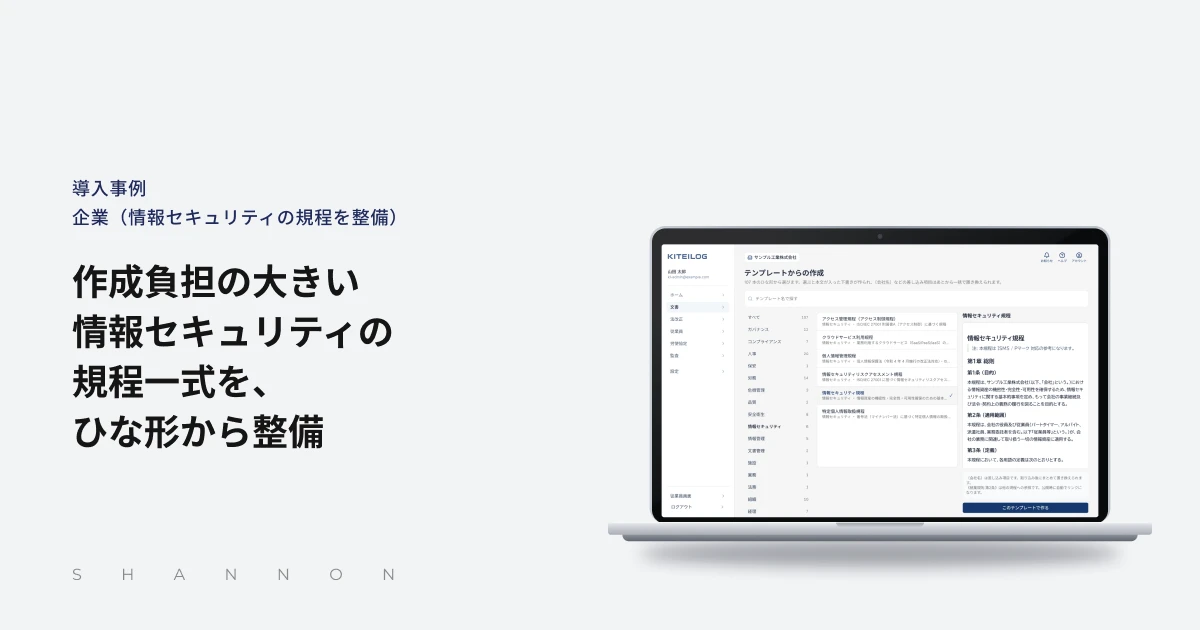
It chose Kiteilog because rules can be drafted from templates and then managed in the same system. Templates provide a basic structure and articles, so the person in charge can focus on adapting them to the company.
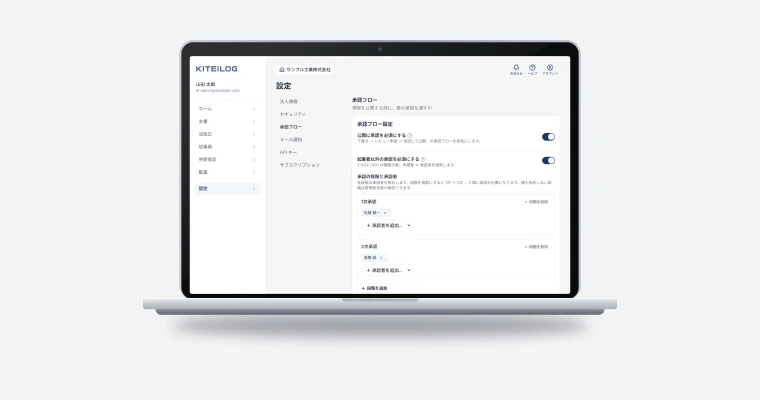
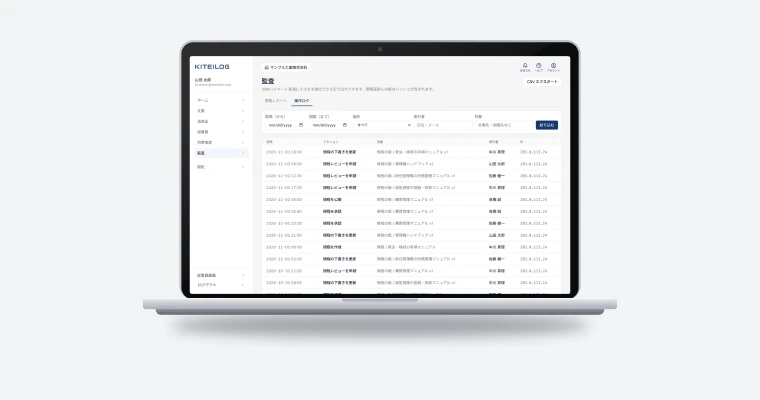
Handling drafting, publishing and amendment in one system was important: drafts are reviewed, published and kept as versions, and amendments follow the same workflow.
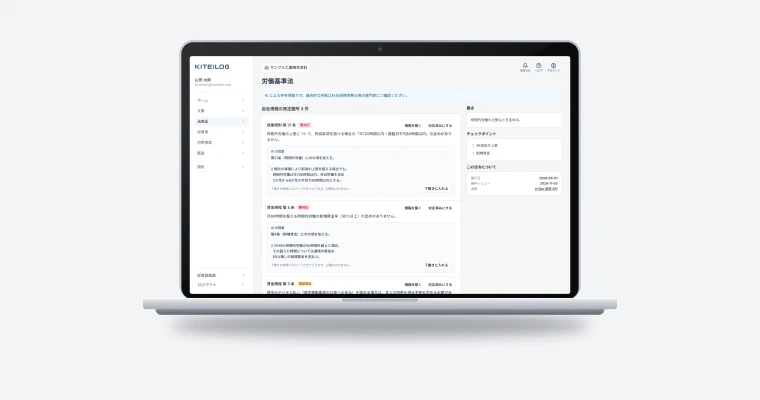
The law check was another deciding factor. Even template-based rules need to be checked against the law once adapted, and being able to compare articles with current law and amendments reassured a team without legal specialists.
Nine drafts on the first day
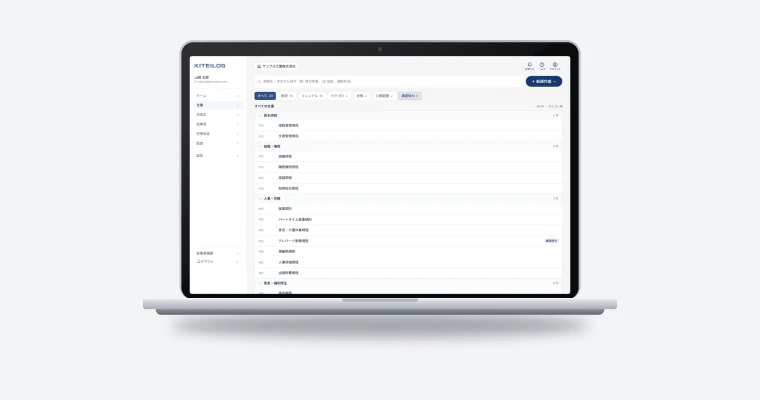
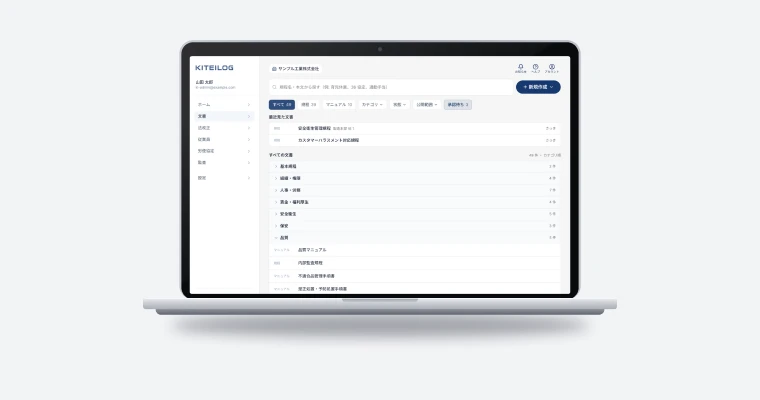
On its first day, the company drafted nine rules from templates, covering information security, personal data, individual numbers, confidential information, cloud services, work rules, travel expenses, officers and more.
Having all the drafts at once gave an early overview of the whole set: which rule covers what, and where rules overlap. Writing them one at a time would have taken much longer to reach that view.
Staff then adapted the articles to actual practice, replacing general wording with the company’s own departments, responsible managers and the scope of cloud services it uses.
They also aligned terms across rules, such as definitions of confidential information and personal data and the titles of responsible managers. Because the templates already shared a structure and style, keeping the rules consistent was easier. The work shifted from writing articles to deciding how the company’s actual arrangements should be expressed within an established framework.
Checking personal-data and individual-number provisions
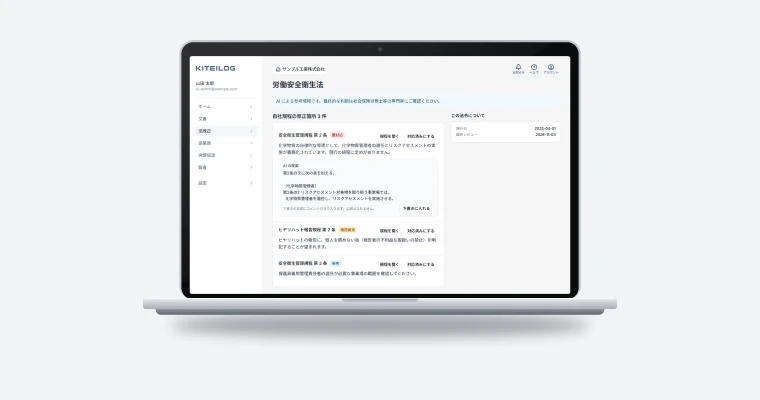
In parallel, the company reviewed the rules with the law check, concentrating on personal data and individual numbers, where legal requirements are extensive.
Each highlighted point was examined against the relevant law, and staff confirmed that adapted wording had not drifted from what the law requires.
Laws continue to change after rules are written, and personal-data legislation has been revised repeatedly. Being able to use the law check for future reviews gives confidence for long-term operation.
For individual numbers, rules need to specify the scope of work, the people involved, and how data is stored and disposed of. Using the highlighted points as a guide, the company re-examined how individual numbers are handled in practice and checked that practice and wording matched, which also prompted a review of everyday administrative procedures.
Securing the console itself
When setting up information-security rules, the system that manages those rules must also be secure. The Kiteilog console is where rules are created, published and amended, and no third party should be able to get in.
The company set up passkey sign-in for the console. Passkeys use credentials stored on the device, so no password is entered, reducing risks such as password reuse and entry on fake sites.
Access control is an important topic in its information-security rules, and applying the same principle to the system that manages them makes the company’s explanation to partners consistent. The company can show not only what its rules say but also that it applies the same thinking to its own tools.
Passkeys were set up before rule drafting began, so the console was protected throughout, including while rules were still in draft.
Publishing as ready, with PDF and Word for submission
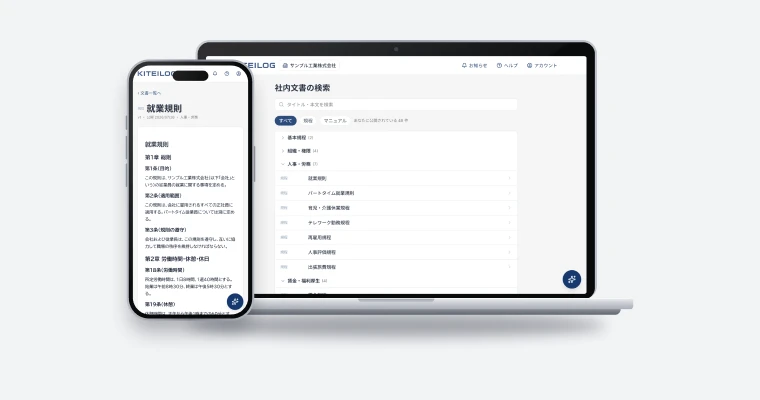
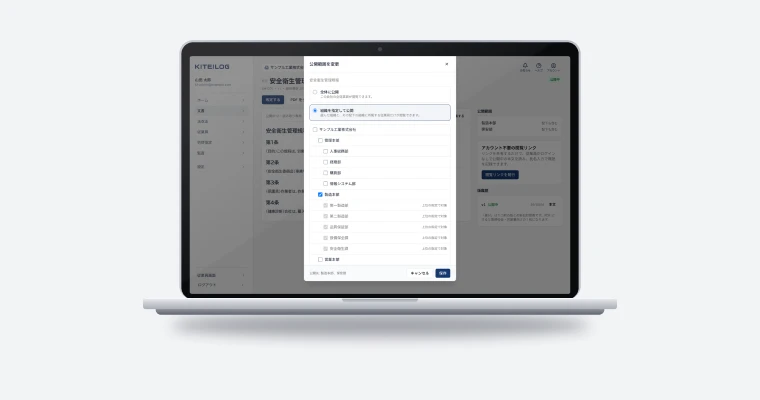
Rules are published as their review is completed, without waiting for the whole set, so internal use could begin early. Published rules are managed as versions, and amendments are handled in the same system.
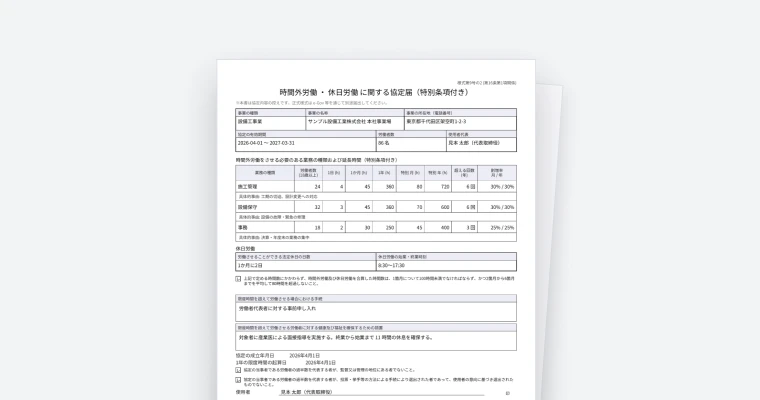
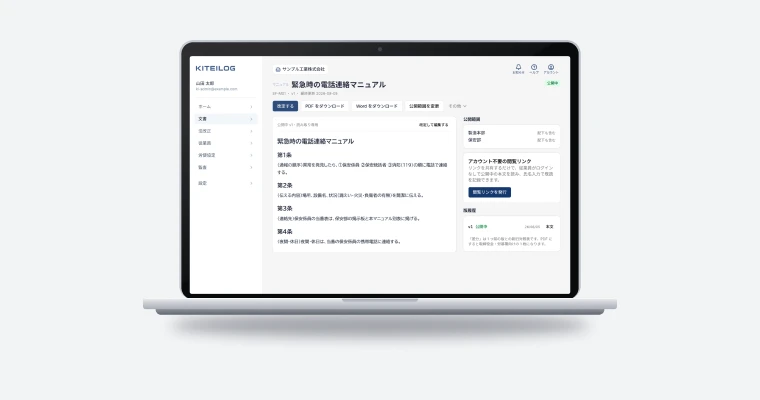
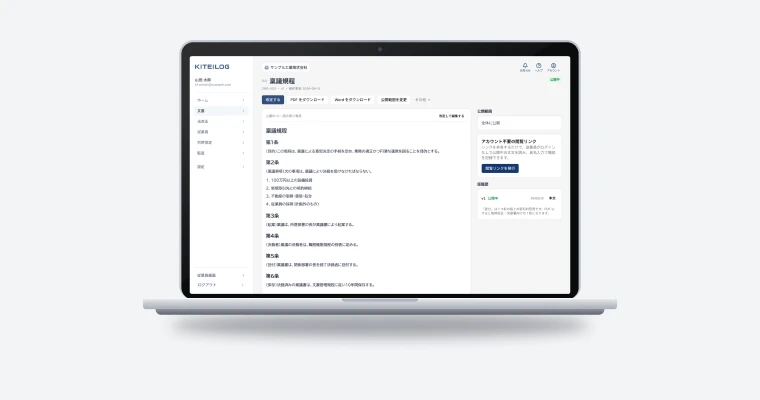
Rules are exported to PDF and Word. PDF exports can be submitted directly when partners request rules, while Word exports are used for internal meetings and further drafting.
Instead of writing a new explanation for each partner, the company now explains its arrangements by pointing to its rules, and answers are consistent across partners. The time once spent preparing explanations from scratch can be spent reviewing and improving the rules themselves.
The company plans to publish all the drafted rules and use them both to inform employees and to support explanations to partners. As laws and the business change, it will create new versions through the amendment workflow and confirm content with the law check.
The aim goes beyond meeting partners’ requests: it is to align how information is handled across the company so that employees work to the same standard. The rules built from templates are the foundation for that.
Key features
- Rule templates
- Law check
- Publishing and versioning
- PDF and Word export
- Passkey sign-in