The company wrote its health-and-safety rules in Kiteilog and publishes them to the employees who work on its construction sites.
Challenges before adoption
- Health-and-safety rules were distributed on paper and reissued after every revision
- Old versions lingered on site, with no way to confirm the latest had arrived
- Employees spread across sites were hard to reach with the same content
Results after adoption
- Rules published to their audience, who can check the latest version
- Amendments recorded as versions, so changes can be traced
- PDF exports used when a paper notice is needed on site
| Customer | A construction company |
|---|---|
| Product | Kiteilog |
| Adopted | October 2026 |
This construction company undertakes building and civil engineering work and runs several sites at once. Most of its employees work on site rather than at head office or branch offices, and the sites and tasks they are assigned to change as projects progress.
To protect the safety and health of site workers, the company has maintained health-and-safety management rules and worked hard to make sure their content reaches everyone. This is how it moved away from paper distribution to writing and publishing the rules in Kiteilog.
Preventing accidents and building a safety structure
Construction carries a higher risk of occupational accidents than many industries, with work at height, heavy machinery and temporary structures. The Industrial Safety and Health Act requires construction businesses to establish safety structures and take measures to prevent hazards.
Preventing accidents depends on every worker understanding and following the safety rules. The company must therefore define its safety and health structure, responsibilities and procedures clearly, and make them known.
The company’s health-and-safety management rules are the backbone of this effort, covering the roles of those responsible, pre-work checks and inspections, and the approach to safety training.
Site workers range from long-serving staff to recent hires, and the company believed everyone needed access to the same rules whenever they needed them. Its challenge lay less in the content of the rules than in getting them to the people on site.
Paper copies reissued after every revision
The rules were printed and distributed, and after each revision the new version was printed again and handed out through site managers. A bound copy was kept in each site office.
Sites are scattered and far from head office, so getting revised rules to each one meant preparing copies per site and handing them out when managers visited or workers stopped by the office. Reaching every site took time, and the delay grew with the number of active sites.
Each revision meant printing the full text, counting and sorting copies, even when only a few articles had changed.
When a project ended, workers moved to other sites, and when and how newly assigned workers received the rules was left to each manager.
As safety work continues, opportunities to revise the rules increase, for example when new methods or machinery are introduced or procedures are improved based on site experience. With every revision bringing a round of distribution, the effort itself risked discouraging revisions.
Old versions on site and uncertainty about what had arrived
The company was particularly concerned about old versions remaining in site offices or in workers’ hands, where outdated procedures could be taken as current.
Small differences in safety procedures can matter for preventing accidents. When pre-work checks or reporting steps change, the revised content must reach everyone.
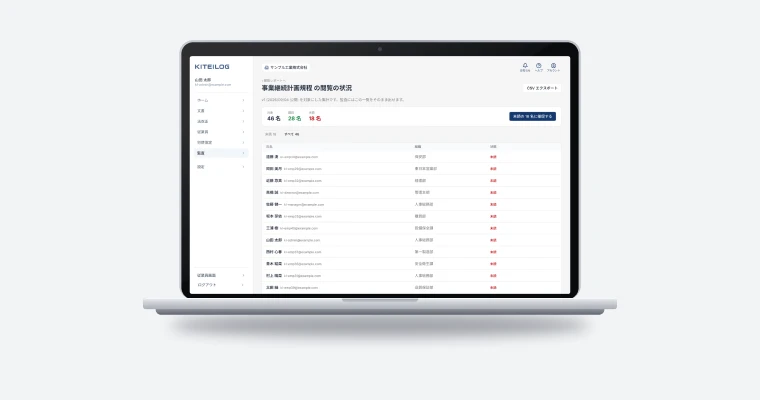
There was also no way to confirm that the latest rules had reached site workers, and the more sites there were, the harder it was for head office to know which version was where.
Site managers, busy with schedules and safety checks, also found it hard to hand out new copies and collect old ones. How reliably the rules were communicated depended on each manager’s effort and attention.
The company therefore decided to put in place a system in which site workers can always check the latest rules.
Delivering the latest version to a defined audience
The company considered a shared folder, which was easy but required site workers to know where files were and a separate way to announce replacements. A general-purpose document management tool would have needed its own conventions to track versions and define readers for each rule.
It chose Kiteilog because rules can be published to a specified audience, ensuring the latest version reaches them. For the health-and-safety rules, that means publishing to the employees who work on site.
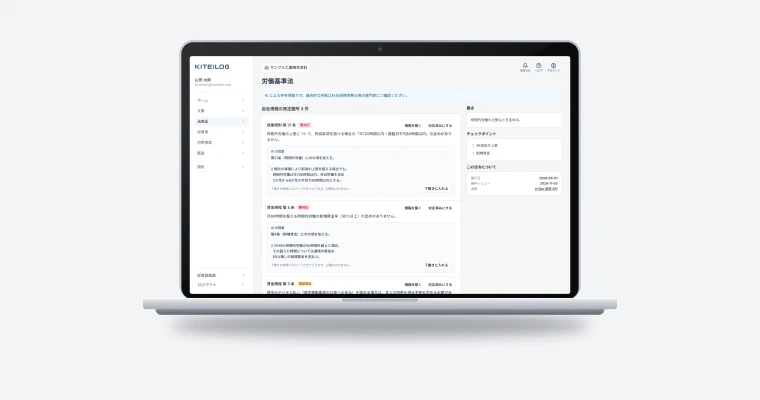
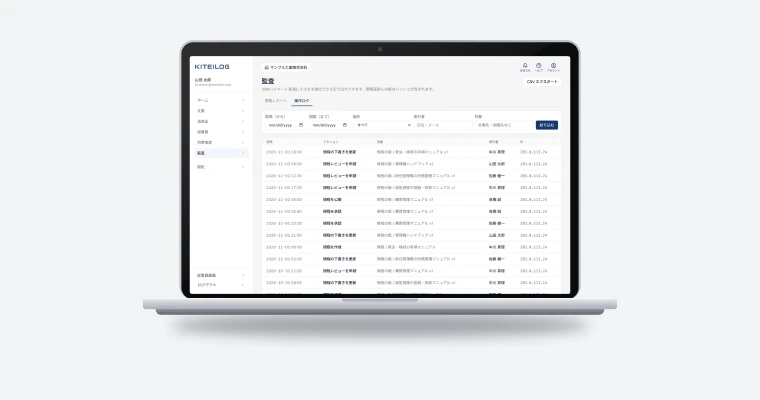
When a published rule is amended, the new version replaces it, so workers always see the current content. The amendment history is kept as versions and can be traced.
Drafting and publishing in the same system was another advantage, bringing the flow from writing to communication together.
Being able to check the rules from a device without returning to the office was also important, so that workers at distant sites receive the same content at the same time.
Writing the rules in Kiteilog
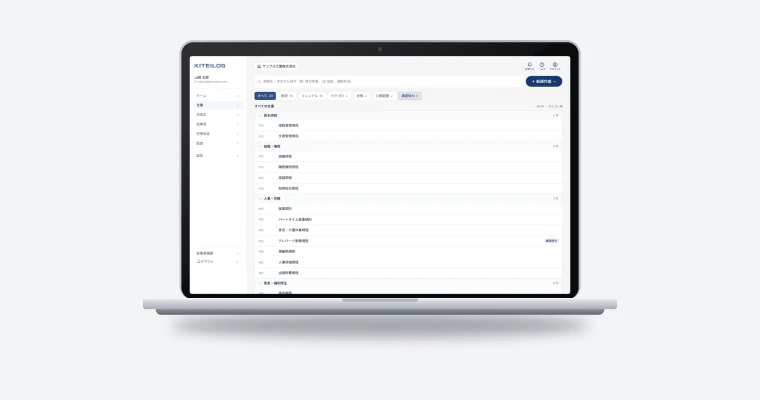
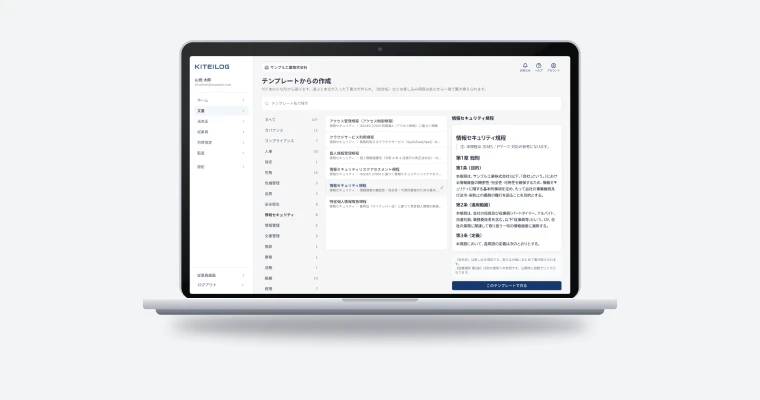
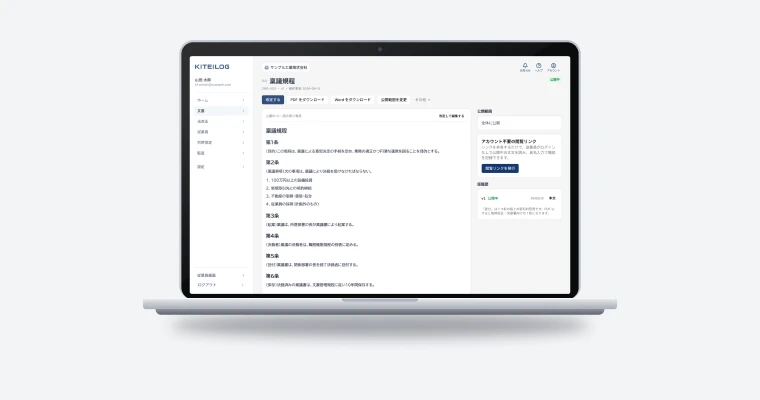
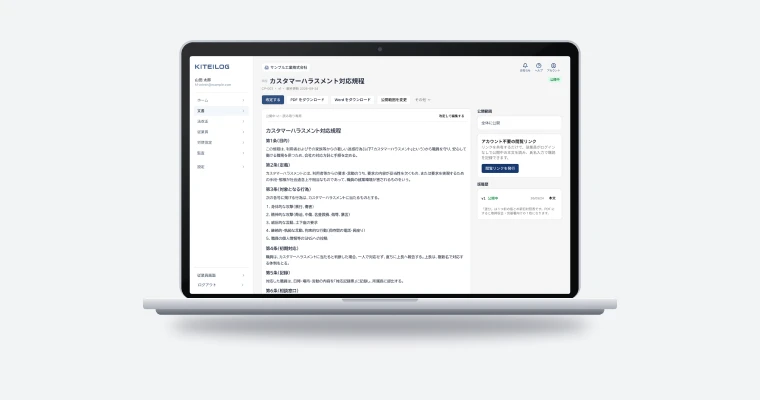
The company wrote its health-and-safety management rules in Kiteilog, based on the paper version, organizing chapters and headings.
The work became an opportunity to review the content. The company considered whether to bring supplementary sheets into the main text and removed descriptions that no longer matched site practice, aiming for a structure workers could easily understand, including those who had joined the company recently.
The draft was reviewed by those responsible for safety and health, who checked that wording would not be misunderstood on site and that procedures matched actual work.
Article numbers and heading levels were also put in order. In the paper version, repeated additions and deletions had disrupted the numbering in places, and the whole structure was tidied up.
The rules carry over the content of the paper version but are now managed as versions in Kiteilog, and future amendments will be made by creating new versions.
Publishing to the employees who work on site
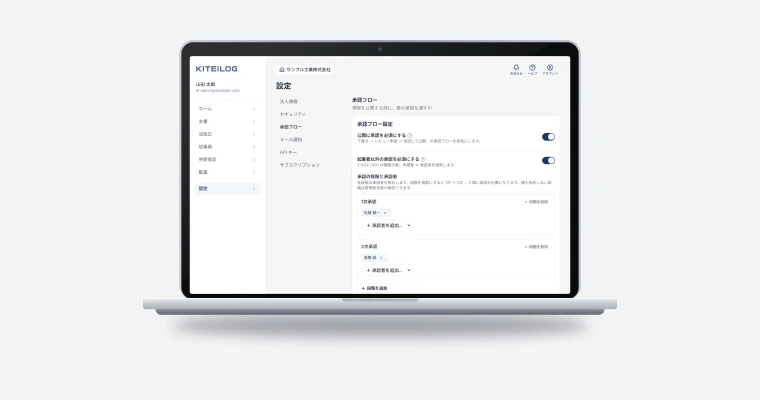
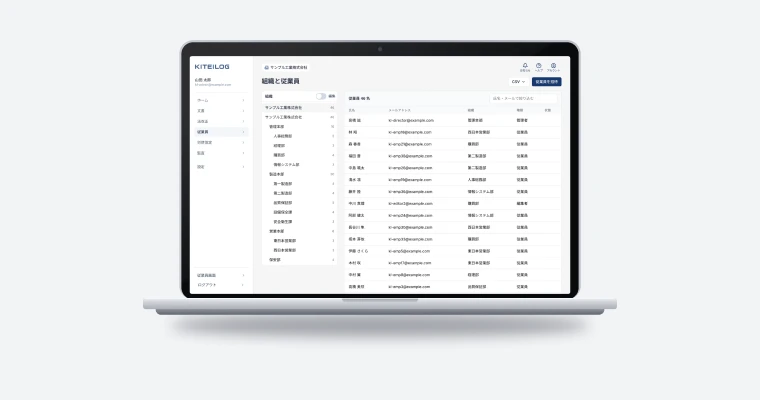
After review, the company set the audience. Including both workers engaged in site work and those involved in site management, it matched the rules’ content against employees’ roles.
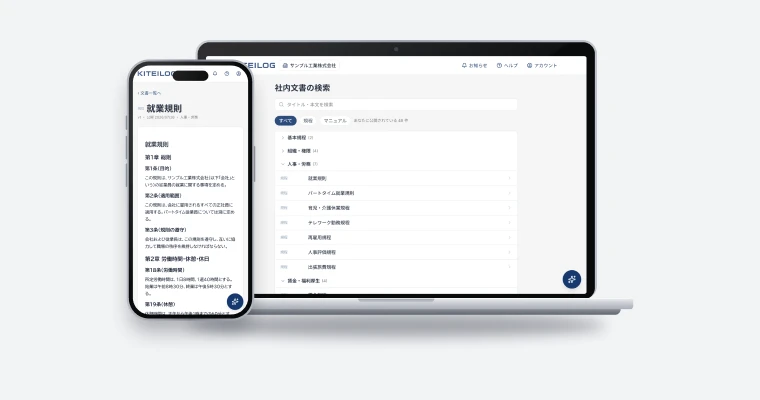
With the audience set, the rules are published to those employees, who can check the latest version in Kiteilog without waiting for paper. Even at distant sites, everyone sees the same rules.
Site managers informed workers at morning meetings and pre-work briefings that the rules are available in Kiteilog and that future amendments will appear there.
Newly assigned workers are also shown how to check the rules when they arrive, so every site now follows the same procedure instead of each manager deciding whether to hand out paper. This makes the communication of the rules less dependent on the effort of individual managers, who can focus on schedules and safety checks.
PDF for site notices, and central management of safety documents
Some sites need the rules posted on paper so workers can check them between tasks and visitors can see the company’s safety efforts.
In those cases, the company exports the health-and-safety rules from Kiteilog to PDF. Because the export is based on the current version, the posted rules and the published rules always match. There is no risk of a notice prepared separately drifting from the rules in Kiteilog.
After an amendment, the new version is exported and the notice replaced, with no separate document to prepare.
Site workers can now check the latest rules, amendments are recorded as versions, and the effort of redistribution and the worry about outdated copies on site have decreased.
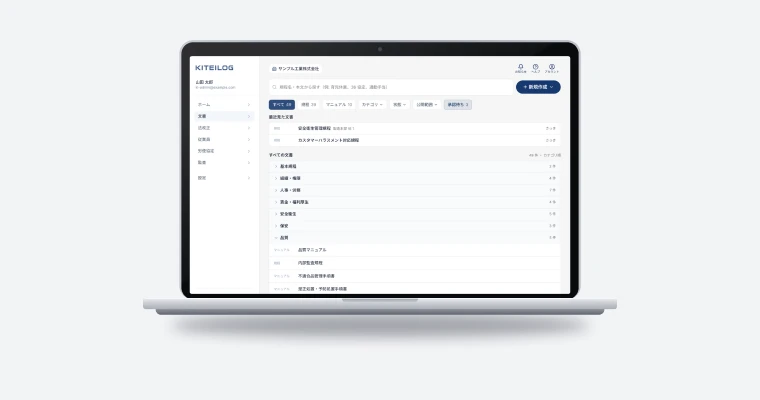
The company plans to register its other rules in turn and manage all its health-and-safety documents centrally, setting an audience for each.
Sites change every day, but the rules to be followed on them must always reach each worker in their latest form. The company sees improving how its rules are communicated as part of its continuing effort to prevent occupational accidents.
Key features
- Rule drafting
- Audience settings
- Publishing and versioning
- PDF export