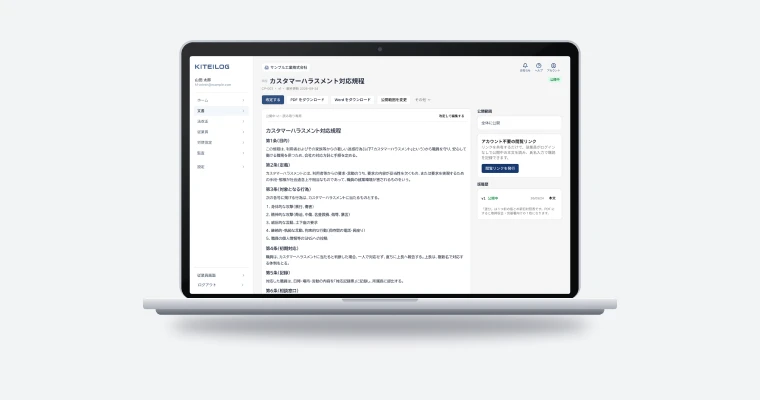
The company imported its general health-and-safety rules and its hazard-prediction and near-miss reporting rules and is reviewing them with the law check. It plans to publish each rule once its review is complete.
Challenges before adoption
- Health-and-safety rules closely tied to the law, needing checks at every review
- Finding the provisions that needed review took considerable effort
- Whom each rule was for had not been clearly organized
Results after adoption
- The law check makes it easier to see which provisions need review
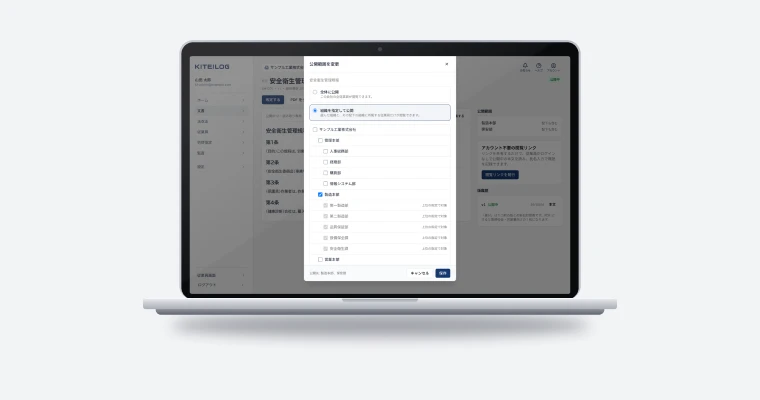
- An audience set for each rule, with preparations for publication under way
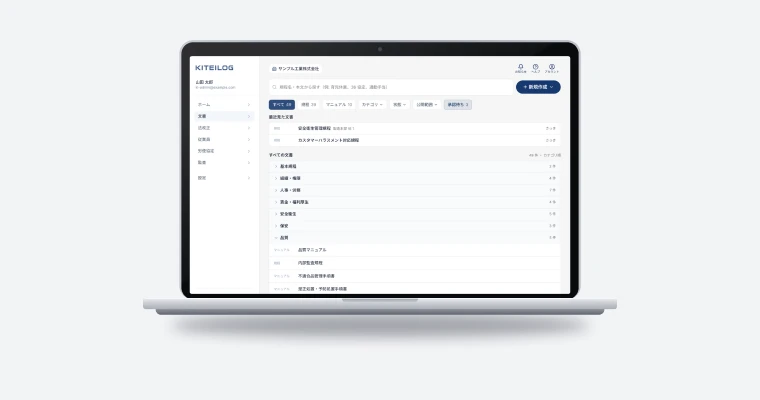
- Information-security documents managed as manuals in the same system
| Customer | An electrical-equipment company |
|---|---|
| Product | Kiteilog |
| Adopted | August 2026 |
This company works on the installation and maintenance of electrical equipment, including substation equipment, wiring, lighting and power systems in buildings and factories. Its employees work not only at its own offices but also at customer facilities and construction sites. Because work locations and tasks change from day to day, the company needs clear rules so that safety is secured in the same way on every site.
In electrical work, a single misjudgment can lead to a serious accident. The company regards safety as the foundation of its business and has set out its health-and-safety structure and hazard-prediction activities in rules. Since August 2026 it has used Kiteilog to review these rules against current law. The review is still in progress and the rules have not yet been published. This case describes how the review is being carried out and what has changed along the way.
Electrical work and the risks of electric shock and falls
Installing and maintaining electrical equipment involves risks such as electric shock, electrical fires and falls from height. Even during de-energized work, there is a risk of touching live parts by mistake or of current arriving by an unexpected route, so procedures and checks must be followed one step at a time.
To protect workers from these risks, occupational health-and-safety law requires employers to establish a safety management structure and to train workers engaged in hazardous tasks. Where several employers work at the same location, a structure for overall safety management is also required.
The company’s general health-and-safety rules set out this management structure, where responsibility lies and how safety committees are run. They cover the company’s own offices and also how overall control is exercised on sites shared with subcontractors, giving direction to all of the company’s health-and-safety efforts.
The other pillar is hazard prediction and near-miss reporting. Hazard prediction means the whole team identifying the risks in the day’s work before starting and agreeing on countermeasures. Near-miss reporting means sharing moments that were dangerous but did not result in an accident, so action can be taken before the same thing becomes an accident. The company set out how these are done in rules, aiming to make them a habit on site.
Reviews that meant chasing the law
Health-and-safety rules are closely tied to the law. Many provisions define internal structures and procedures in response to legal requirements, so when the law is amended the rules need to be reviewed.
At this company, each review meant the person responsible checking the relevant legislation one item at a time, reading through the provisions, identifying which legal requirements each related to and confirming that nothing conflicted with current law. Health-and-safety law covers a wide area, and checking every relevant requirement took considerable time and care.
Finding the provisions that needed review was also laborious. Reading the whole rule and picking out passages likely to be affected by amendments depended heavily on individual knowledge and experience, and the quality of reviews could vary by person.
Over time, the names of laws and article numbers cited in provisions can also become outdated. Such small discrepancies are hard to spot by reading the rules and were easily missed. The work rules had the same issue: laws on working hours, holidays and leave continue to be amended, and electrical work sometimes takes place at night or on holidays, so keeping working-time provisions in line with current law was an important task.
Looking for a way to check rules against the law
The company looked for a way to reduce the burden of reviews while making checks more reliable. Asking outside specialists for a legal check at every review was not realistic. A spreadsheet mapping rules to relevant laws was also considered, but it would have to be updated every time the law changed, which was judged hard to sustain.
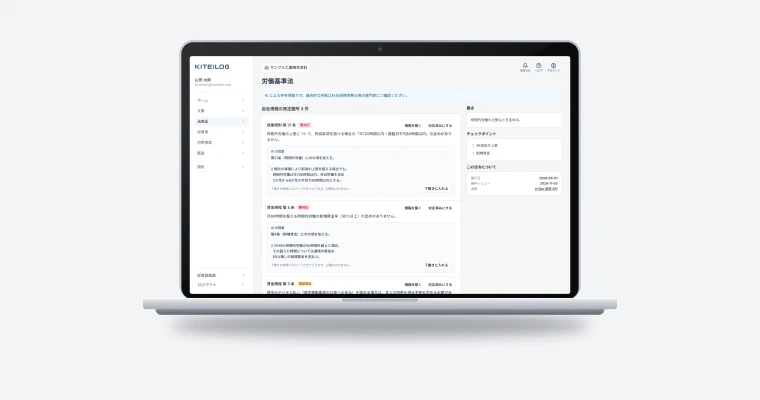
The deciding factor in choosing Kiteilog was its law check, which compares provisions against current law and amendments and points out where review should be considered. Rather than researching the law from scratch, the person responsible can start from the points it identifies. Because results are shown provision by provision, the scope of checks is also easy to share among the people involved.
Importing existing rule files was also important. Health-and-safety rules have many provisions, and re-entering them would have been a heavy burden. Being able to import existing files and run the law check straight away mattered for starting the review quickly.
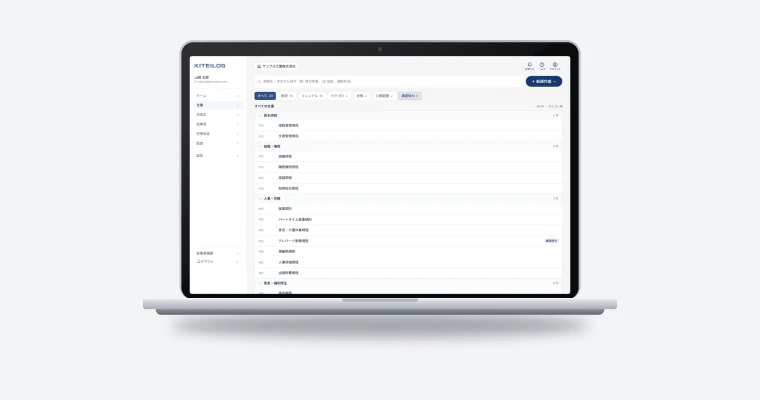
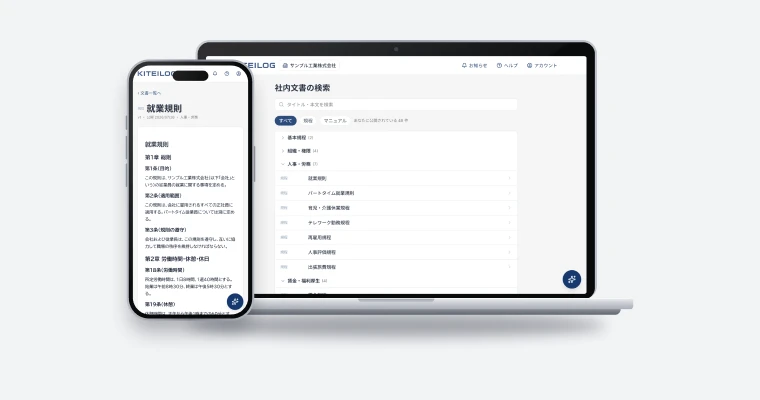
Being able to manage rules and manuals in one system was also valued. The company has other documents that set out procedures employees must follow, and wanted them in one place. When rules and manuals are kept separately, employees are unsure where to look, and providing a single entry point to the company’s rules was one of the aims of this work.
From import to law check
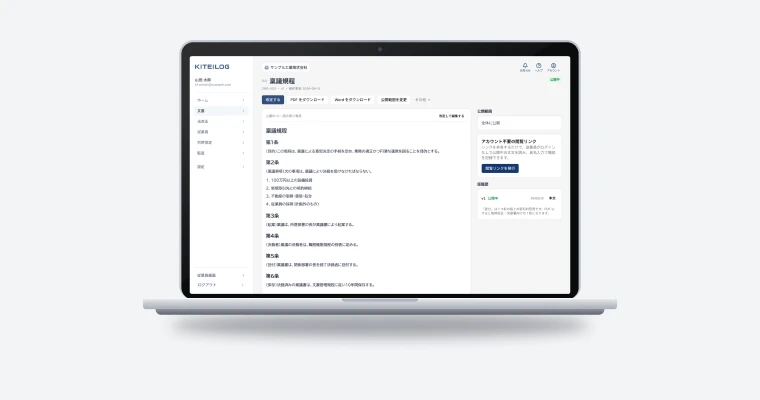
After adoption, the company imported its existing rule files, including the general health-and-safety rules, the hazard-prediction and near-miss reporting rules and the work rules. On import, AI reads the structure of the provisions and turns them into editable rules. The person responsible checked the imported content against the original files, and in doing so found that article numbering and headings varied between rules, which were then aligned.
The imported rules were then run through the law check to identify what to review. Results are shown provision by provision, so it is clear where to look. For each point identified, the person responsible checked the relevant law and decided whether the wording needed to change.
The law-check results are treated as a starting point for review rather than as text to copy into the rules. Matters specific to electrical work and relationships with subcontractors are decisions for the company, and the person responsible considers them, consulting other departments where needed.
The review is proceeding in order of impact on safety. The general health-and-safety rules and the hazard-prediction and near-miss reporting rules come first, with the work rules and others to follow.
Audience settings and information-security documents
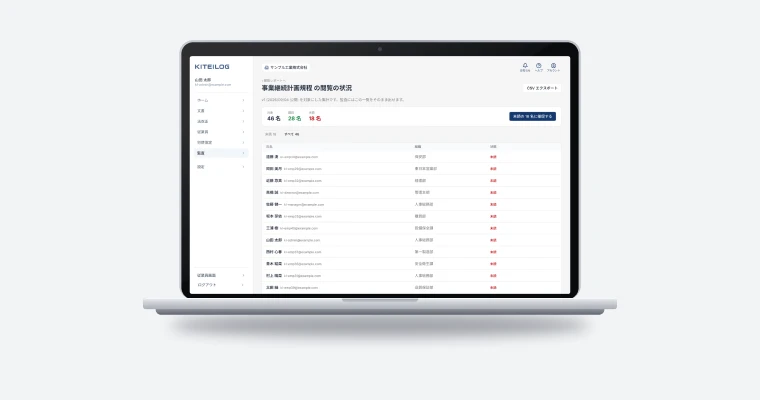
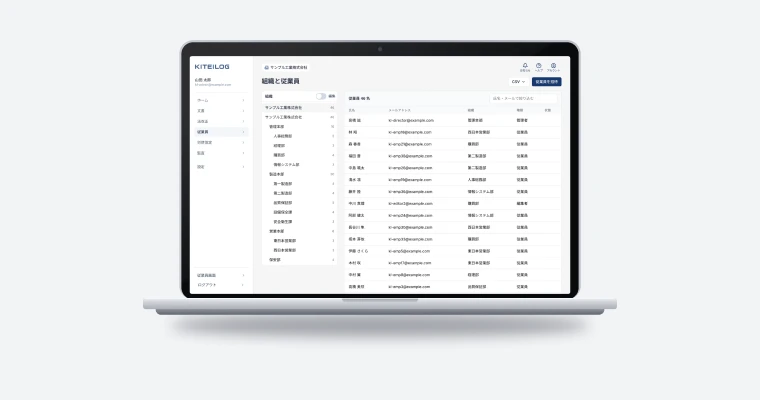
Alongside the review, an audience was set for each rule. The general health-and-safety rules are aimed mainly at managers and safety staff involved in the management structure, while the hazard-prediction and near-miss reporting rules cover site workers broadly. Defining audiences in advance will help ensure that the rules reach the right people once published.
Hazard prediction and near-miss reporting depend on every site worker. If the rules do not reach the site, the activities become a formality. Setting audiences is part of preparing to connect the rules with action on site.
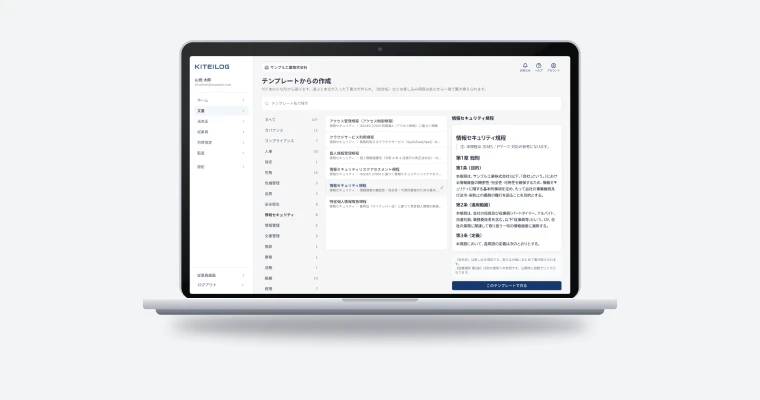
The company also registered its documents on information-security management as manuals. Much of the information it handles, such as equipment drawings and details of customer facilities, must not leak. Managing these documents in the same system as the health-and-safety rules brings it closer to a state where employees can check everything they must follow in one place. They were registered as manuals because they focus on how information is handled in daily work, such as procedures for taking materials off-site and handling photos taken on site, rather than on obligations set out in articles.
Seeing what needs review
The law check has changed how reviews are carried out. Where the whole rule used to be read through to find what needed attention, the review now starts from the points identified. It is easier to see which provisions need review, and there is less worry about missing something.
Review quality no longer depends solely on individual experience. With the law-check results as a common reference, several people checking the same rule can easily share where to focus.
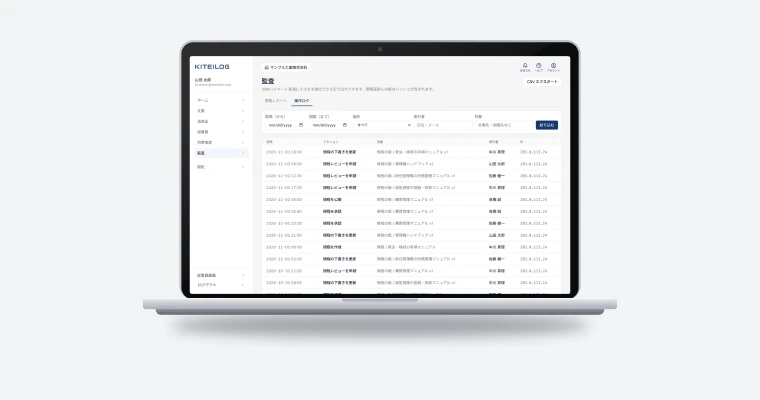
Importing also reduced the preparation needed before the review could begin. With no re-entry, checking could start on the day the files were imported, which matters for a company carrying out the review with limited staff. Rules under review are handled within Kiteilog, so everyone works from the same content and there is no risk of mixing up versions sent back and forth.
With rules and manuals in one list, the overall picture of the company’s rules is also easier to see.
Publishing each rule once its review is complete
The company plans to publish each rule once its review is complete and to inform the employees set as its audience. The hazard-prediction and near-miss reporting rules connect directly to site activities, so it is considering explaining them at morning briefings and safety meetings when they are published.
The law will continue to change. Rather than treating this as a one-time review, the company intends to use the law check to assess the impact of future amendments and keep reviewing its rules.
After publication, it will continue to compare the rules with practice on site. If near-miss reports reveal new hazards, it will consider revising how hazard prediction is carried out or what the rules say, developing its rules together with experience on site. Safety in electrical work is maintained through daily practice, and the company aims to keep its rules in line with current law and make sure they reach every worker.
Key features
- Rule-file import (AI)
- Law check
- Audience settings
- Manuals