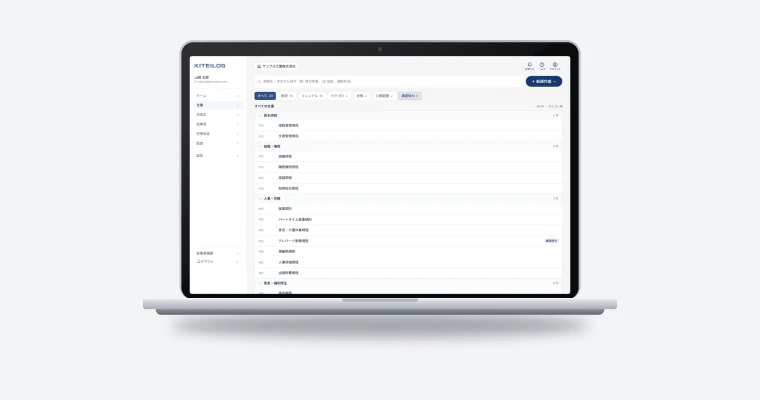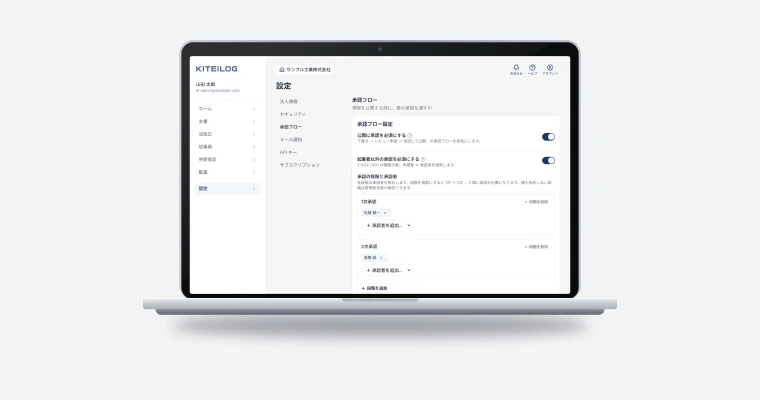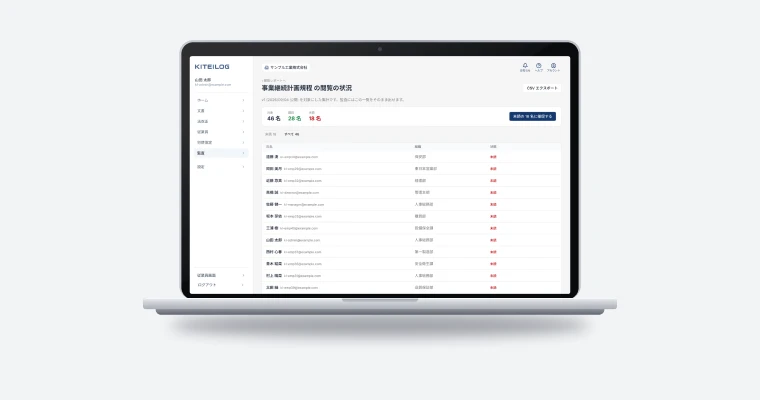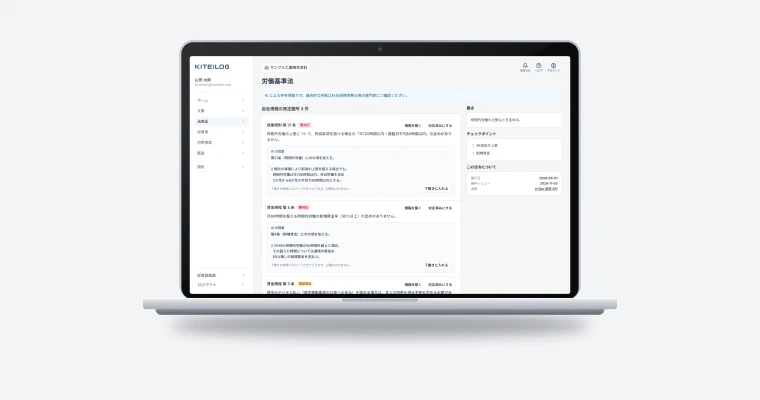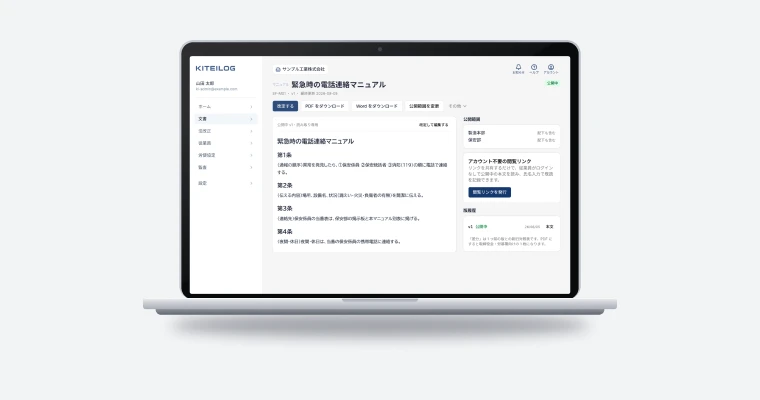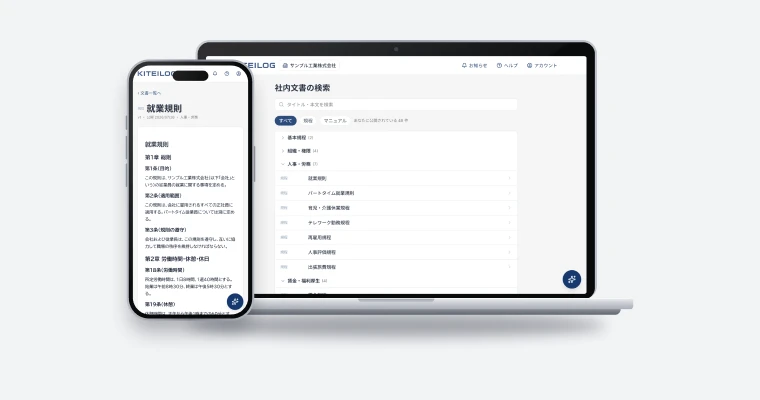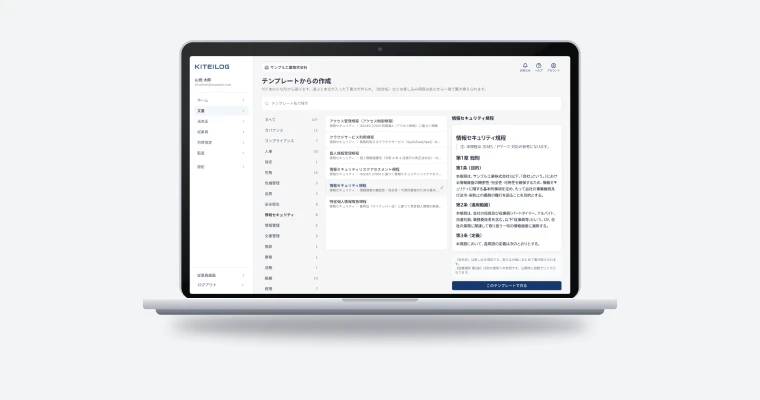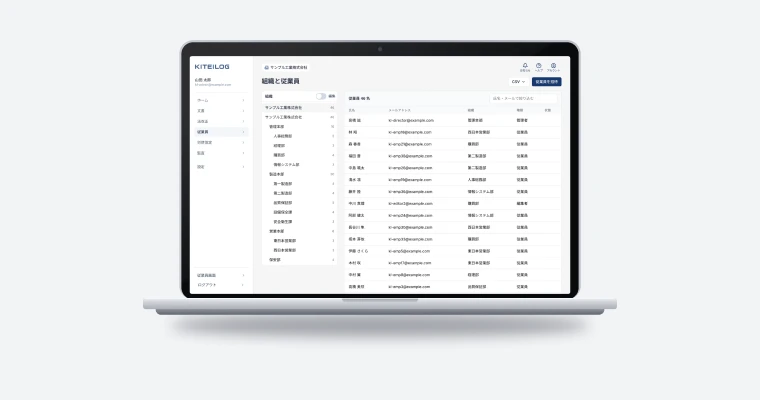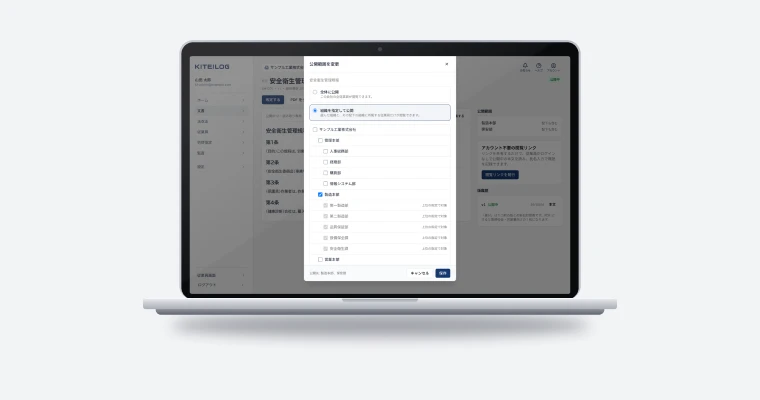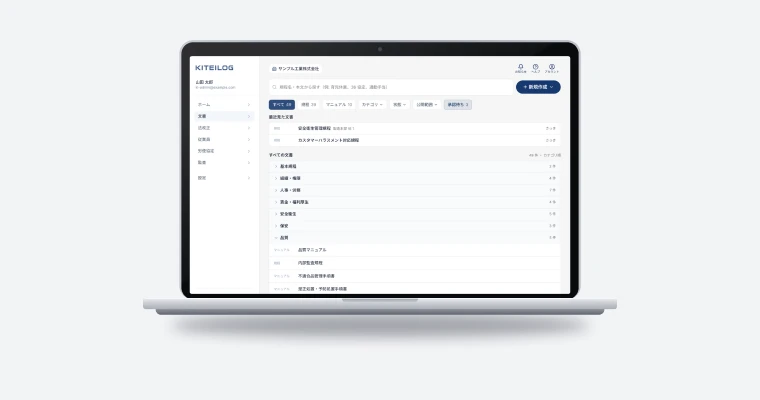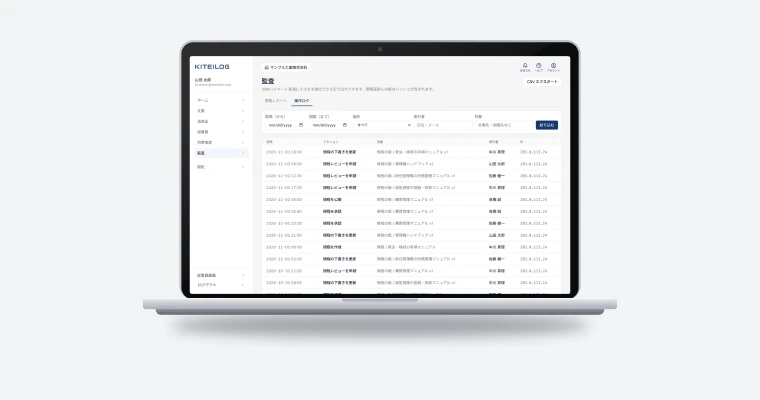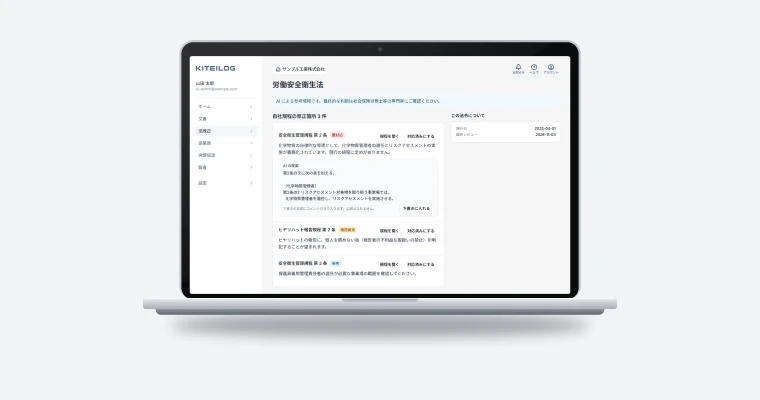
The company publishes its work rules and health-and-safety rules, and with its workplace and worker representative registered, is drafting its Article 36 agreement in Kiteilog.
Challenges before adoption
- Work rules, safety rules and the Article 36 agreement kept in separate files
- Finding amendment history and agreement terms meant searching for files
- Worker representative and workplace details rechecked for every agreement
Results after adoption
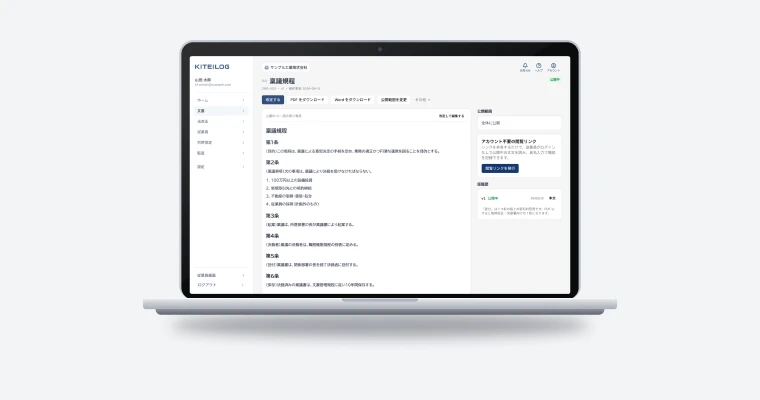
- Work rules and safety rules published, with amendments recorded as versions
- Workplace and worker representative registered once and reused
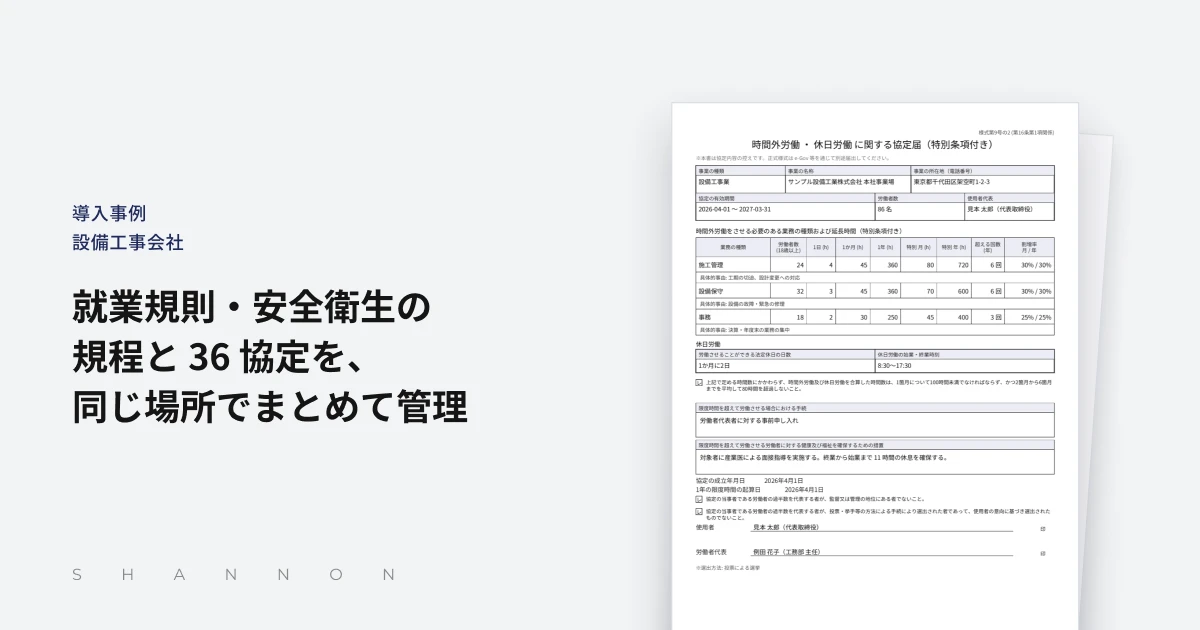
- The Article 36 agreement drafted in the same place as the rules
| Customer | A facilities contractor |
|---|---|
| Product | Kiteilog |
| Adopted | May 2026 |
This company installs building services such as air conditioning, plumbing and electrical systems. Besides new construction it handles renovation and maintenance work in existing buildings, and its employees travel from the office to several job sites.
On construction sites, safety and working-hour management are both critical. The company maintains work rules and health-and-safety management rules and concludes an Article 36 agreement on overtime and holiday work each year. In May 2026 it adopted Kiteilog and moved to managing these rules and the agreement in one place. This is how it came to manage its rules and labor-management agreements together.
Working hours on construction sites under the overtime cap
Construction work is affected by schedules and weather, and workloads vary greatly over the year. Building services work is no exception: when projects near completion at the same time, overtime and weekend work can rise.
Because of this, construction was long exempt from the statutory cap on overtime, but the cap now applies as in other industries. Overtime or holiday work requires an Article 36 agreement filed with the Labor Standards Inspection Office, and staying within its limits is more important than ever.
The agreement is concluded for each workplace with a union representing a majority of workers or, if there is none, with a representative of the majority. Agreements have a validity period, so their terms must be reviewed, re-concluded and filed again, typically every year.
Working-hour rules are closely linked to the work rules, which set scheduled hours, holidays and the treatment of overtime, while the agreement governs work beyond those limits. The two should be managed together so they do not conflict. In a company with a small office team, these procedures fall to general affairs staff alongside their daily work, and when agreement renewals and rule amendments coincide, the load can spike.
Health-and-safety rules that protect the site
Building services work involves many hazards: work at height, heavy loads, electrical equipment and confined spaces. Employees often work alongside the general contractor and other trades and must also follow each site’s safety rules.
The company’s health-and-safety rules set out its management system, pre-work hazard checks, protective equipment and the response to accidents. They are revised as work methods change and laws are amended, and each revision must reach site employees, so the current version must always be clear.
For a company with many employees on site, being able to check both the work rules and the safety rules in their latest form matters for safety and for labor management. Long hours can cause fatigue and lapses in attention that lead to accidents, so working-hour management and safety management are inseparable. Treating the work rules, safety rules and Article 36 agreement as one set was a natural approach for the company.
Rules and agreements in separate files
Previously, the work rules and safety rules were kept as document files, and the Article 36 agreement as a filled-in filing form, each stored separately. Rules were amended by copying and editing files, and each year’s agreement was created by rewriting the previous year’s.
Tracing amendment history meant finding and comparing copied files. Checking what limits a past agreement had set meant locating each year’s file.
Because rules and agreements were stored apart, it was hard to confirm they were consistent. When working-hour provisions in the work rules were revised, checking the impact on the agreement meant opening each file and comparing them.
Details of the worker representative were also rechecked for every agreement. Who was chosen and how is essential information, and whether the representative changed or stayed the same, it had to be confirmed and entered again. Workplace details such as name, address and type of business were likewise copied into each agreement, costing time and risking errors.
This way of working relied on the experience of long-serving staff. Knowing which file was current or where last year’s agreement was stored depended largely on memory, and reducing that dependence on individuals was also an aim.
Managing rules and labor agreements in one system
The company compared several options, such as gathering the files in one place with a general-purpose document management tool or keeping a list of rules and agreements in a spreadsheet.
Aligning storage alone would not record amendments at the level of provisions, and entering representative and workplace details for each agreement would remain. A list would depend on manual upkeep.
The company chose Kiteilog because it manages rules and labor-management agreements in the same system. Rules can be published, versioned and amended in Kiteilog, and the Article 36 agreement can be drafted there too.
Being able to register workplaces and the worker representative was another key reason. Information registered once can be used for drafting agreements, reducing repeated checking and copying. Building its own system was not realistic without development or maintenance staff, so the company chose a service with the necessary features and focused on daily operations.
Registering the workplace and representative first
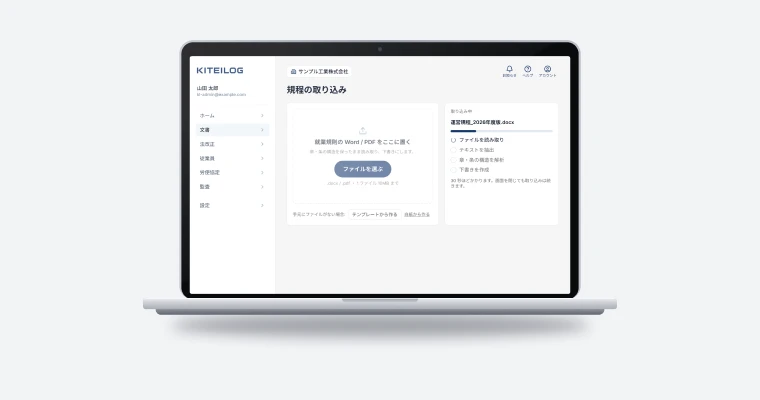
The rollout began by registering the workplace and the worker representative. Having the unit for which agreements are concluded, and the representative’s details, in place first made later drafting smoother.
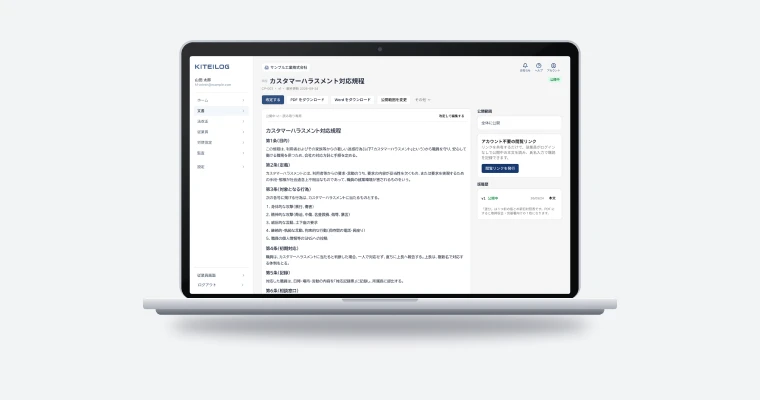
Next, the work rules and safety rules were registered, checked and published, and became the official reference for employees. Site employees were told the rules could be found in Kiteilog, and those who rarely visit the office were informed at morning briefings on site. A date was set after which the old files would no longer be used, so that outdated copies would not linger.
Amendments then moved to Kiteilog: a draft is created, checked and published as a new version, recorded as such, so files are no longer copied and overwritten.
Once the rules were running smoothly, the company began drafting its Article 36 agreement using the registered workplace and representative. It reviews the previous agreement and considers the terms for the coming period in light of expected workloads, checking the published work rules on hours and holidays in the same system so the two stay consistent.
What changed with rules and agreement in one place
The work rules, safety rules and Article 36 agreement are now in one place. Whether checking a rule or the agreement, staff open Kiteilog and find what they need. When the usual person is away, others can find the documents too, which reduces reliance on individuals.
Amendments are recorded as versions, so earlier versions and the history of changes can be traced without comparing files.
With the workplace and representative registered, there is no need to recheck the same information for every agreement, and less copying means less worry about errors. If the representative changes, updating the registered details carries through to later drafts.
Having rules and the agreement side by side also makes it easier to manage them with their relationship in mind. Checking the agreement when revising working-hour provisions has become part of routine work.
Planning agreement renewals ahead
The company plans to use Kiteilog to manage the timing of agreement renewals as well, setting up procedures so that before an agreement expires, its terms are reviewed and the selection of the representative, conclusion and filing are prepared with time to spare. Running agreements and rule amendments in the same system should help general affairs staff see the whole process and plan the order of work when deadlines coincide.
Under the overtime cap, staying within the agreed limits matters more than ever. By managing the work rules, safety rules and Article 36 agreement in one system and keeping them consistent, the company aims to strengthen the foundation that protects the safety and health of the people working on its sites.
Key features
- Publishing and versioning
- Amendment workflow
- Workplace registration
- Worker representative
- Article 36 agreement