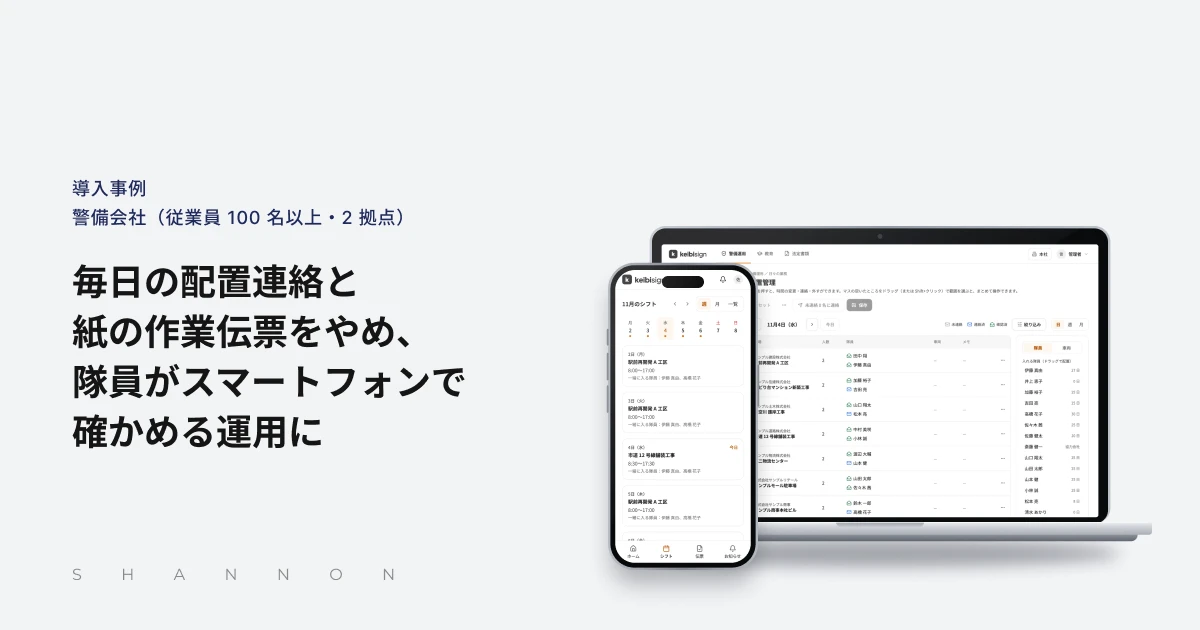
The company moved guard assignment notices and on-site job slips from phone calls and paper into the system. The head office and the branch now manage assignments and slips on the same platform.
Challenges before adoption
- Each guard was phoned the day before to be told the next day's assignment
- Paper job slips took time and effort to collect and file
- The head office and the branch could not see assignments and slips the same way
Results after adoption
- Guards now check their own schedules on their phones
- Job slips are e-signed at the site and stored as they are
- Both offices manage assignments, slips and statutory forms on one system
| Customer | A security company (100+ employees, 2 offices) |
|---|---|
| Product | Security Sign |
| Adopted | October 2025 |
This security company provides facility security, traffic control and other services from two offices, a head office and a branch, and more than 100 guards work at a wide range of sites every day. Its clients include construction companies, commercial facilities and event organizers, so the number of sites and the shape of each shift change considerably from day to day.
As the number of guards and sites grew, notifying guards of their assignments and handling paperwork from the sites became a heavy burden for the office. The company co-developed Security Sign, a SaaS for managing security-guard operations, as a partner, and has been moving work that relied on phone calls and paper into the system step by step. This is how that effort unfolded.
Assignment work that depended on phone calls and spreadsheets
Security work starts with assigning guards so that each site has the required number of people with the required qualifications. At this company, assignments for the following days were drawn up in a spreadsheet, and in the evening the scheduler phoned each guard individually to tell them the meeting time and the site location.
This meant one call for every guard. When a guard could not be reached, the scheduler had to call back later and note in the spreadsheet what had been communicated. Whenever a sudden absence or a change in a client’s request occurred, the assignments had to be rebuilt and the guards concerned contacted again.
As a result, the scheduler’s workload piled up in the evening, and on many days they could not leave the office until all the calls were done. Building assignments requires taking into account the qualifications each site demands, as well as each guard’s preferred shifts and day-off requests. These judgments relied heavily on experienced staff, and the work had become dependent on particular individuals.
For guards, hearing the next day’s schedule over the phone was a burden as well. A misheard detail or a missed message could lead to a late arrival at the site. The company needed a way for guards to check their assignments for themselves.
In security work, having the right number of people at the right place at the right time is the foundation of client trust. A miscommunication about assignments can affect safety at the site. Making assignment work more reliable was therefore not only a matter of office efficiency but a question of the company’s quality as a security provider.
The cost of collecting and storing paper job slips
The other major issue was the job slip. When a job ended, the guard had the client’s representative sign a paper slip and brought it back to the office. Office staff checked each slip, filed it, and kept it as the basis for billing.
Paper slips could not be collected until the guard returned to the office. At sites where guards went directly from home and back, it could take days for a slip to arrive. Late collection delayed billing checks, and when a missing entry or signature was found, the client had to be asked to confirm again.
Storage was a burden too. Slips accumulated daily, and finding an old one meant leafing through binders one by one. When a client made an inquiry, the company could not always produce the relevant slip quickly.
The head office and the branch also managed assignments and slips separately, which made it hard to see the whole company’s situation on the same basis. To maintain the same quality as the company grew, assignments and slips needed to be handled in a single system.
In addition, the Security Services Act requires offices to keep documents such as the guard roster and training records on hand. These were also split between paper and spreadsheet files, and cross-checking them against assignment and attendance data required manual work. The company wanted a system in which daily operational records and statutory documents could be prepared from the same information.
Moving the most burdensome tasks first
To solve these issues, the company decided to have a system built specifically for security work. General-purpose attendance or scheduling tools could not fully handle tasks unique to the industry, such as site-specific qualification requirements and client signatures on job slips. As the party that knew front-line work best, the company joined the development and co-developed Security Sign.
Rather than switching everything at once, the policy was to move the tasks that weighed most heavily on the front line into the system first. The first targets were the daily assignment calls and the paper job slips. Both involve guards and office staff every day, so improvements would be felt by everyone.
Operation began at the head office. The scheduler created assignments in Security Sign, and guards were given the mobile app. Guards checked their schedules in the app and had clients sign job slips at the site. In the early stage, phone notices continued in parallel until guards became comfortable with the app.
Once the procedures had settled at the head office, the same system was rolled out to the branch. Because the branch could use the procedures already established at the head office, the transition went ahead without major confusion.
Repeated explanations to guards and clients
The company’s top priority in making the new system stick was explaining it to guards. Guards span a wide age range, and some are not used to smartphones. Along with distributing the app, the company prepared instructions limited to three operations, checking the schedule, reporting clock-in and clock-out, and getting a job slip signed, and walked through them hands-on at morning meetings and training sessions.
Office staff helped guards individually when they were unsure. During the parallel period, staff checked whether each guard had seen their schedule in the app and called those who had not, as before. Proceeding in stages let guards move to the new method without strain.
Explaining the change to clients was also essential, since switching job slips from paper to on-screen signatures required their cooperation. The company explained to each client how to sign and how signed slips would be stored, and proceeded with their understanding. For clients who preferred to sign on paper, paper slips remain in use and photos of them are uploaded to the system.
Throughout the rollout, the screens and workflows were revised based on feedback from the field. As a co-development partner, the company pursued a form that both guards and office staff found easy to use, which helped the system take root.
A system shaped around security-industry practice
In developing Security Sign, usability that matches real security work was the priority. On the assignment screen, guards can be assigned while checking each site’s required headcount and qualifications. Day-off requests are also received in the system, so the scheduler can take them into account when building assignments.
Job slips are signed by the client’s representative directly on the smartphone screen. Signed slips are stored as electronic records, and the office can review them before the guard returns. For clients who require paper signatures, photos of paper slips can be uploaded and stored.
Vehicle assignments for travel to sites can be managed on the same screen as guard assignments. It is clear at a glance which guard is traveling in which vehicle, preventing mix-ups in vehicle arrangements.
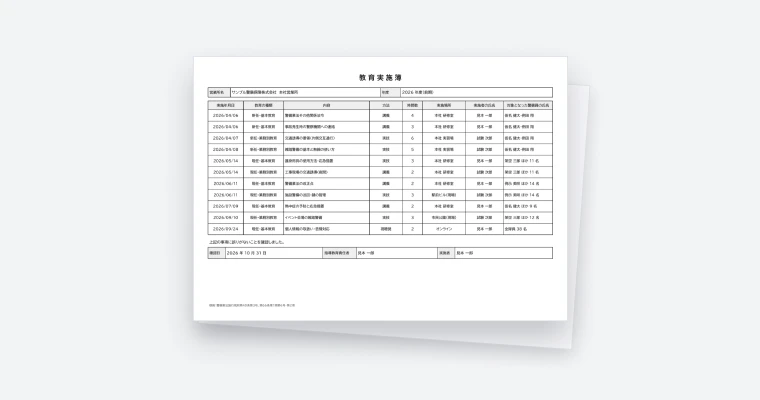
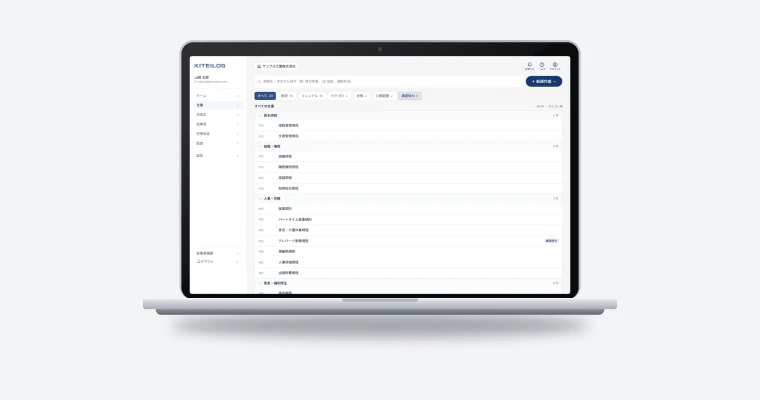
Statutory forms that offices must keep under the Security Services Act, such as the guard roster and training records, can also be managed in the same system. Handling assignments, attendance and statutory forms in one place was an important point for standardizing the company’s operations.
Daily work without phone calls and paper collection
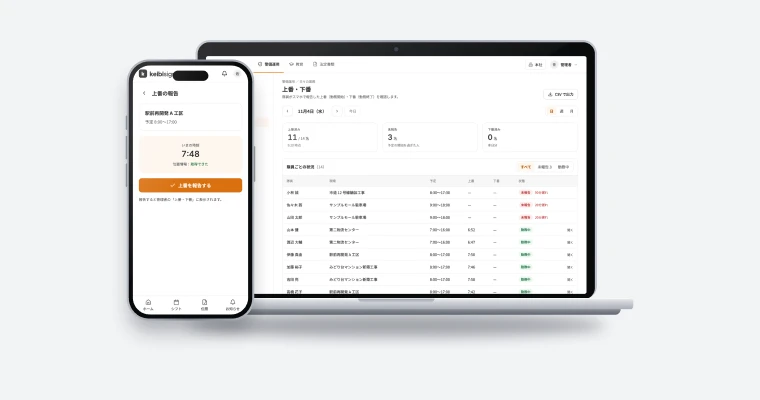
Since the rollout, assignments are created in the system and guards check their own schedules on their phones. Calling each guard the evening before is no longer necessary, and the scheduler can spend that time on building the assignments themselves. When something changes at short notice, updating it on screen lets guards see the latest schedule in the app.
Guards also report clock-in and clock-out from their phones. The office can see who is at which site in a list and notices missing reports sooner.
Job slips are signed on screen by clients at the site and stored as electronic records. Collecting and filing paper slips is no longer needed, and the office can check the status of slips at any time. Finding past slips takes far less effort, and client inquiries can be answered promptly.
With the head office and the branch managing assignments and slips in the same system, the whole company’s situation can be seen on the same basis. Procedures that differed between offices have been aligned, and standardization is progressing.
A changing role for the office
With phone notices and paper collection gone, the role of office staff is changing too. Time once spent on calls and filing can now go to coordinating with clients, preparing new sites and planning guard training.
Because assignments remain as records in the system, other staff can respond using the same information even when the usual person is away. Some of the judgments that relied on experienced staff can now be made while checking required headcounts and qualifications on screen, which also helps reduce dependence on specific individuals.
Extending use to statutory forms and training records
The company now also handles vehicle assignments and day-off requests in the system. At the head office, use is expanding to statutory forms such as the guard roster and training records, and a setup in which everything from assignments to document management runs on one system is taking shape.
Going forward, the company plans to further develop the management of training plans and records so that document preparation for on-site inspections can be completed as part of daily work. As a co-development partner, it will continue to feed insights from the field into improving Security Sign and contribute to greater efficiency across the security industry.
Key features
- Guard assignments and shared schedules
- Clock-in / clock-out reports
- E-signed job slips
- Vehicle assignments
- Day-off requests
- Statutory records and training logs