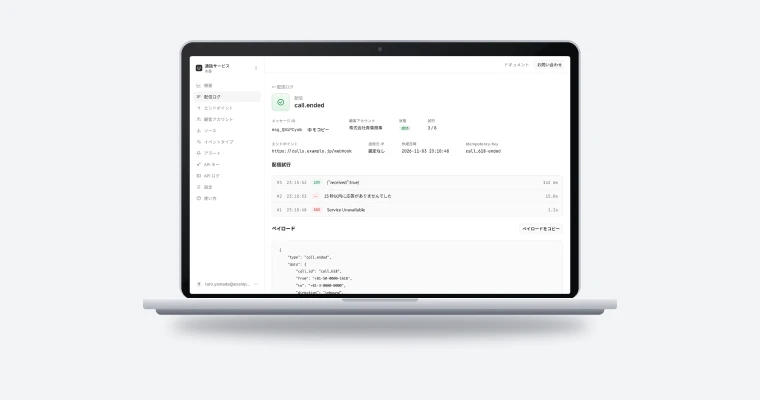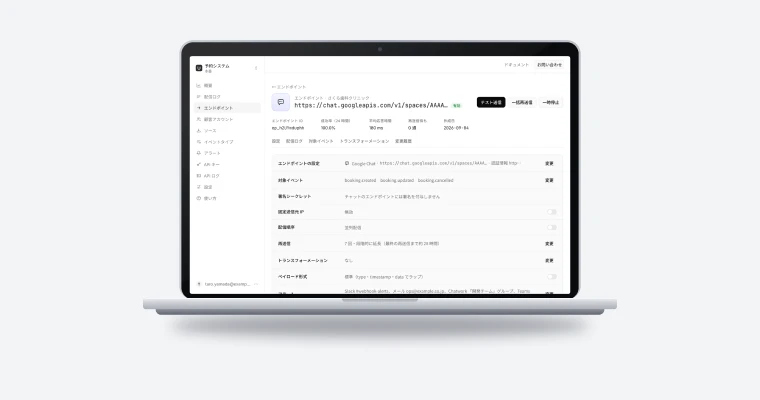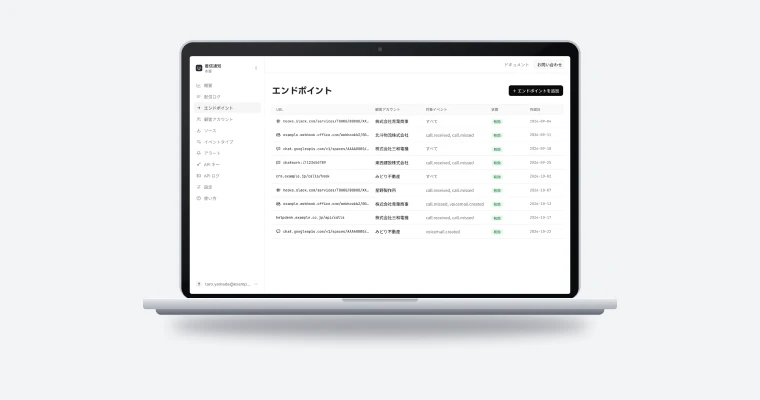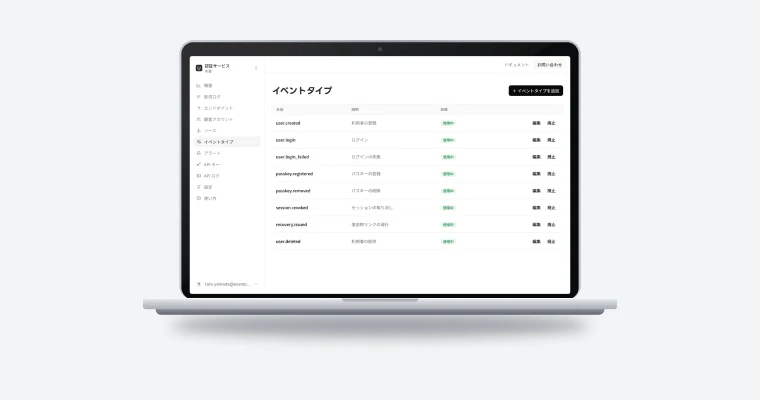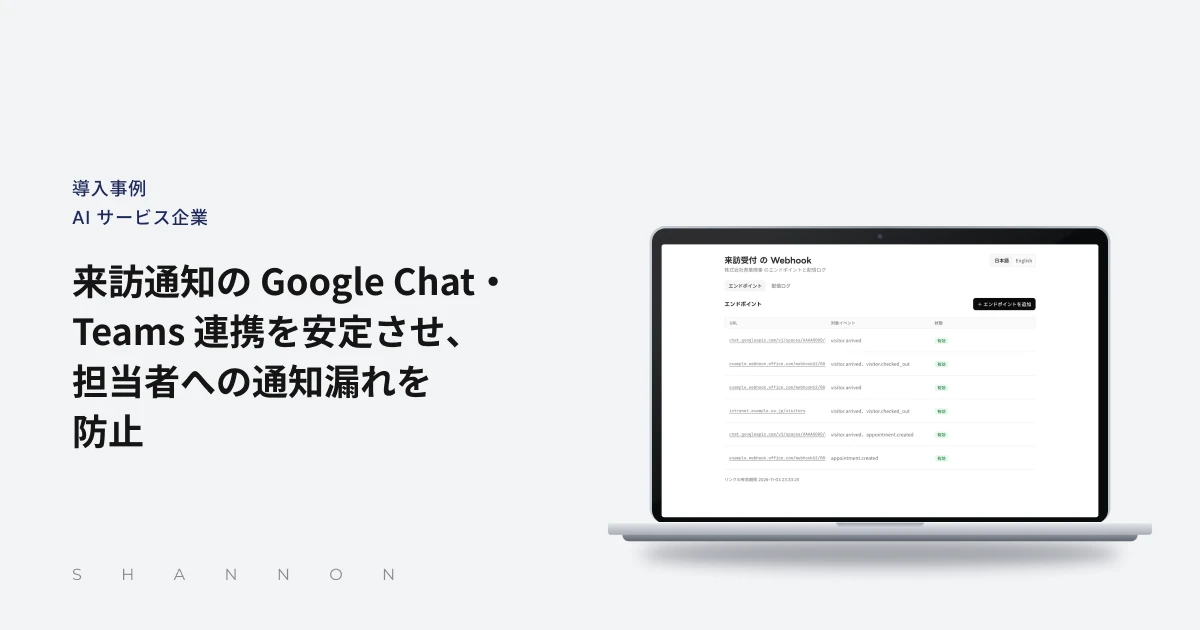
The system sends visitor and call-for-staff notices through Webhook Admin to staff on Google Chat and Microsoft Teams. Notices that briefly fail are retried, and undelivered notices are never treated as delivered.
Challenges before adoption
- Brief chat-service outages could keep visitor notices from reaching staff
- Retries risked delivering the same visitor notice twice
- Whether a notice arrived was not properly reflected in the reception guidance
Results after adoption
- Visitor notices that briefly fail are retried, with a delivery record kept
- Duplicate notices are prevented, so staff can respond without confusion
- Reception never tells visitors a notice was delivered when it was not
| Customer | An AI services company |
|---|---|
| Product | Webhook Admin |
| Adopted | October 2026 |
This company provides a visitor-reception system that greets visitors on a tablet placed at the reception desk of a company’s office. A visitor explains the purpose of the visit on the tablet, the reception AI finds the person being visited, and that person is notified. The service’s role is to connect visitors to staff without keeping them waiting, even at offices with no one at the desk.
The key to this is the notice to staff. Staff receive visitor notices in the Google Chat or Microsoft Teams they use every day and head to reception. The company changed the system to deliver these notices through Webhook Admin, improving their stability and quality. This is what the company did to prevent missed notices.
A reception where an undelivered notice leaves visitors waiting
At reception, any delay or gap in notification turns directly into waiting time. Visitors have no choice but to wait at the desk until someone comes. If the notice never reaches the person, the visitor waits unnoticed, which affects the impression of the company being visited.
At an office with a receptionist, someone would notice that no one had come and call the person on the internal phone. But many offices using the service run reception unstaffed. The notice is often the only means of contact, so reliable delivery is a precondition for an unstaffed reception to work at all.
Visitor notices are also time-critical. A few minutes’ delay is rarely serious for a booking notice, but a visitor notice is sent while the visitor is standing at the desk. A late notice causes nearly as much trouble as one that never arrives. Notices had to be delivered reliably and as quickly as possible.
Reception is also the first point of contact for business partners, job applicants, delivery workers and many others. Visitors remember the wait at reception as part of how the company treated them. Many companies adopting the service want unstaffed reception without any drop in the quality of how visitors are received, and reliable notification is seen as the foundation for meeting that expectation.
Brief chat outages and knowing whether a notice arrived
Previously, the service sent messages directly to staff chat. When Google Chat or Teams was working normally, notices arrived immediately, but if the chat service briefly refused a message, the notice was lost. Chat outages are usually short, but notices for anyone who arrived during one never reached staff.
Building a way to resend lost notices raises another problem. A send that looks failed may in fact have been accepted by the chat service. Resending it then delivers the same visitor notice twice, leaving staff to work out whether there are two visitors or one, which undermines trust in the notices.
The other issue was the reception AI’s guidance. The AI tells visitors that the person has been notified and asks them to wait. If it says this when the notice has not arrived, the visitor waits for someone who is not coming. Reflecting whether a notice actually arrived in the reception guidance was central to the quality of reception.
Requirements for the delivery system
In reviewing the notification system, the company set out its requirements: resend notices that briefly fail, never let resends duplicate a notice, keep a record of delivery results, and manage destinations separately for each client company.
Building this in-house was considered. Combining retries with duplicate prevention, however, means tracking the state of every notice and handling the different responses of each chat service. This is specialist work separate from developing a reception system, and it would need ongoing monitoring once built.
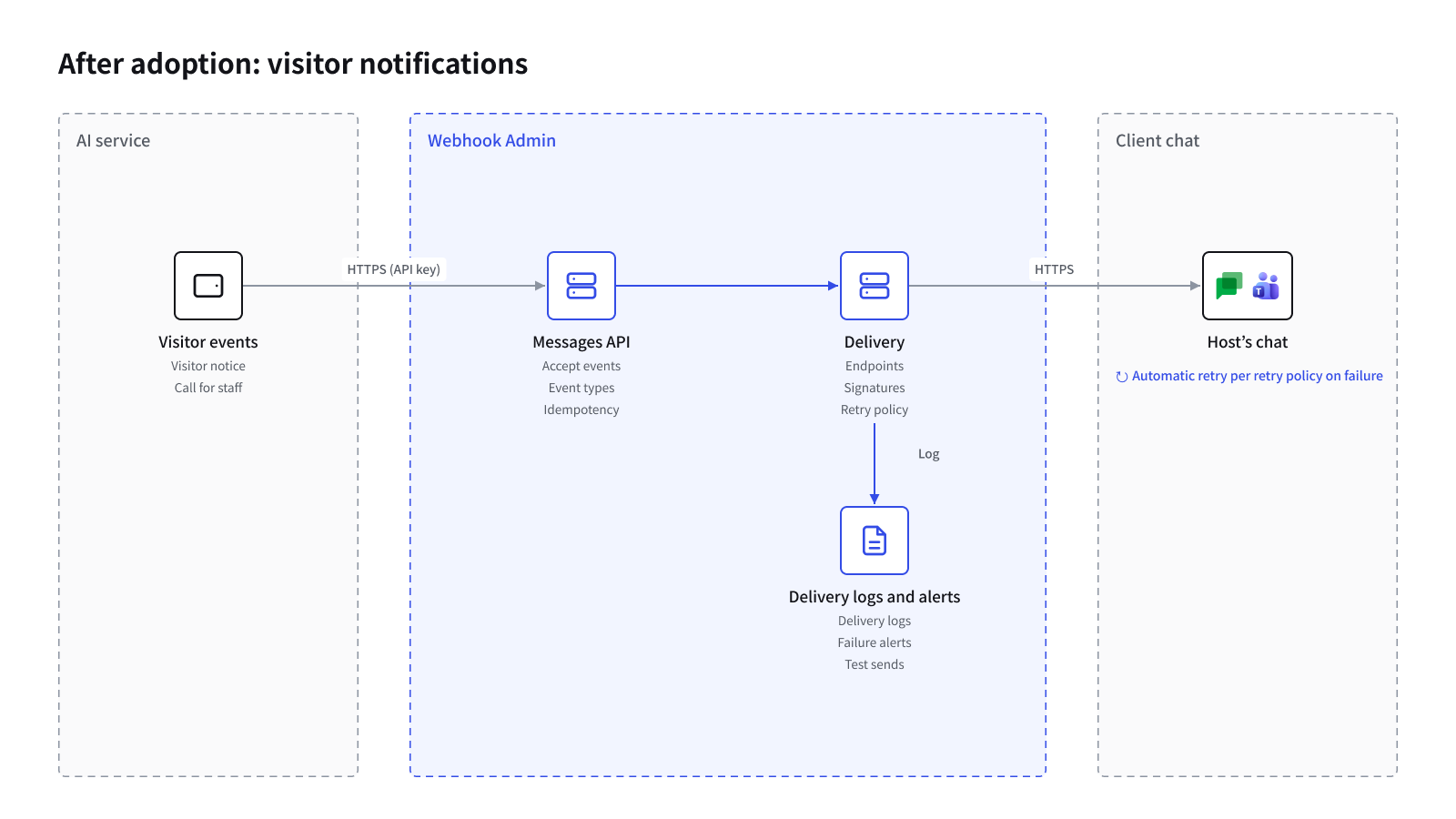
Webhook Admin met all of these requirements. Destinations can be registered per client company and delivered directly to Google Chat and Teams. Failed notices are resent after an interval, duplicate sends are prevented, and delivery results are kept for later checking. The company decided to hand delivery to Webhook Admin and focus development on the reception experience itself.
Separating visits from staff calls and organizing destinations per company
The company first organized the types of notice. Of everything that happens at reception, two things are sent to staff: visitor notices and call-for-staff notices. A visitor notice tells staff that a visitor has checked in. A call-for-staff notice is a separate notice used to call staff to reception. Separating these as events lets recipients understand immediately what each notice means.
Next, destinations were organized per client company. The service is used at reception desks of many companies, and a visitor notice must reach only that company’s staff. Destinations are registered separately for each client company in Webhook Admin, so an event at one company’s reception never reaches another company’s chat.
The switch was made in stages, starting with the receptions that send the most notices. Delivery records were checked to confirm notices sent through the new system reached staff, and only then was it extended to other companies. For client companies, the chat messages looked and worked the same, and staff had nothing new to learn.
Alongside the switch, the company asked client companies to check which destinations they had registered. Under the new system, a notice with no registered destination is treated as undelivered, so a missing registration changes what reception tells visitors. Announcements to administrators explained where destinations are registered and how reception behaves when none is set, so companies could check in advance.
The review turned up cases where chat spaces no longer in use, left over from transfers or reorganizations, were still registered as destinations. Notices sent there would arrive but go unread. The company shared destination status together with delivery records and encouraged companies to make sure notices go where staff actually read them.
Notice content was reviewed at the same time. Visitor notices carry what staff need to decide to go to reception, such as the visitor’s name and purpose. Because chat spaces may include employees other than the person being visited, the information included was kept to what the response requires. Defining content per notice type makes it easier for recipients to understand the situation from the message.
Never treating an undelivered notice as delivered
Operationally, the company’s top priority was to reflect correctly in the reception guidance whether a notice arrived. Where no destination is registered for a company or department, the notice is treated as undelivered. The reception AI then does not say the person has been notified, and instead guides the visitor to call someone themselves. Knowing the notice did not go through, the visitor can reach staff another way.
With this rule in place, the reception AI’s guidance and the actual notification status no longer diverge. Not giving visitors false reassurance is basic to earning trust in an unstaffed reception. The company regards not only reliable delivery but also how the system behaves when delivery fails as part of reception quality.
Even with a destination registered, if the chat service briefly refuses a notice, Webhook Admin resends it. Duplicate prevention applies to resends, so staff are protected from receiving the same visitor notice twice and can act on each notice as it comes.
Delivery records also help with support. When a client company reports a missing notice, the records show when it was sent and what happened. If a destination is misconfigured, support can give specific guidance based on the record.
Reliable notices behind an unstaffed reception
Since the move to Webhook Admin, visitor notices are resent through brief outages and reach staff. Duplicate prevention keeps resends from causing new confusion. With more reliable notification, the company can run a reception that does not keep visitors waiting with greater confidence.
The reception AI’s guidance now matches what actually happened. Delivered notices are treated as delivered and undelivered ones as undelivered, and visitors receive guidance that fits the situation. Visitors are spared waiting for someone who is not coming.
On the development side, the company no longer carries a delivery system of its own. With retries, duplicate prevention and delivery records handled by Webhook Admin, developers can spend their time on the reception experience, such as conversations with visitors and how the right person is found.
Next steps for reception quality
The company will keep delivering reception notices reliably while using delivery records to improve reception quality. If the records show where notices are having trouble getting through, the company can suggest earlier that a client company review its destination settings.
Some client companies use Google Chat in some departments and Teams in others. Using per-company destination management, the company intends to improve its guidance on destination settings so that staff at such companies receive notices wherever they normally work.
An unstaffed reception only works when both visitors and staff trust the system. The company will keep valuing both reliable notification and honest guidance when a notice does not get through, as it works toward a reception that never keeps visitors waiting.
Key features
- Destinations per company
- Delivery to Google Chat and Teams
- Retries and delivery records
- Protection against duplicate notices