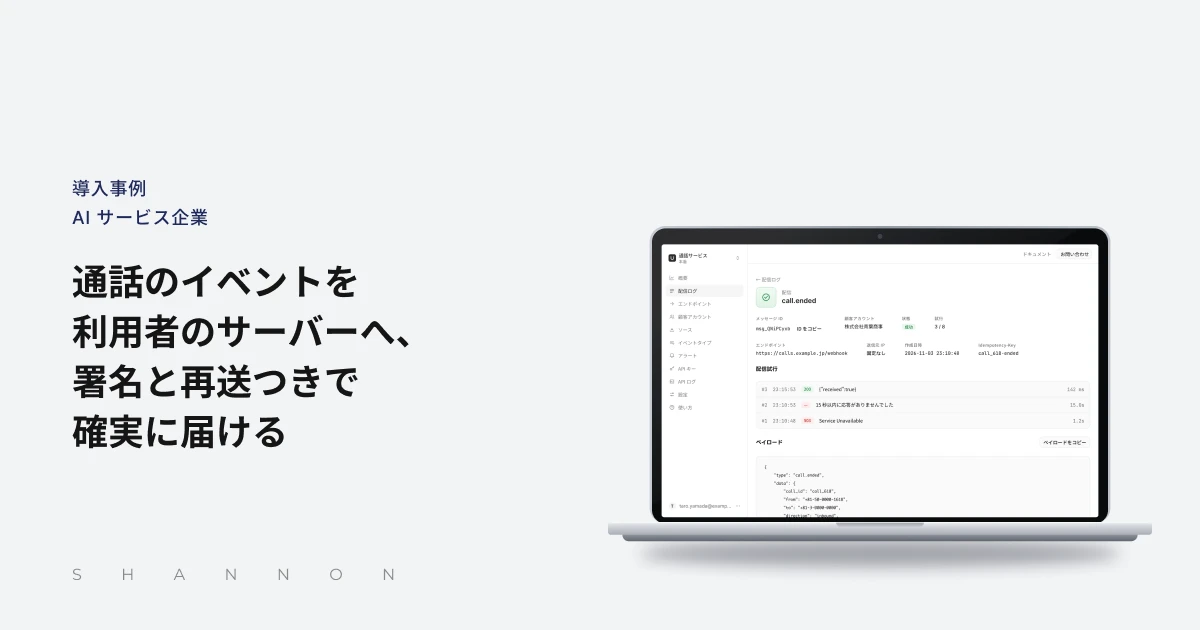
The platform delivers call events such as start, end and summary readiness to customers’ servers through Webhook Admin, with signatures and retries.
Challenges before adoption
- Call start, end and summary readiness had to reach customers’ servers
- Reliable delivery needs signatures, retries, delivery logs and more
- Building and running delivery in-house was a heavy burden
Results after adoption
- Call and balance events delivered to customers’ servers with signatures
- Failed events retried, with delivery records available to check
- Development focused on voice AI instead of delivery infrastructure
| Customer | An AI services company |
|---|---|
| Product | Webhook Admin |
| Adopted | October 2026 |
This company provides a platform for building AI voice reception over the phone and the web. Its customers are businesses that build their own services on top of it, such as services that take bookings for clinics and shops, or services that answer the phone on behalf of other companies.
The outcome of each call on the platform is essential to these services. They need to know, promptly and reliably, when a call has ended or when its summary or recording is ready. The company adopted Webhook Admin to deliver these call events. This case study explains how the delivery system was put in place.
Customer services waiting on call results
A great deal happens within a single call. The line connects, the AI listens to the caller’s request, checks booking availability or decides whether to hand off to a person as needed, and the call ends. Afterwards, a summary, a transcript and a recording are prepared.
Customer services act on each of these events. A booking service passes the summary to clinic or shop staff. A phone-answering service reports the outcome to the client company. When the AI requests a handoff, the customer’s side must get a person ready to respond right away.
To do this, customers need the platform to tell them when something happens. They could poll the platform for new calls, but notices would arrive late and the number of requests would grow. Webhooks, where the platform sends an event to the customer’s server as soon as it happens, suited this use.
Balance notices matter as well. If customers do not learn quickly that their usage balance is running low, call reception could stop. Both call and balance events had to reach customers’ servers reliably.
Everything reliable delivery requires
Sending an event by webhook is not technically difficult. Delivering events that customers can rely on, however, requires much more than the send itself.
First, customers must be able to confirm that an event really came from the platform. Preventing forged or altered events means signing each one so customers can verify it.
Second, failures must be handled. Customer servers will sometimes be unavailable or in the middle of an update. Failed events need to be retried at intervals, without the same event being processed twice.
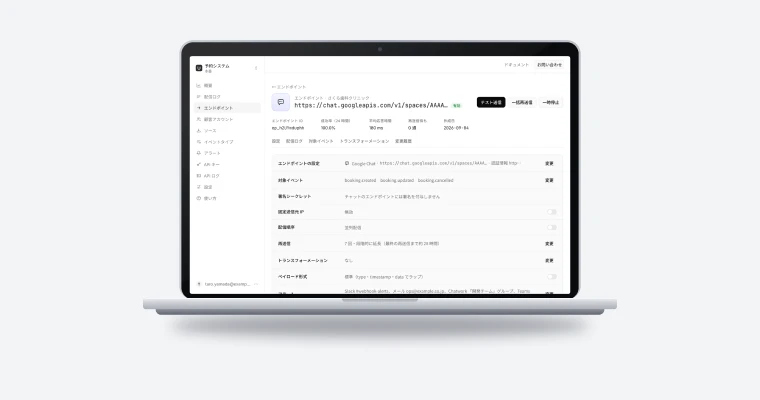
Third, delivery records are essential. When a customer reports that call results have not arrived, the platform needs to see what was sent, to which endpoint, when, and what response came back. Endpoints must be managed per customer, and delivery must be pausable and resumable.
Building all of this in-house and keeping it stable as customers grew would have been a heavy burden. The company wanted to spend its development effort on the quality of AI conversations and call features. Every hour spent on delivery infrastructure was an hour not spent on how well the AI understands callers, how naturally it responds, or how smoothly it hands calls to people.
Choosing a dedicated delivery service over building in-house
The company compared building delivery in-house with using a dedicated delivery service. Building it would allow full control, but signatures, retries, duplicate prevention, delivery logs and endpoint management would all have to be built, then maintained through incidents and growth.
The company chose Webhook Admin, a webhook integration service, because it provides delivery with signatures, retries and logs out of the box, along with management of event types and endpoints per customer. Signatures follow the Standard Webhooks approach, so customers can verify them with a well-known method. Retries, delivery logs, test sends and the ability to pause and resume endpoints were all available without additional development, which meant the platform could offer customers a complete delivery experience from the start rather than adding pieces over time.
With delivery handled by Webhook Admin, the company’s developers can concentrate on decisions specific to the platform: which events to send and what information to include. Before adopting it, the team created endpoints in the test environment and tried receiving signed events, confirming that customers would only need to verify signatures and route events by type.
Organizing call and balance events by type
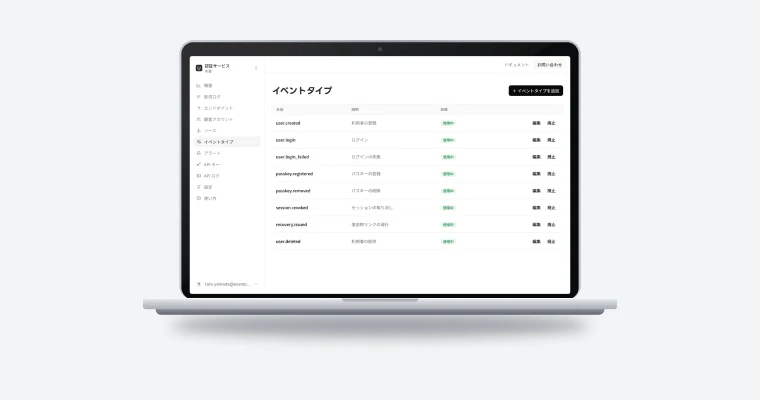
The company first organized the events to deliver. Call started, call ended, summary ready, transcript ready, recording ready, handoff requested and balance low are each registered as event types in Webhook Admin.
Fine-grained types let customers receive only the events they need. Some want only call endings and summaries; others want handoff requests immediately so a person can step in. The company also fixed what each event contains, such as the call identifier, start and end times, and which output is ready, so customers can match events against their own records. Defining the shape of each event in advance makes it easier for customers to write the code that receives them.
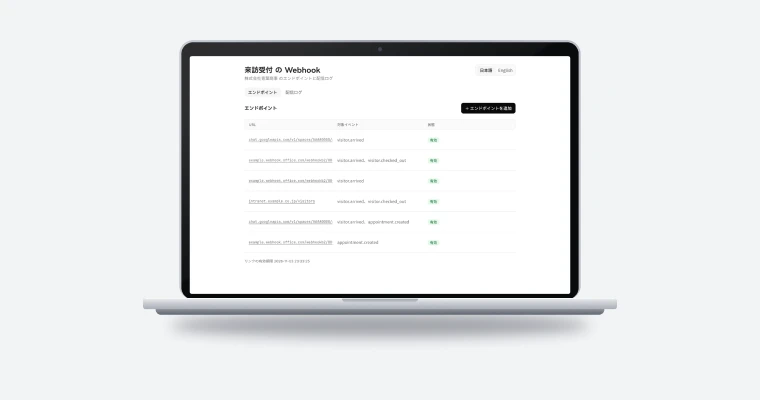
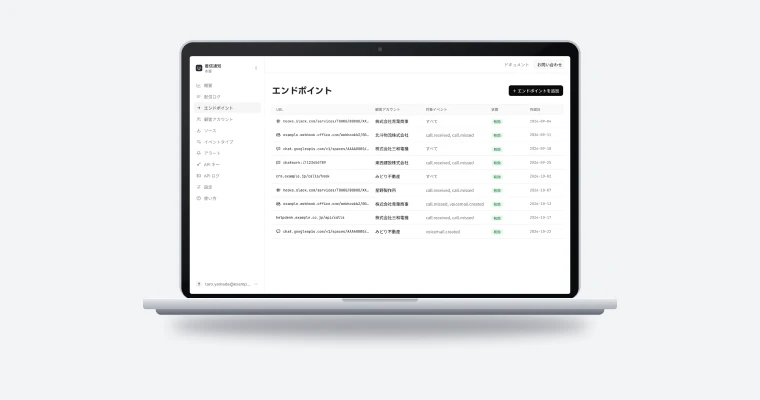
For each customer, a consumer and endpoint were set up in Webhook Admin. Because endpoints are separate per customer, changing or pausing one customer’s destination does not affect delivery to any other.
A switchover checked with test sends and a parallel run
The switchover went in stages. In the test environment, the team used Webhook Admin’s test sends for each event type to confirm that signature verification and handling worked as expected.
Next, services built on the platform within the company became the first recipients of call-ended and summary events. Booking and phone-answering services received real call results this way and were confirmed to be able to notify staff and clients.
External customers were given documentation describing the event types, their contents and how to verify signatures. They were also advised to pause their endpoint during server maintenance and resume it afterwards. During the transition, the existing way of querying call results from the platform remained available, so customers could compare delivered events with queried results before relying mainly on delivery.
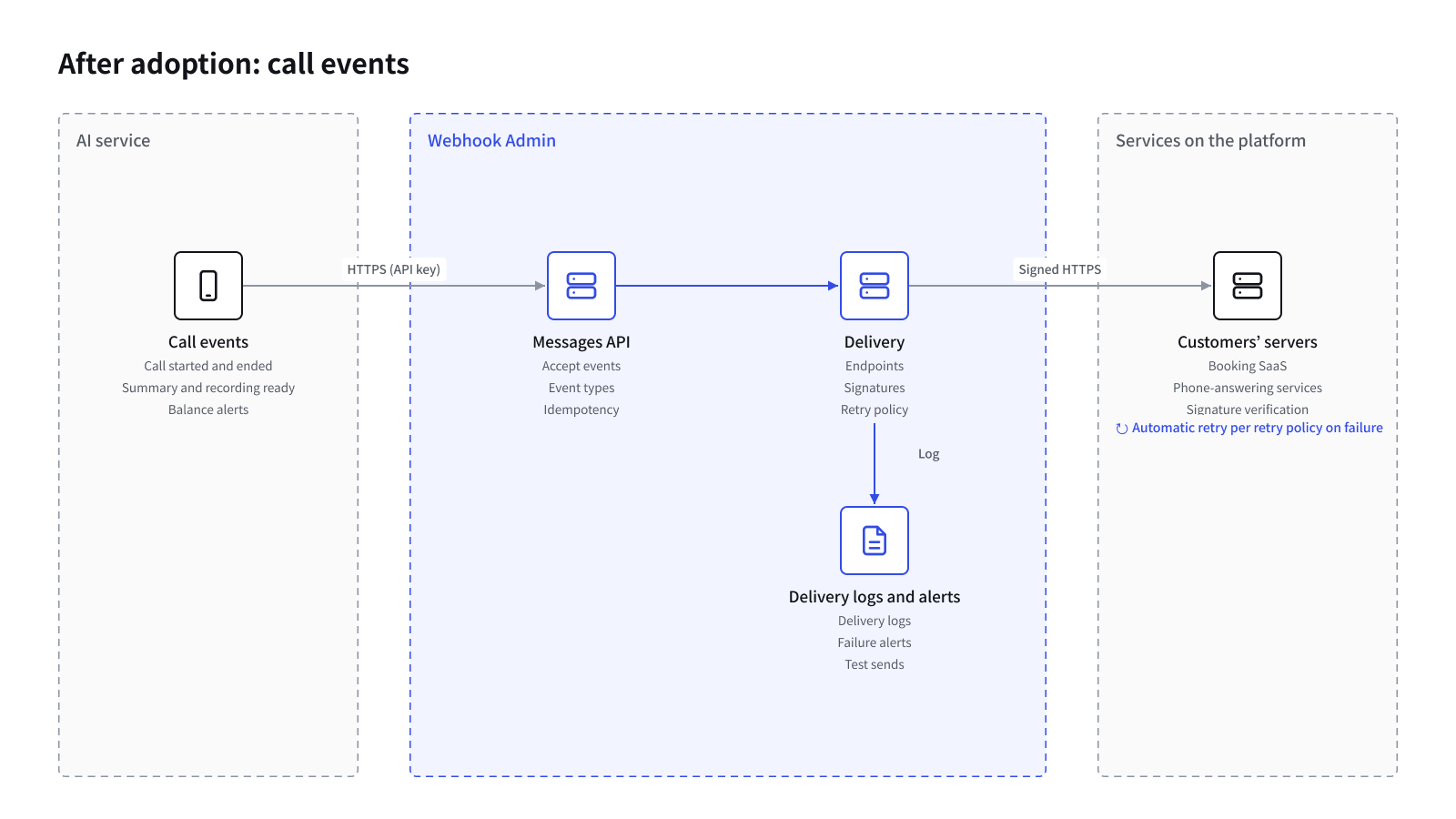
Daily delivery backed by signatures and retries
Call and balance events are now delivered to customers’ servers with signatures. By verifying them, customers know an event came from the platform, and can simply discard anything that fails verification.
When a customer’s server is briefly unavailable, events are retried at intervals. Duplicate prevention means an event delivered twice is not processed twice, reducing the risk of call results being recorded twice on the customer’s side.
Delivery records are available in Webhook Admin. When a customer reports missing results, the platform can check send times and responses and quickly tell whether the issue lies with the customer’s server or the delivery settings. Endpoints with repeated failures can be spotted in the records, and the customer can be contacted early to review the destination.
Services built on the platform, including booking and phone-answering services, receive call endings and summaries through this delivery and pass them on to clinic and shop staff or client companies. With no delivery system to run in-house, the company can focus its development on voice AI features.
Next steps as the customer base grows
The company plans to add event types as platform features expand. A new event only needs to be registered as a type and checked against endpoint settings to reach customers through the same system, and customers can start receiving it on their existing endpoints by choosing the new type.
Endpoints and delivery records can be managed the same way however many customers join. The company will expand its guidance on event contents and signature verification so customers can bring call results into their services faster, and will make wider use of the balance-low event so customers can act early and call reception is not interrupted.
Key features
- Event types
- Endpoints per customer
- Signatures and retries
- Delivery logs